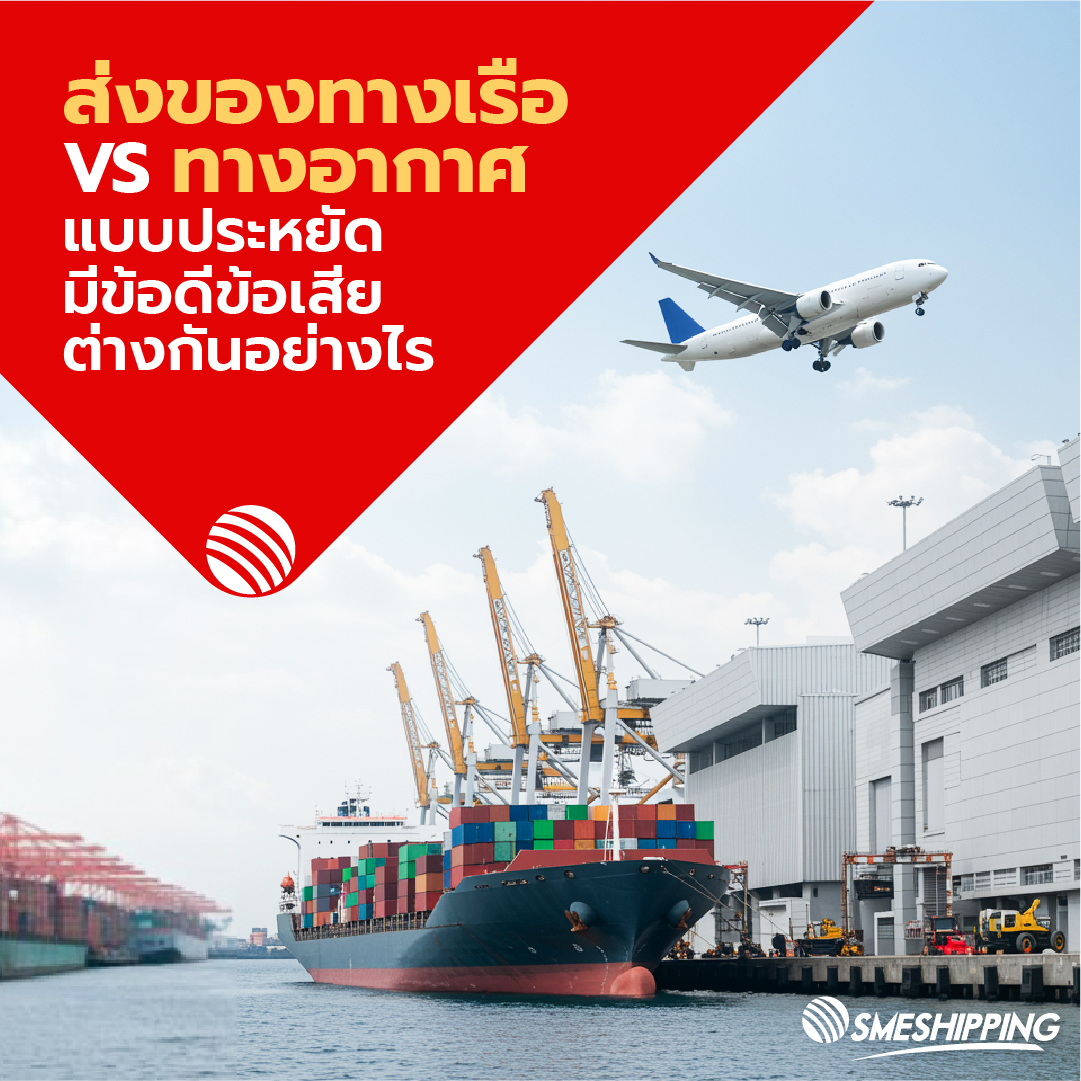
Is shipping by sea or air more economical? | SME Shipping

Shipping by sea vs. shipping by air (economical): What are the advantages and disadvantages of each?

 In the era of rapidly growing online businesses and international trade, many entrepreneurs face decisions about "shipping"—whether by sea or air—to best suit their costs, time, and product characteristics. Choosing a shipping method isn't just about speed; it also involves budget, customs regulations, and potential risks during transit. This article from SME Shipping will help you understand the differences between sea freight and economy air freight, along with recommendations on which option is most cost-effective and suitable for your business.

What is sea freight?

Sea freight is the international shipping of goods using seagoing vessels. It is commonly used for transporting heavy, large-volume, or oversized items such as machinery, furniture, agricultural products, or raw materials. The unit cost is relatively lower than air freight, making it suitable for long-term planning and when urgent delivery is not required.

Advantages and disadvantages of sea freight.

strengthweakness
The cost per unit of freight is significantly cheaper compared to air freight.Shipping takes a long time (typically 2-6 weeks depending on the route).
Suitable for large, heavy, or bulky items.We need to plan our stock in advance.
Cost-effective in the long run for import and export businesses with clear order cycles.Vulnerable to delays due to external factors such as weather, shipping traffic, or customs inspections.

What is economy air freight?

Economy air freight refers to shipping goods by air using available space on commercial or passenger flights. It's a cheaper alternative to express air cargo but still offers the advantage of speed compared to sea freight. It's suitable for items that aren't too large, and are of medium to light weight, such as clothing, electronics, or urgent shipments.

Advantages and disadvantages of economy air freight.

strengthweakness
Much faster than by ship (usually 3–7 days).The shipping cost per unit is higher than by sea.
Suitable for urgently needed items or those with short expiry dates, such as food, medicine, and seasonal clothing.Limits on the size, weight, and type of goods.
Shipping and customs clearance processes are often faster in many countries.If shipping large quantities of goods, the total cost may be more than worthwhile.

Which shipping method is the most cost-effective?

The cost-effectiveness of transportation depends on three main factors:

  1. Quantity of goods – If the quantity of goods is large, shipping by sea is much more cost-effective.
  2. Delivery timeframe – If you need the product quickly and with a definite deadline, air freight is more suitable.
  3. Product characteristics – For perishable or high-value items, air ventilation should be used to reduce risk.

 If you're starting an import-export business, you should assess the unit cost, delivery time, and product risks to choose the transportation method that best suits your goods and your budget. Alternatively, a combination of both (e.g., using economy air for urgent shipments and sea freight for larger orders) can help manage your business more efficiently.


Is it difficult for business owners to handle the paperwork themselves? | SME Shipping

Is it difficult for entrepreneurs to handle import and export of goods themselves?

Importing and exporting goods involves legal processes, customs procedures, international documentation, and logistics, which can sound complex for inexperienced individuals. However, many businesses are now interested in learning and handling these processes themselves to save costs and improve efficiency. With the right understanding and proper preparation, independent importing and exporting is not too difficult. This article from SME Shipping will guide you through the essential basics for entrepreneurs looking to start their own import and export business.

What entrepreneurs need to know if they want to import and export on their own.

1. Registration and application for an Exporter/Importer Code.

Before importing or exporting can take place, businesses must register as importers and exporters with the Customs Department through the e-Customs system. They will receive a Customs Registration ID to use for identification in the Customs Department's system for every transaction. *It is recommended to apply for the code before actually starting your business so that you are ready when orders come in.

2. Learning about the Social Security Code (HS Code).

HS Code (Harmonized System Code) is a 6-10 digit numerical code used to classify goods internationally, which will have an impact on...

  • Tax rate payable
  • The need to obtain a license.
  • Specific product restrictions apply (e.g., food, medicine, medical devices, etc.). Entering the wrong code may result in product seizure, customs delays, or retroactive fines.

3. Documents related to import and export.

Businesses must prepare all necessary documents for customs clearance, receiving and shipping goods, and confirming information with business partners and government agencies. Important documents that need to be prepared include:

  • Commercial Invoice: List of Products and Selling Price
  • Packing List: Packaging Details
  • Bill of Lading / Air Waybill: Shipping document
  • Import-export license (if required)
  • C/O (Certificate of Origin): To receive tax benefits under a Free Trade Agreement (FTA).

4. Knowledge of taxes and duties.

Businesses wishing to import and export independently must have a basic understanding of taxes and duties to avoid problems with retroactive tax collection. This knowledge is also essential for calculating the true cost of goods to be included in each export shipment, such as import duty, Value Added Tax (VAT), and excise tax (for certain types of goods like liquor, perfumes, and electrical appliances).

5. Customs procedures and e-Customs system.

All import and export activities must be submitted through an electronic system, such as:

  • e-Customs: For submitting customs declarations.
  • NSW (National Single Window): For applying for licenses from various agencies online.

If you lack experience, you may use a customs broker to help with the process in the beginning.

6. Choosing a freight forwarder or shipping agent.

In importing and exporting goods, "transportation" is a crucial element because it directly affects the cost, time, and safety of the goods. Even if businesses can handle customs procedures themselves, they often need to rely on freight forwarders or shipping agents to manage international transportation and handle complex shipping documents.

  • Suggest the most economical route.
  • Negotiate with shipping lines/airlines.
  • Verify that the shipping documents are correct.

Although self-importing and exporting requires careful study and adherence to specific details, with dedication to learning, understanding the system, and careful planning, entrepreneurs can operate independently and efficiently, saving costs in the long run.

Reasons why you should pay attention to import and export documents | SME Shipping

Why should businesses pay attention to documentation for importing and exporting goods?

 International import and export businesses have become easier and more open. However, importing and exporting goods isn't just about ordering or shipping; it requires an understanding of the processes and regulations involved, especially regarding "import and export documentation." This documentation is crucial for the speed, accuracy, and security of business operations. Neglecting or improperly managing it can negatively impact business time, costs, and credibility. This article from SME Shipping will explore why businesses should pay more attention to import and export documentation.

What are import and export documents?

Import and export documents are crucial documents used in international customs clearance. Their purpose is to provide information about the goods, such as details, value, shipping route, origin, and consignee. These documents are essential components used in the inspection and approval process for import/export and typically include primary documents such as:

  • Invoice
  •  Packing List
  •  Bill of Lading (Air Waybill)
  • Certificate of Origin
  •  Licenses or certificates from relevant authorities (if any)

These documents represent crucial information used by customs authorities to approve customs clearance, inspect taxes, and verify security requirements or other special laws.

Why should businesses pay attention to import-export documentation?

Many people may view import-export documents as mere technical matters or just pieces of paper. However, in reality, these documents are the heart of international business. If businesses fail to prepare the documents properly, lack thorough checking, or miss certain items, it can lead to unforeseen negative consequences. But if businesses pay attention to checking import-export documents every time, it can help streamline the process in the following ways:

  1. Reduce the risk of goods being held up at customs because if the documents are incomplete or the information is incorrect, customs may not release the goods, resulting in delays, wasted time, financial losses, and potentially negatively impacting customer relationships.
  2. This document helps in calculating taxes accurately, as the information in it forms the basis for tax calculations. Errors or inaccuracies could result in retroactive tax collection or overpayment.
  3. Enhancing the image and credibility of your business, especially when working with international partners, requires clear and professional documentation. This instills confidence in your partners and encourages them to do business with you.
  4. Make full use of tax benefits, whether through FTA or BOI. If the documents are complete and correct, you can apply for various tax incentives, which can help reduce costs.
  5. Having evidence is useful for retrospective investigations in case of product issues or business disputes. These documents become crucial evidence in protecting the rights of the business owner.
  6. It helps to comply with the laws of each country correctly. Regulations vary from country to country, so preparing the appropriate documents for your destination reduces the chance of errors in advance.

In short, although import and export documents may seem tedious and detailed, they are crucial for the smooth and efficient operation of your business, minimizing potential future problems and contributing to its long-term stability.

Reasons why you should use customs clearance services | SME Shipping

Good reasons why businesses should use customs clearance services.

In an era of continuously growing international trade, businesses involved in importing and exporting goods need a thorough understanding of the relevant procedures and laws. One crucial step that cannot be overlooked is "customs clearance," the process of inspecting and approving goods moving internationally. Lack of knowledge, expertise, or errors in this process can lead to delays, fines, or detention. Therefore, using professional customs clearance services can help ensure smoother and more professional business operations. This article from SME Shipping will guide you through understanding "customs clearance" and its importance for businesses. 

What is customs clearance?

Customs clearance is the process that occurs when importing or exporting goods across a country's border. It requires document verification, duty assessment, and approval by the Customs Department to ensure that the imported or exported goods are legal, not prohibited or restricted items, and that duties have been paid correctly.

Why are customs procedures important?

Customs procedures are the first line of defense affecting the speed, accuracy, and cost of importing and exporting goods. Incorrect procedures or a lack of thoroughness in document verification can lead to further inspections, retroactive tax collection, or even detention or destruction of incoming goods. Furthermore, it can damage business reputation in the eyes of international partners. Therefore, meticulous customs clearance is key to professional international business.

Why should businesses use customs clearance services?

For business owners who are unfamiliar with import and export customs procedures, there are now experts or customs brokers available to act as intermediaries providing specialized services. These offer numerous advantages that can help your business operate efficiently, including:

  1. Reduce the risk of errors in document submission, save time and minimize delays, and help goods clear customs faster.
  2. Reduce hidden costs such as taxes or penalties for errors. Choosing an experienced service provider can help you take advantage of tax benefits and avoid unnecessary fines.
  3. We can provide advice on trade terms and privileges, such as utilizing preferential treatment under FTAs, BOI incentives, or applying for tax exemptions.
  4. Enhance your credibility in the eyes of your international business partners. When customers see that you have a professional import/export management system, it positively impacts your business image.
  5. Stay updated on new laws and regulations to help you avoid missing out on changes in customs laws or regulations.

Using customs clearance services not only ensures accurate and efficient import and export of goods, but also enhances business credibility and prepares it for sustainable competition in the global market. Businesses seeking to reduce risk and improve efficiency in international trade must seriously understand and choose to use customs experts for smooth operations. In short, customs clearance refers to the process by which the sender or recipient of goods must deal with the customs authorities of the destination country to allow the goods to legally enter or leave the country.

Why Green Logistics is Something You Should Pay Attention To | SME Shipping

Modern SMEs need to know! Why 'clean transportation' is more important than you think.

Today, consumers and business partners worldwide place increasing importance on sustainability and environmental conservation. As a result, carbon footprint has become a crucial indicator that businesses need to pay attention to, especially in the transportation sector, which is a major source of greenhouse gas emissions. For SMEs (small and medium-sized enterprises), focusing on this is not just about building a positive image, but also about tangible business opportunities. This article by SME Shipping will help you understand why 'Carbon Footprint' is more important than many realize.

What is the carbon footprint of transportation?

A carbon footprint is the total amount of greenhouse gases emitted, both directly and indirectly, from the activities of individuals, organizations, or the production of goods and services over a period of time. Examples of activities that generate a carbon footprint include:

  • Electricity usage in homes or offices.
  • Traveling by car, plane, or other means of transport.
  • Product manufacturing and transportation processes.

For transportation, the carbon footprint depends on various factors such as distance, weight and size of the goods, as well as the mode of transportation used.

Why is carbon footprint important for SMEs in the transportation sector?

Freight transportation is one of the activities that generates the most greenhouse gas emissions because it uses fossil fuels such as diesel and gasoline, which, when burned, release carbon dioxide and other gases that cause global warming. SMEs are increasingly focusing on measuring and reducing their carbon footprint in transportation, and choosing transportation services that are not only environmentally friendly but also have positive impacts on their business in several ways, as follows:

1. Reduce costs in the long term.

Improving transportation processes, such as consolidating delivery rounds, choosing energy-efficient methods, or selecting logistics providers that focus on green transport, can actually reduce fuel costs and time.

2. Meet the needs of modern customers.

Customers worldwide, especially in Europe and America, prefer environmentally friendly brands. SMEs that transparently display their carbon footprint will build credibility and increase market opportunities.

3. Increase export opportunities.

Many countries and organizations require partners who can provide environmental information, such as carbon labels or environmental reporting. If SMEs can clearly state this information, they will have a competitive advantage.

4. Prepare for future laws.

Many countries are beginning to implement regulations on carbon reduction, such as the EU's CBAM (Carbon Border Adjustment Mechanism), which imposes import taxes based on carbon emissions. If SMEs prepare themselves and adapt early, they will be able to remain competitive in the long run.

5. Create a sustainable business image.

Paying attention to its carbon footprint enhances its image as a socially responsible business (CSR), which is a key selling point for building customer loyalty and attracting partners.

 Paying attention to "carbon footprint in transportation" is not just an environmental issue; it's a business tool that helps reduce costs, build credibility, and increase competitiveness internationally. SMEs that start measuring and improving today will have a competitive advantage in both the present and future markets.

7 Tips for Running Promotions for International Markets | SME Shipping

How to make promotional strategies for international markets work.

When Thai brands or businesses begin expanding into international markets, one of the key strategies to reach consumers is "promotion." However, there's no single formula for effective promotions in every country. If entrepreneurs want their sales promotion campaigns to be successful internationally, they need strategies tailored to the context of each market. This article from SME Shipping will explore approaches to help you run effective international promotions that meet the needs of today's customers.

1. Study the behavior and culture of consumers in each country.

Before planning a promotion, it's crucial to understand consumer purchasing behavior in each country. For example, consumers in Japan prioritize quality and brand over price, while in India or the Philippines, people may respond better to discounts and giveaways. Additionally, consider the specific culture and festivals of each region, which can be used as selling points or themes to create a more locally relevant promotion.

  • Japan: Emphasis on quality and reliability.
  • India: I like promotions that offer good value.
  • China: Emphasizes promotional activities during festivals such as 11.11 (Singles' Day).

2. Clearly define the goals of the promotion.

Promotional activities shouldn't be done simply because competitors are doing them, but must have a clear objective. For example, these could include increasing short-term sales, encouraging trial of new products, or building brand awareness among target customers. If the goals differ, the format and messaging of the promotion must be adapted accordingly to achieve the desired results.

3. Choose a promotional format that is suitable for that particular market.

Types of promotions that work in Thailand may not work in other countries. For example, flash sales or time-limited promotions are popular in Western markets where consumers respond to urgency, while some markets prefer buy-one-get-one-free or free gift offers that give a greater sense of "value." Therefore, promotional strategies should be based on the specific behavior of consumers in the target market (including local seasonal promotions).

4. Adapt marketing to each local area (Localized Marketing).

Localized marketing is key to successful promotions overseas because consumers in different regions have distinct tastes, languages, and beliefs. Campaigns must communicate in a language that aligns with the local context, culture, and trends, rather than simply providing a literal translation. Furthermore, using well-known influencers or presenters in that country helps build credibility and reach the target audience more deeply.

5. Communicate promotions clearly and appropriately for the channels in each country.

Choosing the right communication channel is another key to success. Marketing should select channels that align with the lifestyles of customers in each area, and choose platforms that match the consumer behavior of that country, such as:

  • China: WeChat, Tmall
  • Japan: LINE, Rakuten
  • USA/Europe: Instagram, TikTok, Facebook

6. Continuously measure results and adjust promotional strategies.

Measurement is key to developing more effective promotions. A good campaign should be tracked and analyzed in real-time to use the data to improve future plans in terms of cost, efficiency, and return on investment. Key performance indicators to focus on include:

  • Click-through rate (CTR)
  • Sales from the campaign.
  • Conversion Rate
  • Number of users who used discount codes

7. Collaborate with local partners to gain genuine market access.

Having partners who understand the context of the target country helps brands adapt to the market effectively. Whether it's local distributors, advertising agencies, or influencers, these individuals possess insights that brands cannot obtain through general analytics. They can provide advice, feedback, or even help design campaigns tailored directly to local consumer behavior.

 Successful promotional strategies for international markets aren't about how much discount you offer, but about understanding consumer behavior, culture, and communicating at the right time. If you can adapt well to the local market, global brand growth is within reach. 

Understanding Online Consumer Behavior in International Markets | SME Shipping

Understanding the behavior of international online buyers: How to sell effectively to them?

In a world where online marketing knows no borders, businesses can reach a wider range of customers through online media, leading to adaptation and targeted marketing strategies for new customer segments. Many Thai businesses are also turning to international customers through global e-commerce platforms. However, achieving high sales isn't simply about having good products or low prices. Consumer behavior differs drastically from country to country, including preferred channels, payment methods, product selection, and even expectations regarding after-sales service. This article from SME Shipping explores how buyers from China, the US, and Europe think when shopping online and outlines strategies to best meet their needs.

Analyzing the behavior of international online buyers.

1. North America (USA / Canada)

  • American consumers prioritize ease of ordering; websites must load quickly and be user-friendly.
  • Transparency in delivery; showing the exact delivery date and providing clear tracking information.
  • Credit cards and PayPal are commonly used.
  • Reviews are very important: Reviews from previous customers have a significant impact on purchasing decisions.

2. Europe (e.g., Germany, France, United Kingdom)

  • Interested in sustainable/eco-friendly products?
  • I like websites that have clear company information and a supportive return policy.
  • Europeans often prefer to read websites in their local language, not just English.
  • Popular payment methods include bank transfers (SEPA), PayPal, and Klarna.

3. East Asia (China, Japan, South Korea)

  • I mainly make purchases via mobile phone.
  • I like promotions and flash sales.
  • Chinese customers will use specific applications such as WeChat Pay / Alipay.
  • Speed of chat response / customer service is key.

4. Southeast Asia (e.g., Indonesia, Vietnam, Philippines)

  • Shop via social media (Facebook / TikTok / Instagram)
  • They exhibit the behavior of "taking a long time to look at something, and making a quick decision when there's a promotion."“
  • Cash on delivery (COD) is a popular payment method.

Sales strategies to appeal to international customers.

1. Localize your content. Use easy-to-understand language for each country, provide detailed product descriptions, include multiple images and demonstration videos to increase conversions.

2. Choose the platform that best suits each market, as follows:

  • China: JD.com, Tmall
  • America/Europe: Amazon, Etsy
  • Southeast Asia: Shopee, Lazada, TikTok Shop
  • Social commerce: Facebook and TikTok Live are also gaining popularity in many countries.

3. Support local payment methods.

  • Boost your confidence with a payment system you're familiar with.
  • Use a payment gateway like Stripe, PayPal, or 2C2P that supports multiple countries.

4. It has a reliable international transportation system.

  • Fast shipping, with tracking information and a return policy (if possible).
  • Use fulfillment logistics services such as Fulfillment by Amazon (FBA) or SME Shipping.

5. Build credibility.

  • Customer reviews / Store rating / Quality guarantee
  • There is an About Us page / displays certificates / guarantees data security.

Selling online in a global market isn't just about translating a website; it requires a deep understanding of customer behavior, culture, purchasing channels, and expectations in each region, then adapting strategies accordingly, including sales channels, promotional strategies, and payment methods.

What is an Export License and what you should know | SME Shipping

What is an Export License? Who needs this license?

 Exporting goods to foreign countries is one of the key ways to expand business opportunities for Thai entrepreneurs. However, exporting is not just about preparing and shipping goods to their destination. There are also related legal requirements, especially if the goods are in the government-controlled category. In such cases, entrepreneurs may need an export license to ensure compliance. This article from SME Shipping will explain in simple terms what an export license is and who needs to obtain it before exporting goods.

What is an Export License?

An export license is a document issued by a government agency that allows businesses to legally export certain types of goods to other countries. It is typically used for goods that are government-controlled or have special export regulations, such as certain agricultural products, industrial goods with specialized technology, weapons, and goods that may harm the environment or natural resources.

Why is an export license required?

An export license is a document that shows you have been properly authorized by the government agency to export certain types of goods. This is necessary for:

  • Comply with legal requirements for products under government control.
  • Prevent customs issues in case the destination country requires verification documents.
  • Reduce the risk of suspension or seizure of goods if inspected and found to lack the necessary licenses.

Who needs an Export License?

Not everyone who exports goods needs this license, but if you are one of the following types of businesses, you will need to apply for an Export License:

  1. Exporting goods that are subject to government control, such as rice, sugar, minerals, firearms, live animals, processed wood, or hazardous materials, is prohibited. A list of controlled goods can be found at the Department of International Trade.
  2. Exports to countries with trade controls or restrictions, such as countries on sanctions lists or countries experiencing political conflict.
  3. There are specific requirements from the destination country. Some countries require an export license from the country of origin as a condition for import.
  4. Exporting goods related to intellectual property, such as software programs and high-tech machinery, may require prior inspection and authorization.

What are the consequences of exporting without a license?

Exporting goods without the necessary licenses can have serious consequences, such as:

  • The item was denied customs clearance on both the Thai and foreign sides.
  • The seizure or confiscation of goods can cause financial damage.
  • Subject to fines or legal action; liable to fines or imprisonment according to the law governing that product.
  • This affects the business image and the trust of business partners.

The agency that issues export licenses in Thailand.

In Thailand, the agencies authorized to issue export licenses are usually the Department of International Trade, Ministry of Commerce, or specialized agencies such as...

  • Department of Industrial Works (for chemical products)
  • Department of Forestry (for timber and wood products)
  • Department of Fisheries, Department of Livestock Development (for animals and animal products)

 Export licenses are "essential" for businesses exporting controlled or specially mandated goods. Businesses should always check the type of goods and requirements of the destination country before exporting to ensure that international trade is conducted legally and to avoid unnecessary additional costs.

Title: FTA: Tax Reduction Opportunities That Businesses Should Know | SME Shipping

Free Trade Agreements (FTAs) and opportunities for tax reduction for Thai SMEs.

The concept of a Free Trade Agreement (FTA) is a key strategy that opens "doors of opportunity" for Thai SMEs to access foreign markets at reduced costs, especially in terms of import tariffs, which can be reduced to as low as 0% in many cases if the benefits of an FTA are used correctly. It's like a "business pass" that helps Thai products access new markets more easily without bearing the burden of tariffs that hinder competitiveness. This article from SME Shipping will explore what Thai SME entrepreneurs should know about FTAs.

What is an FTA?

A Free Trade Agreement (FTA) is an agreement between two or more countries to promote trade by "reducing or eliminating trade barriers," such as import/export tariffs, tariff measures, or quantitative restrictions, in order to facilitate smoother trade between them. The goal is to enable goods and services from each country to move across borders "freely and fairly."“

With whom does Thailand have FTAs?

Currently, Thailand has both bilateral and multilateral FTAs with many countries, such as:

  • ASEAN
  • China
  • Japan
  • South Korea
  • Australia – New Zealand
  • India
  • Chile – Peru – Hong Kong
  • RCEP (Regional Comprehensive Economic Partnership)

In total, it covers more than 18 countries, representing more than 60% of Thailand's international trade.

Why do Thai SMEs need to know about FTAs?

In today's global trading world, where cross-border competition is commonplace, Thai SMEs need to seek new opportunities abroad. This is because it's a shortcut to reducing costs and increasing profits for exports. For Thai entrepreneurs, understanding and utilizing the benefits of FTAs will help...

  1. Export goods without paying import duties in the destination country (for some items, the duty code is 0%).
  2. Competing in the global market becomes easier because product prices have decreased.
  3. Expand your market to countries that have FTAs with Thailand with confidence.
  4. There is an opportunity to access new customers who may previously have been an obstacle due to taxes.

How can SMEs take advantage of FTAs?

  1. Check if your products are eligible for FTA benefits by visiting the Department of International Trade website or the FTA e-Tariff system to verify whether your products qualify for import tariff reductions.
  2. Apply for a Certificate of Origin (CO) to demonstrate that your goods were manufactured in Thailand, in accordance with FTA requirements. Applications can be submitted to the Department of International Trade or via electronic systems such as e-Form D or e-CO.
  3. It is important to understand the "Rules of Origin" (ROO), as each FTA has specific rules regarding "what types of goods" are considered to be manufactured in Thailand. For example, goods may be manufactured or assembled in Thailand, or use domestic raw materials exceeding a specified percentage.
  4. Prepare all necessary documents, including tax invoices, ingredient lists, production documents, shipping bills, and other documents required for applying for a Certificate of Origin (CO).
  5. Stay informed about new FTAs, as Thailand is still negotiating market access with new countries such as the EU, EFTA, etc.

Examples of SMEs that have benefited from FTAs.

  • A dried fruit manufacturer exporting to China is utilizing the Thailand-China FTA to reduce import tariffs to 0%.
  • A wooden furniture factory exporting to Australia uses the Thailand-Australia FTA to reduce tariffs by several times.
  • Garment factories use the rule of origin stating "Made in Thailand" to obtain tax breaks in Japan.

FTAs aren't just for big corporations; Thai SMEs of all sizes can use them as a tool to reduce costs, export more easily, and effectively penetrate new markets, if they prepare and utilize them wisely starting today.

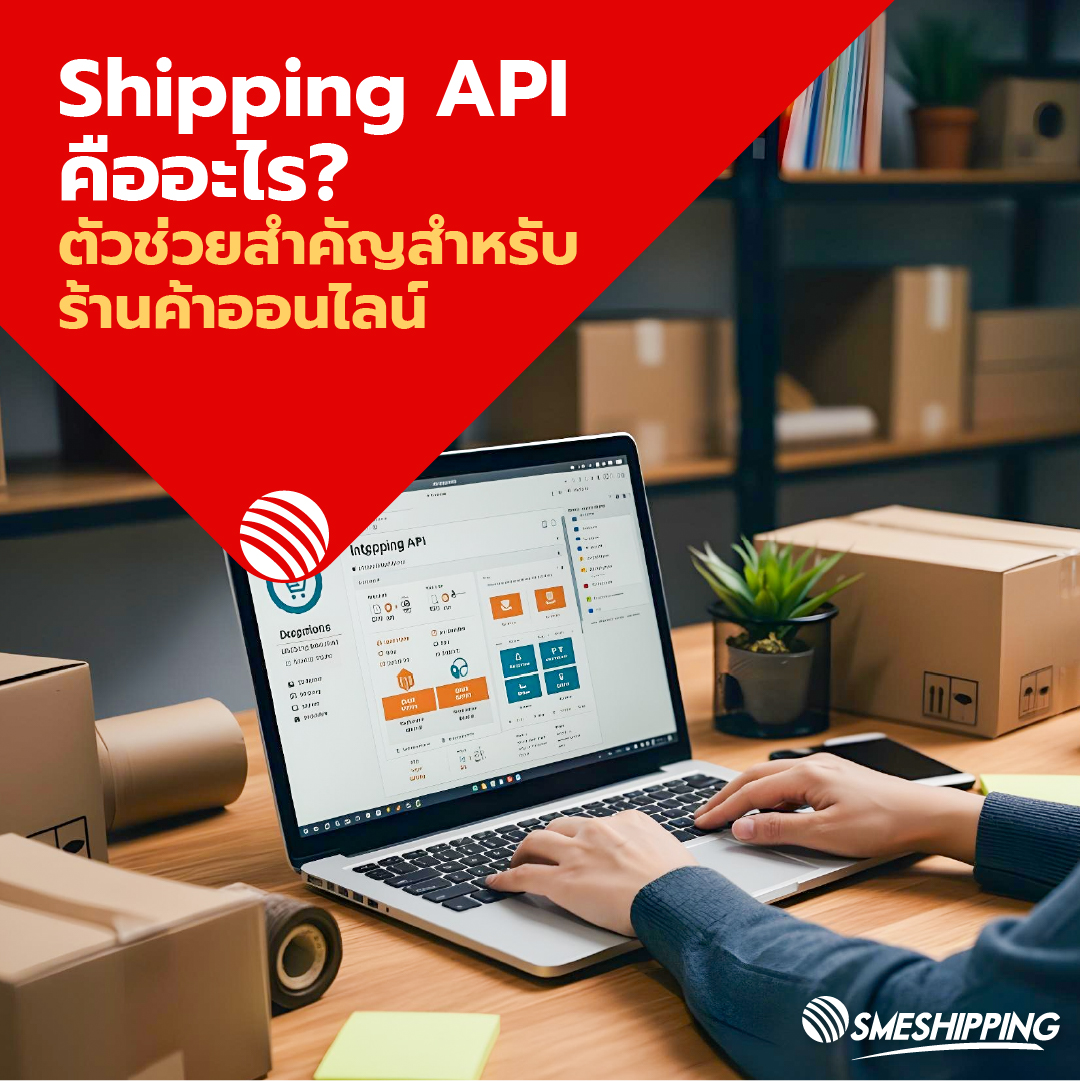
Shipping API: A tool for online stores | SME Shipping

What is a Shipping API? A key tool for online stores.

In the era of rapidly growing online commerce, managing a modern and accurate shipping system has become a crucial factor for businesses to gain a competitive edge. One key tool in modern logistics is the Shipping API, which connects your store with external shipping providers, simplifying and automating the processes of shipping cost calculation, label creation, and parcel tracking. This article from SME Shipping will explore what a Shipping API is and why it's essential for online stores in this day and age.

What is an API?

A Shipping API is an application programming interface that allows websites or e-commerce platforms to connect directly with various shipping service providers such as Kerry Express, Flash Express, DHL, Thailand Post, etc., without having to manually enter data or switch between multiple systems. It is developed for the following uses:

  • Automatically calculate shipping rates.
  • Reserve and print shipping labels.
  • Track your package status in real-time.
  • Check the service area and delivery time.

Why should online stores use a Shipping API?

Using a Shipping API will help you expand your business more quickly and smoothly. The advantages of a Shipping API include:

  1. Reduce data entry errors by directly linking shipping information with the service provider.
  2. Automatic shipping cost calculation reduces guesswork and makes calculations more accurate.
  3. Real-time parcel tracking allows you and your customers to know the delivery status at all times.
  4. Save time and increase efficiency by eliminating the need to re-enter data multiple times and reducing manual work.
  5. Enhance the customer experience with fast and accurate delivery.

How does the Shipping API work?

When an order is placed, the store system sends the necessary information to the connected shipping provider's API to retrieve shipping rates and details. The API will respond with important information such as:

  • Calculate accurate shipping costs based on weight, package size, and destination.
  • Display shipping service options for customers to choose from, such as express delivery, standard delivery, or economy delivery.
  • Automate the creation of parcel numbers and shipping labels, reducing manual work and minimizing errors.

This entire process happens in real-time and is automated, resulting in faster, more convenient product delivery and greater customer satisfaction.

How to choose the right Shipping API for your store.

When choosing a shipping API for an online store, businesses should consider the following factors:

  1. Carrier coverage: Choose an API that supports connectivity with multiple carriers.
  2. Supporting your platform: Find APIs that can easily integrate with your store's system, such as Shopify, WooCommerce, or Magento.
  3. API documentation and support: Ensure the API documentation is clear and provides quick support for Q&A.
  4. Supported features: Choose an API that can handle features such as tracking multiple packages simultaneously and generating shipping reports.

 In short, a Shipping API acts as a bridge between your online store and shipping provider, allowing you to retrieve shipping information, calculate costs, create shipping labels, and track packages in real-time without having to re-enter data or switch between multiple systems. Whether you sell products on an e-commerce website, marketplace, or social media, connecting to a Shipping API will help you manage orders professionally, save time, reduce errors, and enhance the customer experience at every stage of the shipping process.