Should I price my products using DDP or CIF terms for international customers?

Selling products internationally isn't just about "whether you sell or not," but about pricing to cover costs, manage risk, and actually close the sale. One of the most frequently asked questions from SME entrepreneurs is: should I price my products using DDP (Delivered Duty Paid) or CIF (Cost, Insurance & Freight)? This article will help you clearly understand the differences between DDP and CIF, along with guidelines for choosing the right one for your business. Gain a clear understanding of Incoterms before setting prices that won't compromise your profits.

What is DDP (Delivered Duty Paid)?

DDP (Delivered Duty Paid, commonly known as Door to Door) is an Incoterms delivery condition that stipulates that the seller's liability ends when the goods are delivered to the buyer's location, such as a warehouse or another location agreed upon under the DDP terms. The seller is responsible for all costs and risks associated with transporting the goods from the seller's location to the buyer's location, including...

  • Domestic shipping costs at the origin.
  • Shipping or air freight charges.
  • Export and import customs procedures
  • Import duties and fees
  • Shipping costs to the customer's address.

Furthermore, sellers bear the risk of loss or damage to goods that may occur throughout the transportation process. Therefore, it is recommended that sellers purchase comprehensive shipping insurance covering the entire route from the seller's warehouse to the buyer's warehouse to manage this risk appropriately.

What is CIF (Cost, Insurance & Freight)?

CIF (Cost, Insurance & Freight) is a delivery term under Incoterms that stipulates that the seller's liability ends when the goods are placed on board the vessel at the port of origin. Under CIF terms, the seller is responsible for all costs associated with export and maritime transport, including:

  • Export customs clearance fees at the country of origin.
  • Making a freight forwarding contract.
  • Freight charges from the port of origin to the port of destination.
  • Cargo insurance costs to cover risks during transit.

However, the risk of the goods is transferred from the seller to the buyer the moment the goods are placed on board the vessel at the port of origin, even though the seller pays for the freight and insurance. Furthermore, in terms of cost structure, the CIF term can be described as FOB + freight cost + cargo insurance.

When selling products internationally, should I price my goods using DDP or CIF terms?

The answer is... There is no single best approach for every business, but there is one that is best suited to the situation, considering the business's needs as follows:

You should choose CIF if…

  • Just started selling internationally.
  • I'm not yet familiar with taxes and legal matters at the destination.
  • The customer is an importer or a company that handles its own import process.
  • We want to control costs and reduce risk.

Because CIF (Cost, Interest, and Exchange) is safe, easy to control costs, and suitable for startup SMEs.

You should choose DDP if…

  • Customers want convenience and don't want to deal with paperwork.
  • Do you have a reliable logistics partner?
  • I have a good understanding of the costs and taxes at the destination.
  • Want to increase your chances of closing a sale?

Because DDP means easy sales and customer convenience, but cost control is crucial.

In summary, pricing products internationally is not just about numbers, but about choosing delivery terms that best suit the cost structure, business readiness, and customer expectations.

  • CIF is suitable for clients who want to manage their own expenses, ideal for starting out and controlling risk.
  • DDP is for customers who want a convenient, all-in-one service, ideal for sales that emphasize convenience and customer experience.
How to set prices for international sales without losing profit to shipping costs.

Expanding into international markets is a crucial step for SMEs, but many entrepreneurs often face the problem of making sales but leaving no profit. The main reason isn't the product itself, but the pricing strategy, particularly the complex and often hidden costs of international shipping. This article from SME Shipping will guide you on how to systematically set international selling prices to ensure your pricing covers actual costs, maintains market competitiveness, and prevents unforeseen losses due to shipping expenses.

Why is pricing different for international sales compared to domestic sales?

For domestic sales, we may be familiar with simple formulas or recipes.Cost of goods + Profit = Selling price

However, when it comes to cross-border sales, this formula is no longer sufficient because other costs are involved, such as:

  • International shipping costs
  • Product insurance fee
  • Import duties and customs procedures
  • Document fees, logistics management fees.
  • Exchange rate risk

If you set prices based solely on product cost, there's a very high chance that transportation costs will unknowingly eat up all your profits.

Transportation costs are an expense that cannot be overlooked.

For international sales, shipping costs are not just for shipping packages, but include various expenses such as:

  • Transportation costs from the factory or warehouse to the port.
  • Shipping or air freight charges.
  • Destination service fees (clearance, customs, delivery to customer)
  • Charges according to the terms of delivery.

If you don't consider these costs from the start, the price you set on paper might seem like a sale, but in reality, your accounting figures might show you're unknowingly losing money on every order. So where should you begin pricing for international sales? 

Where should you start when setting prices for international sales?

1. Start by seeing the "actual costs" at every step.

Before thinking about profit, the first thing that needs to be clear is... The total cost you actually have to pay. It's not just the cost of goods alone, but also includes...

  • Cost of production or price of goods (COGS)
  • International shipping costs at all stages.
  • Product insurance fee
  • Taxes and fees involved.
  • Labor costs, documentation costs, and logistics management costs.
  • Payment processing fees and exchange rate fluctuations.

When you see these numbers clearly combined, you'll immediately know where the minimum selling price should be to avoid selling at a loss.

2. Choose appropriate Incoterms, not just those requested by the client.

Incoterms are international terms used to define who is responsible for the costs at each stage of transportation, such as:

  • FOB (Seller handles delivery to the port of origin).
  • CIF (Cash on Delivery) – Seller handles delivery to the destination port, including insurance.
  • DDP (Drop-and-Delivery), where the seller handles everything until the product reaches the customer.

The more responsibility you take on, the higher your costs become, and these costs are inevitably reflected in your selling price. Therefore, choosing the right Incoterms for your business model will help you better control profitability from the start.

 3. Don't set prices without considering the end market.

A good price isn't just about covering costs, but also about choosing the right price for the market you're targeting. In some countries, customers prioritize quality, brand, and reliability, while in others, price is the primary competition. Setting prices too high might result in low sales, while setting them too low could lead to price wars and a loss of profit in the long run.

4. Develop a clear pricing strategy before entering the market.

Effective pricing should answer the question: what do you want from this market?

  • Looking to target the initial market segment.
  • I want to position the product as premium.
  • We want to set prices close to those of our competitors.
  • Or focus on the value the customer receives rather than the price.

Regardless of which path is chosen, the important thing is that every figure must have a rationale behind it, not just guesswork in pricing.

What happens if you set the price incorrectly?

Setting prices for international sales without careful consideration can lead to problems that many SMEs have encountered, such as:

  • The profit we should have made is lost to transportation costs.
  • Sales look good, but we're short on cash flow.
  • We are unable to expand our market or accept more orders.
  • We had to revise the prices, which damaged our credibility with customers. 

When setting prices for your products, whether domestically or internationally, always remember that a good price is the foundation of sustainable sales. And pricing international products isn't overly complicated if you start from the beginning.

  • Understand the true costs.
  • Consider shipping costs from all angles.
  • Choose suitable delivery terms and set prices that are in line with the market.

For SMEs, professional pricing from the start will help you maintain sales, preserve profits, and grow steadily in the global market.

What is an HTS Code? Understanding shipping to the USA.

Hello. Having worked in international parcel shipping for over 10 years, I've noticed that the recent changes to US customs regulations have had the biggest impact on senders since I started working in this field. Today, I'll explain... HTS Code Let me explain it in simple terms so that...To USAYour experience went more smoothly.

What is an HTS Code?

HTS Code Abbreviation for Harmonized Tariff Schedule Code It's a 10-digit code that the United States uses to categorize goods entering the country, much like a product's identification card. Every item you send to America, whether it's clothing, cosmetics, souvenirs, or even Thai sweets, is subject to this code. All HTS codes must be included. This lets American customs officials know what your goods are and how much tax you have to pay.

Why do I need to enter an HTS code?

  1. Mandatory law – You absolutely have to include this; the package will be held up at customs.
  2. Calculate tax – To enable customs to calculate import taxes correctly.
  3. Inspect the goods. – It helps officials know what they need to check.

10-digit HTS Code structure

Let's look at an example. Home decorations (For example, bamboo lamps or wicker baskets) You can see that the codes are separated into layers like this:

Example: Home decor made from bamboo.

Code: 9403.89.6010

levelmaincodemeaning
Chapter2 digits94Furniture category: Beds, mattresses, lamps.
Heading4 digits9403Other furniture and parts.
HS Code6 digits9403.89Furniture made from materials other than metal/wood/plastic.
Subheading8 digits9403.89.60Furniture made from rattan, bamboo, or similar materials.
Statistical10 digits9403.89.6010Home decor items made especially from bamboo.

To put it simply like this:

  • First 2 digits (94) = It's in the furniture category.
  • 4 digits (9403) = It's another type of furniture.
  • 6 digits (9403.89) Made from special materials (not ordinary metal, wood, or plastic).
  • 8 digits (9403.89.60) Indicate that it is made of bamboo or rattan.
  • 10 digits (9403.89.6010) Specifically, it is described as "home decor" made from bamboo.

First 6 digits All countries use the same one, but...Principles 7-10 It's unique to America, in order to categorize things more precisely.

Examples of typical product descriptions and HTS codes.

  • Cotton t-shirt: 6109.10.0040
  • leather bag: 4202.22.8020
  • Dried Thai desserts: 1905.90.9040
  • Cosmetics (cream): 3304.99.0000

Tips for finding the correct HTS code.

  1. Describe the product in detail. – What material is it made of? And what is it used for?
  2. Use the U.S. Customs website. (usitc.gov) Free search available.
  3. Inquire with the shipping company. – We have the experience to help advise you.
  4. Beware of misidentification. – This may result in additional taxes or confiscation of the package.

Caution

  • Do not enter the wrong code. To avoid paying taxes, as it could lead to problems.
  • Prohibited items Certain items, such as fresh food and meat, are strictly prohibited from being shipped.
  • Product price It must be stated accurately.

summarize

HTS codes sound complicated, but once you understand them, they're not difficult. The important thing is...Please provide accurate and complete product information.

If you're unsure, always feel free to ask the SME Shipping team. Entering the wrong code may result in your package being held up at customs or incurring additional charges. Contact SME Shipping at 02-105-7777 or Line @Shipping.

We hope your parcel delivery goes smoothly! 

Freight Charge

The purpose of this article is to help you. I understand all the costs. This relates to shipping, not just freight, so you can be aware of... 

  1. Budget assessment
  2. Selecting the appropriate LCL/FCL and destination services.
  3. Reduce the risk of hidden costs.

I hope this article has helped you plan your meetings with your transportation team more easily and make more confident decisions.

1) What is freight?

Freight or shipping charges. That is the sea freight cost from the port of origin.From the Port of Loading to the Port of Discharge. This freight fee will...Not included. Operating costs at both ports, LCL (Less Than Container Load) consolidation/distribution fees, documentation fees, customs clearance fees, ground transportation (trucking/delivery), insurance, taxes and duties, and other special control fees. Breaking down these costs into three parts will give you a clearer picture and make managing your expenses easier.  (A) Origin Charges + (B) Freight + (C) Destination & Delivery

2) What are the associated costs for shipping goods by sea?

Cost structure that goes beyond just freight charges. 

From your home → to the recipient's home.

A) Origin Charges: Charges on the originating side.

Pre-shipment expenses such as:

  • THC (Terminal Handling) Operating costs at the originating port.
  • CFS/Consolidation (for LCL) Warehouse consolidation fee
  • Documentation / Handling Fee Document and transportation handling fees.
  • Pick-up/Drayage This is the cost of hiring a truck to pick up the goods from our address and transport them to the shipping line's location/central warehouse for export preparation.
  • Packaging/Crating Packaging cost (box/wooden crate/cushion)
  • Insurance Recommended for fragile/high-value items.

B) Freight (Shipping charges)

  • LCL (Less than Container Load) shipping. Think along. CBM or W/M (Weight or Measurement—calculated based on the higher value or the size of the package) And there are often... Minimum 1 CBM
  • FCL (Full Container Load) shipping. The shipping cost is calculated as a "full container load" (20'GP ~33 CBM / 40'HC ~67 CBM), regardless of whether the container is full or not.
  • Surcharges that you may encounter are often collectively referred to as... Ocean Freight Surcharges And it is often included as "All-in ocean freight," which includes:
    BAF (Bunker/Oil), CAF (Currency exchange rate), PSS (Peak Season), GRI (General rate increase), Congestion (Crowded area), War Risk/Insurance (Risky route), Low Sulphur/ETS (Environmental regulations in some regions)

C) Destination & Delivery

  • DTHC/CFS Deconsolidation (LCL) Port/warehouse operating costs at the destination vary depending on the shipping line.
  • Customs Brokerage/Entry Customs clearance fees
  • Inspection/Exam Random or product-specific inspection fees (depending on the laws of the destination country).
  • Storage/Demurrage/Detention Storage fees/Overdue container return/Exceeding free time. 

An example to illustrate the point.

1. The customer is busy clearing documents, which is causing... The item was left in that position for 3 days. Exceeding free time → Got in trouble. Storage

2. The customer has not yet requested the forklift to pick up the container from the port. Parking containers exceeding free time. → Got hit. Demurrage

Three customers have already taken the containers to the warehouse to load their goods, but... Return the locker late. Exceeding free time → Got in trouble. Detention

  • Delivery (Trucking) Delivered to the destination as Curbside or White-glove

    Delivery to your doorstep (Curbside): The delivery truck arrived, dropped him off in front of the house, and that was it.
    Premium service (White-glove): The moving team helped carry items into the house, arranged them in the rooms, unpacked, and cleaned up any trash.
  • Duties/Taxes/Import Charges Taxes/duties/fees according to the commodity classification and laws of the destination country. 

summarize: Customers often misunderstand that "Freight = Total shipping cost," but in reality, "Freight" is just one part of the cost. Part 2 For illustrative purposes only.

3) LCL vs FCL: How to choose wisely and minimize risk.

  • LCL Suitable when CBM is low, payment is based on actual area, but there are many contact points (consolidation/distribution of goods).
  • FCL Suitable when CBM is high (based on experience, ~15–20 CBM in some seasons becomes worthwhile), offering better control over risk/time/damage.
  • Always check.Request a quotation for comparison. LCL vs FCL When the volume begins to enter the worthwhile zone.

4) Documents and regulations

Basic documents required at almost every destination:

  • Commercial Invoice (If there is a value/commercial or customs assessment), Packing List (Specify item(s)/quantity), Bill of Lading
  • Customs information Destination country (HS Code/Product Description/Origin/Purpose of Use)
  • Safety Regulations/Advance NoticeMany countries have Advance Cargo Information (ADI) systems for sea shipments, such as: AMS/ISF (USA), ENS (European Union), AFR (Japan), ACI (In many countries) the concept is "providing information before the ship docks" in order to screen for risks in advance. It needs to be agreed upon from the start who will submit the application and when.
  • Specific license (If applicable): Plants/food/chemicals/batteries/hazardous materials, etc. Regulations differ from country to country → Sales representatives should ask, "Are there any special items?" to plan ahead.

The management of these documents will be included in the Documentation/Handling Fee. Or other service fees. 

5) Incoterms® and scope of responsibility. 

Incoterms® (by ICC) This refers to the globally accepted definition of the scope of obligations between seller and buyer, or sender and receiver, such as:

  • EXW/FOB The buyer or recipient of the goods bears a greater burden (including sea/destination costs).
  • CIF/CFR The seller includes some of the seafood costs.
  • DAP/DDP The seller/shipper bears a higher burden at the destination (including door-to-door delivery/including taxes – depending on the agreement).

In the context of the transportation/moving service business, it is recommended that... Clearly define the scope of services. Specify what the quotation covers (e.g., "Door to Port," "Port to Door," or "Door to Door," etc.) so that you... Compare the prices of each service equally. 

6) How to request a freight quote without making mistakes or getting out of control.

Use this list to send to sales/forwarders, covering all three cost components.

  1. To City/Country/ZIP (if applicable) + Where to send Arrived at the pier. or Arrived home (Curbside/White-glove)
  2. Product characteristics In short: Category (e.g., personal use/sample/commercial), “Not for resale”.
  3. Total volume (CBM), Total weight (kg), Main crate size, Packaging method (wooden crate/box/pallet)
  4. Timeline Available days/fixed or flexible time slots.
  5. Special documents/requirements Expected to be required (permits/certificates/hazard warnings, etc.)
  6. Advance Notice/Customs Requirements Destination: Who submitted, deadline, estimated cost.
  7. insurance Do you need it? (Type/Coverage amount)
  8. Incoterms®/Scope of Services As required (Door-to-Door / Door-to-Port, etc.)
  9. Request a quote for "3 separate parts".“ ready Included/Excluded Items And specify. Free time / Conditions for Demurrage / Detention / Storage

7) An example overview of what you will need to prepare for managing expenses.

Hypothetical case: LCL 8.0 CBM Country A → Country B, door-to-door delivery (truck arrives, drops off at your doorstep, and that's it) (Curbside).

  • Origin: THC + CFS + Doc + Pick-up (if applicable) + Insurance
  • Freight (LCL): Rate: Baht per CBM × 8.0 (minimum 1 CBM) + Surcharges depending on the route.
  • Destination: DTHC + Deconsolidation + Brokerage/Entry + Advance Declaration/Security Fee (according to Country B's regulations) + Trucking Curbside + Taxes/Duties (if any)
  • Risks that could escalate: Submitting destination information late, incomplete documents, not locking in free time, not booking a vehicle at the destination in advance, goods subject to special inspection but not prepared.

Checklist of questions and answers to ask before starting the shipping process.

  • Which document submission system must be used at the destination country? (AMS/ISF, ENS, AFR, ACI, etc.)
  • When is the final day for all preparations to be completed before the ship departs? (How many hours or days before departure/arrival?)
  • Who submits the customs clearance request? (Agent/broker/forwarder)
  • Are all the necessary information complete? (Sender's and recipient's information, product description, number of boxes, weight, packaging location, port)

We will view costs in three parts: Origin, Freight, and Destination/Delivery, to avoid the misconception that freight is the entire cost. Then, we will lock down key steps (documents, scheduling transportation, free time) to prevent budget overruns, and finally, provide a budget summary and service options at the destination to help the sender make confident decisions.

Need a quote? Contact SME Shipping at 02-105-7777 or Line @Shipping.

U.S. Tariff Measures 2025: How will the new procedures affect Thai exporters?

In 2025, the United States announced the abolition of the privilege. de minimis Or the tax exemption for goods valued at no more than $800, a measure widely used by both small businesses and e-commerce platforms, resulting in... U.S. tariff transport measures 2025 It has become a crucial element for those shipping goods to America, especially through express services like FedEx and DHL.

Overview of the change: End of the Thai-US de minimis (bribe) policy.

Starting August 29, 2025, the United States will eliminate tariff exemptions on goods. Every piece, regardless of its value. These items are shipped into the United States for national security reasons and to prevent the smuggling of illegal goods (such as drugs, counterfeit products, etc.). 

Originally, the right... de minimis Packages valued at up to $800 are allowed to enter the country tax-free and without complex customs procedures. But after this change, even inexpensive packages must be subject to full taxes and go through a thorough customs process.

How are express delivery companies like FedEx and DHL adapting?

FedEx A Regulatory Alert has been issued informing customers about the cancellation of the de minimis requirement and advising them to calculate taxes in advance and prepare all necessary documents, such as HS Code and invoices specifying origin/price, to expedite customs clearance. 

While DHL Express We temporarily stopped accepting packages exceeding $800 (April 2025) to adjust our systems to accommodate new measures. We resumed accepting packages as normal on April 28, 2025, using an “informal entry” system for items valued between $800 and $2,500, which expedites customs clearance.

In addition, DHL also offers... Additional solutions such as:

  • Break Bulk Express (BBX): Combine multiple packages into a single customs request (helps reduce costs and complexity).
  • Foreign Trade Zone (FTZ): Warehouse space in the US is now available with greater flexibility for deferring tax payments or managing inventory.

Why should Thai exporters keep an eye on the "US tariff measures of 2025"?

  1. Costs will definitely increase. – Even low-cost goods are required to go through customs procedures and pay full taxes, which immediately increases the “landed cost” for Thai exporters.
  2. Customers may hesitate. – When goods are subject to Section 19% or high handling fees, end market customers may switch to purchasing from sellers who already have stock in the US, reducing their tax burden.
  3. The competition has changed its format. – Thai exporters need to adjust their strategies, such as shipping larger quantities at a time (to spread out the cost per unit), changing shipping routes, or using DHL's BBX/FTZ services to simplify the process.

Practical approaches that Thai SMEs can implement.

  • Calculate taxes and customs fees in advance. Customers should already know what the final price will be.
  • Prepare the documents., such as HS Code and Invoice Clearly
  • Consult with transportation experts like SME Shipping. Before shipping business products. 
  • Consider storing your stock in the US (Fulfillment Center/3PL). To reduce the risk of import taxes and increase the speed of delivery to the destination.
  • Communicate with customers honestly. Explain why the selling price changed, and to build understanding and trust.

This measure has completely changed the game for shipping goods to America. Even though express delivery services from private postal companies like FedEx and DHL are trying to adapt their tools and channels to make it easier for customers to cope, Thai SMEs still need to adapt in depth, especially in... cost, Document preparation, and Logistics route

If you are exporting goods to the United States, don't overlook the "US Tariff Measures 2025," as this could give you a business advantage...or unknowingly lead to losses.

Consult with SME Shipping's professional international freight forwarding assistants for free before shipping goods to the USA. Just call us at 02-105-7777 or chat with us via LINE OA: @shipping.

Source of news. https://www.dhl.com/us-en/home/important-information/2025/shipments-to-the-united-states-with-a-customs-value-exceeding-usd-800.html?utm_source=chatgpt.com

https://www.fedex.com/content/dam/fedex/us-united-states/International/US_Eliminates_De_Minimis_Treatment_for_Imports_Effective_August_29_2025.pdf?utm_source=chatgpt.com

Postal codes: Their importance in the digital age.

In an era of exponential growth in online shipping and e-commerce, postal codes have become… A crucial tool for accurate, fast, and efficient sorting and delivery. Whether domestically or internationally, this article will provide an in-depth look from the past to the present at "what postal codes are, their origins, how they are used in different countries, and how we can benefit from them in this modern era."“

History of postal codes 

  • The postal code system originated from dividing large areas, such as London in 1857 into 10 zones: EC, WC, N, NE, E, SE, S, SW, W, NW, which helped to speed up delivery within the city.
  • The modern postal code system was first officially used in Ukraine in 1932 but was discontinued in 1939.
  • Germany was the first country to seriously implement it in 1941.
  • The United States followed suit in the mid-war era of the 1960s with the ZIP Code (1963).
  • The United Kingdom used an alphanumeric system, which began testing in 1959 and was adopted nationwide in 1974.

The structure of postal codes in each country.  

• Thailand

  • Use a 5-digit code (NNNNN), where the first two digits indicate the province or special area, and the remaining three digits represent the post office in that area.
  • These code systems officially came into use on [date]. February 25, 1982
  • Codes are divided into "zones" according to region, such as 10xxx for the central zone, 20xxx for the eastern zone, 80xxx for the southern zone, etc.

• Germany

  • A two-digit system was used in 1941, then adjusted to a four-digit system in 1962 (Western calendar), followed by another system for the East.
  • Currently, five digits have been used since 1993 to support national reunification and the expansion of service areas, etc.

• Japan

  • The code consists of 7 digits in the format NNN-NNNN.
  • The first two digits indicate the prefecture; for example, "40" is Yamanashi Prefecture.
  • Use the symbol “〒” (U-bin mark) before the code to indicate that it is a postal code.

• United Kingdom

  • Use a combination of alphanumeric characters, such as SW1A 1AA.
  • The structure is divided into Outward code (area and region) and Inward code (sectors and transmission points).
  • This system allows you to target specific street levels or house numbers — some codes specify around 10–15 addresses, or even single-family homes.

The benefits of using zip codes. 

  • Increase the speed of sorting and delivery. Because machines and automated systems read codes quickly and accurately.
  • Reduce errors. Due to spelling errors or ambiguous boundaries.
  • Supports high-tech systems. Examples include navigation systems (GPS), statistical references, risk assessment, and marketing.
  • Efficiency in business and services. For example, using UK codes to define units in resource allocation systems (Postcode Address File).

The latest innovations in Thailand's postal system. 

Thailand is developing a system. Digital Post ID Which has been using QR codes instead of the original 5-digit code since [year]. 2022 To ensure accurate address identification, including in high-rise buildings or condominiums where standard postal codes cannot cover.
This QR code is for one-time use only to prevent data forgery and enhance the recipient's privacy.

In short, zip codes… they sound like ordinary numbers, but they are actually the heart of global communication and transportation.

Every country designs its own code to reflect its region, culture, and history, but ultimately… these codes serve the same purpose: connecting the world in just a few days. ✈️

And today, the system is evolving towards a more accurate Digital Post ID than ever before. This is the next step in the world of logistics, where even something as small as a "postal code" is a crucial element that speeds up the process.

Source of content

https://en.wikipedia.org/wiki/Postal_code
https://www.britannica.com/topic/postal-code
https://postalmuseum.si.edu/research-articles/flashing-across-the-country/a-zoning-system-in-development
https://en.wikipedia.org/wiki/Postcodes_in_the_United_Kingdom
https://en.wikipedia.org/wiki/List_of_postal_codes
https://www.nationthailand.com/thailand/policies/40022652d

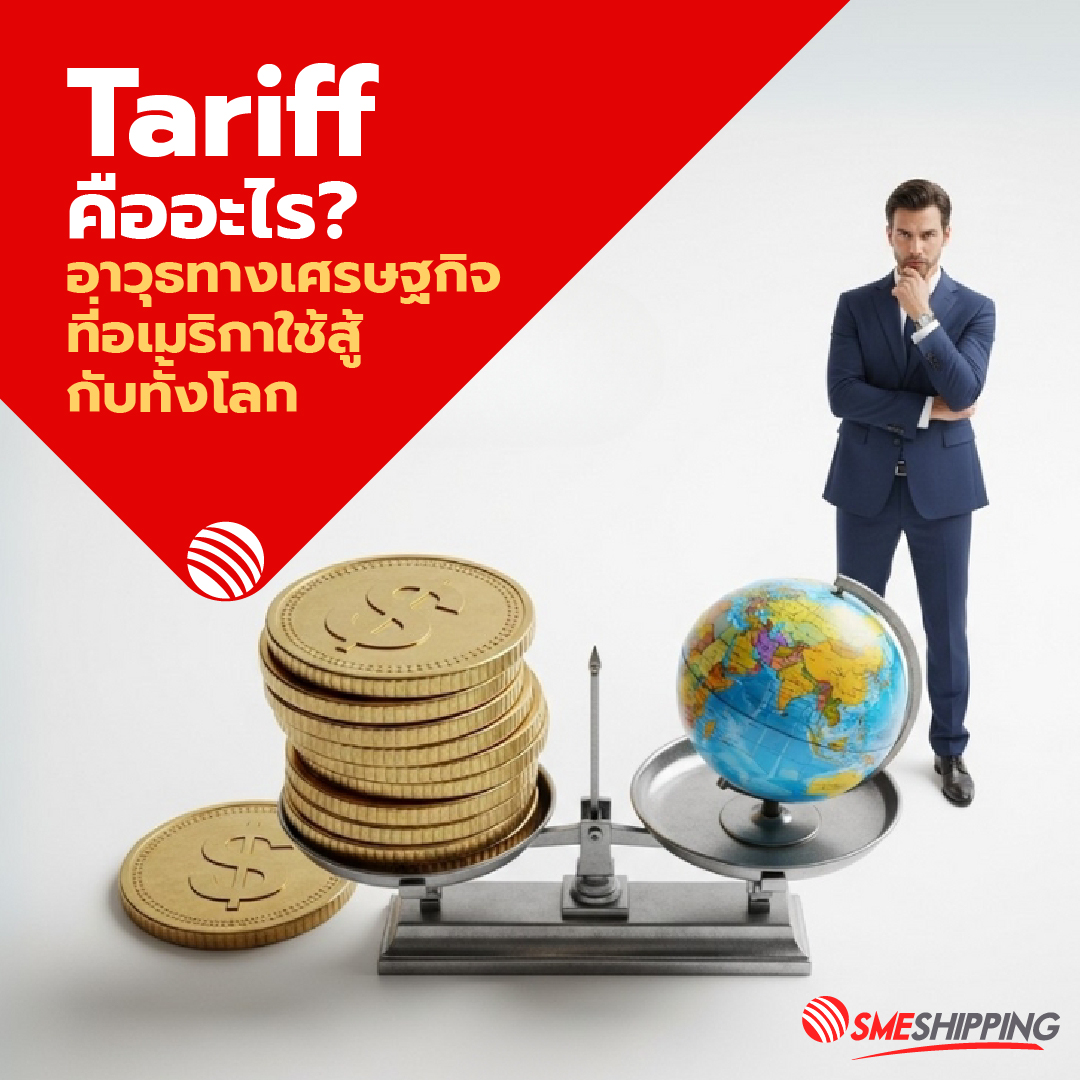
What is a tariff? It's an economic weapon that America uses against the rest of the world.

When talking about "Tariff" or... Import tax Many people may think it's just a matter of customs duties collected on imported goods, but in reality, a tariff is... Economic and political tools It has been used for a long time and remains a key "weapon" that superpowers like the United States have repeatedly used to protect their domestic economy and negotiate with trading partners.

In this article, we will explore the history of tariffs from their early days to the present, and explain why. Former President Donald Trump What if it is brought back into intensive use, and what will be the impact on global trade and Thailand?

The History of Tariffs: From Government Revenue to Political Tool

Going back to the 18th and 19th centuries, the main source of revenue for the U.S. government came from... Tariff Since there is no personal income tax, the government primarily collects import taxes on goods from Europe. Besides generating revenue for the government, tariffs are also used as a tool... Protect emerging industries. American

This concept is called... Protectionism Or "trade protectionism," which aims to drive up the price of imported goods in order to encourage people to use domestically produced goods instead.

During the same period, many European countries adopted similar measures, such as England's "Corn Laws" to protect its farmers, which eventually became the norm for future use. Import tariffs are a strategic tool.

Tariffs in the 20th Century: From the Great Depression to Free Trade

Although tariffs have been used for a long time, they have also had significant negative consequences. A clear example is: Smoot-Hawley Tariff Act, 1930 During the Great Depression, the United States imposed very high import tariffs. This measure prompted trading partners to retaliate by raising tariffs on American goods as well, resulting in a decline in global trade and a further worsening of the global economic downturn.

After World War II, America and its allies turned to creating a system... Free Trade Under GATT and later the WTO, the aim was to reduce tariffs and prevent another “trade war.”

Tariffs in the Trump era: The return of the trade war.

Even though the world is moving towards free trade, Donald Trump During the years 2017–2021, I picked... Tariff It's being used as a weapon again, especially against... China which is America's largest trading partner.

Trump imposed tariffs on hundreds of billions of dollars worth of Chinese imports, citing China's unfair trade practices and intellectual property violations as reasons. The result is what is known as… Trade War That shook global supply chains.

Besides China, Trump also used tariffs to pressure the European Union, Canada, Mexico, and developing countries like Thailand to force them to move manufacturing back to the United States and create jobs domestically.

A tariff is a barrier, but it can also backfire and harm you.

Although tariffs help protect domestic producers, they also have drawbacks. Long-term negative effects This would raise domestic prices, increasing costs for consumers, and also give trading partners the opportunity to retaliate by raising tariffs on American goods as well.

In the case of the US-China trade war, numerous studies indicate that: American businesses and consumers in the United States themselves. The entity bearing the highest tariff costs is not China, as initially intended, because imported goods are essential in the supply chain.

The impact of tariffs on Thailand and exporters.

For Thailand, US tariffs directly affect exporters selling goods to the American market. Products such as… Textiles, clothing, processed food, and electronic equipment. They were all affected.

In 2025, the United States reduced the base of the projected retaliatory tariffs 36% to... 19% However, it remains a significant pressure point, causing a noticeable slowdown in exports in the second half of the year. Analysts expect overall Thai exports to grow by only a small margin for the entire year. 1.5–4% That's all, even though the first half of the year saw high growth of 15%.

Therefore, Thai entrepreneurs need to accelerate... Adjust strategy For example, diversifying markets to other regions, reducing logistics costs, or using fulfillment centers abroad to avoid the impact of tariffs.

Lessons from Tariffs: An Economic Weapon That Will Never Die

What we learn from history is that tariffs don't disappear; they are used repeatedly whenever a superpower wants to gain an economic or political advantage.

From the 18th century, when tariffs were America's primary source of income → to the Great Depression, where tariffs crippled the global economy → to the Trump era, where tariffs have once again become a weapon in trade wars.

For Thai exporters, this is a "warning sign" that over-reliance on any single market can be extremely risky, and rapid adaptation is key to surviving the impact of global trade policies.


Source

  • Kasikorn Research Center. (2025). Thai exports grew strongly in the first half of the year before facing US tariffs, leading to a slowdown in the second half.. Kasikorn Research
  • White House. (2025). Suspending Duty-Free minimizes treatment. Whitehouse.gov
  • FedEx. (2025). Regulatory Alert: Elimination of de minimis imports. FedEx.com

WTO & Trade History. Tariffs and protectionism in historical context. WTO.org

How to deal with foreign tariffs | SME Shipping

How should Thai businesses cope with foreign tariffs?

In the world of free trade, competitiveness is not just about quality or price, but also includes "trade barriers" from abroad, especially tariff barriers erected to protect domestic producers at the destination. This has become a significant challenge for Thai businesses, particularly in an era of volatile global economies and constantly changing international trade policies. So how can Thai exporters adapt to survive and grow? This article from SME Shipping will explore what businesses should know and how to cope with this trade situation. 

What impact do tariffs have on exporting goods to foreign countries?

Tariff barriers are customs duties imposed on imported goods, resulting in higher prices for Thai products in destination countries and making them less competitive compared to domestic products or competitors from countries with preferential tariff treatment. The impacts include:

  • Sales decreased because consumers chose cheaper products.
  • Profits were lost due to having to lower selling prices to retain customers.
  • Disadvantages include wasted time and costs due to the additional document verification and tax payment process.

What export products are affected?

Products from Thailand that are often affected by foreign tariffs include:

  • Agricultural products: Rice, cassava, rubber, processed fruits.
  • Industrial products: Steel, automotive parts, electrical appliances.
  • Fashion and textile products: Clothing, shoes, bags.

In particular, if the destination country does not have an FTA agreement with Thailand, or revokes preferential tariff treatment (such as GSP), it will immediately make Thai goods more expensive.

How is the Thai government responding?

The government has implemented several measures to help Thai businesses cope with tariffs, such as:

  • Negotiate free trade agreements (FTAs) with new trading partners such as the EU, India, and the Mercosur Group.
  • Promote the application for preferential tariff treatment, such as FTA Form D, Form E, or CPTPP.
  • Providing insightful information and training to entrepreneurs through the Department of International Trade Promotion and the Customs Department.
  • Create new brands and standards to make products competitive based on value, not just price, such as quality certification, sustainability, and environmental considerations.

Choosing "export markets with low tariffs" or "markets with which Thailand has FTA agreements" is a crucial strategy for Thai businesses to effectively reduce costs and enhance their competitiveness. This is especially important in an era where many countries are reintroducing tariff barriers to protect their domestic markets. Planning to utilize FTA benefits effectively is essential for businesses seeking to export goods, reduce costs, and compete sustainably in international markets.

For example, here are some tax benefits that can be advantageous for entrepreneurs:

  • Processed fruit producers
  • For exports to China, use Form E.
  • Exempted from import duty 100%
  • Competitors from Vietnam who do not have Form E eligibility are subject to tariff 10%, giving Thai products a price advantage.

Tariff barriers are an unavoidable challenge for Thai entrepreneurs, but they are not insurmountable obstacles. With a good understanding of the import tariff system and by leveraging existing free trade agreements, entrepreneurs can...

International shipping laws you should know | SME Shipping

International transport laws that businesses need to know.

Exporting or importing goods isn't just about cost, choosing a shipping company, or import taxes. There's another crucial factor that can "determine the success or risk" of a business: "international shipping laws." Ignoring or failing to understand these laws can lead to problems such as goods being seized, held at customs, or even lawsuits in other countries. To avoid these risks, this article from SME Shipping will explore the importance of international shipping laws and what you should know before engaging in global trade.

Why are "international transport laws" important?

When businesses expand into international markets, entrepreneurs often focus on price, transportation, and import duties. However, there's another element many overlook: "international shipping laws." These are crucial variables that directly impact costs, delivery times, and the safety of goods. Even minor misunderstandings or errors can lead to unforeseen business losses. So why are these laws so significant?

  1. Reduce legal risks because a lack of understanding of the laws of the destination country, such as prohibited goods, controlled goods, or packaging requirements, may result in goods being detained or significant fines being imposed.
  2. Preventing business problems: Incorrect shipping conditions or incomplete documentation may result in the end customer being unable to receive the goods, or lead to liability issues between the sender, carrier, and recipient.
  3. Enhancing a professional image, international clients will trust businesses that are knowledgeable about laws and can handle cross-border documents and regulations correctly and quickly.

Things entrepreneurs need to know before exporting goods.

  1. INCOTERMS are international trade terms that define the responsibilities between seller and buyer, specifying who is responsible for costs, risks, and documentation at each stage of goods transportation. This includes freight costs, customs duties, and potential damage to goods. Examples include FOB, CIF, DDP, etc., which specify responsibilities for freight costs, taxes, and risks during transit.
  2. HS Codes and product restrictions: Products with a customs code (HS Code) identify the type of goods for use in calculating taxes and checking restrictions. For example, some types of goods require special licenses or are prohibited from export to certain countries.
  3. Customs laws vary from country to country. For example, Australia has strict regulations regarding wood and food, while the United States has restrictions on goods from certain countries.
  4. International transport law (e.g., Hague-Visby, Hamburg Rules) defines the responsibilities of transport companies in the event of damage or loss during transit.
  5. Commercial documents such as invoices, packing lists, customs declarations, certificates of origin (CO), and export/import licenses must be accurate and comply with the laws of both countries.

Understanding international shipping laws is essential for businesses from the very beginning. This understanding not only ensures the safety of goods and protects the business's reputation, but also enhances competitiveness in the global market, leading to smoother business operations.

How scary are import tariffs and Trump's policies? | SME Shipping

Just how "terrifying" are US import tariffs under Trump's policy for exporters?

During President Donald Trump's term, the United States pursued an aggressive trade policy under the "America First" concept, which focused on protecting domestic industries. One of the key tools was imposing tariffs on imported goods, particularly from China, which had a widespread impact on global supply chains. Businesses in trading partner countries, including Thailand, also faced repercussions. 

The question is…how "dangerous" are Trump's import tariffs for Thai exporters? This article from SME Shipping will take you through a study of former President Donald Trump's import tariff policies during the US-China trade war, which created significant repercussions in the international trade system and continues to have an impact today.

The origins of Trump's import tariff policy.

Trump implemented the "America First" policy to protect domestic industries by imposing tariffs on imported goods, particularly from China, which was the U.S.'s largest trading partner at the time. Examples of key measures include:

  • Tariffs were imposed on steel and aluminum from several countries.
  • Impose tariffs on over $300 billion worth of imported goods from China.
  • Tariffs have been increased to as much as 25% for various categories of goods, such as electronics, household goods, industrial raw materials, etc.

So how concerned should Thai entrepreneurs be?

Caution

  • If you export goods containing raw materials or components from China to the United States, they may be classified as "Chinese goods" and subject to additional tariffs.
  • Some types of goods may be unknowingly classified as subject to increased taxes.
  • Customers in the United States may request price negotiations to offset higher costs resulting from import tariffs.

Hidden opportunities

  • Countries not on the tariff list (such as Thailand) may have a competitive advantage.
  • Thai manufacturers could be a "new alternative" to China in the eyes of US businesses.

How should exporters cope?

  1. Check if the items are on the list of items subject to taxation.
  2. This can be checked through the USTR's Harmonized Tariff Schedule (HTS) system.
  3. Consider the source of raw materials/manufacturing plants.
  4. If goods or raw materials originate from China, there should be clear documentation indicating that they are manufactured in Thailand to avoid misinterpretation.
  5. Negotiate selling prices and import taxes with customers.
  6. Sometimes clients may bear the tax burden themselves, or find ways to share the risk.
  7. Utilize the Generalized System of Preferences (GSP).
  8. Some products from Thailand also receive GSP benefits, which help reduce/exempt taxes.

Trump's import tariff policy is "daunting" for businesses that don't understand international tax mechanisms. However, if you are an importer and exporter who stays informed about tariffs, pays attention to product details, verifies the origin of goods, and knows how to use trade tools like GSP or FTA, you can still export to the United States safely, and in some cases, may even gain an advantage from this crisis.