


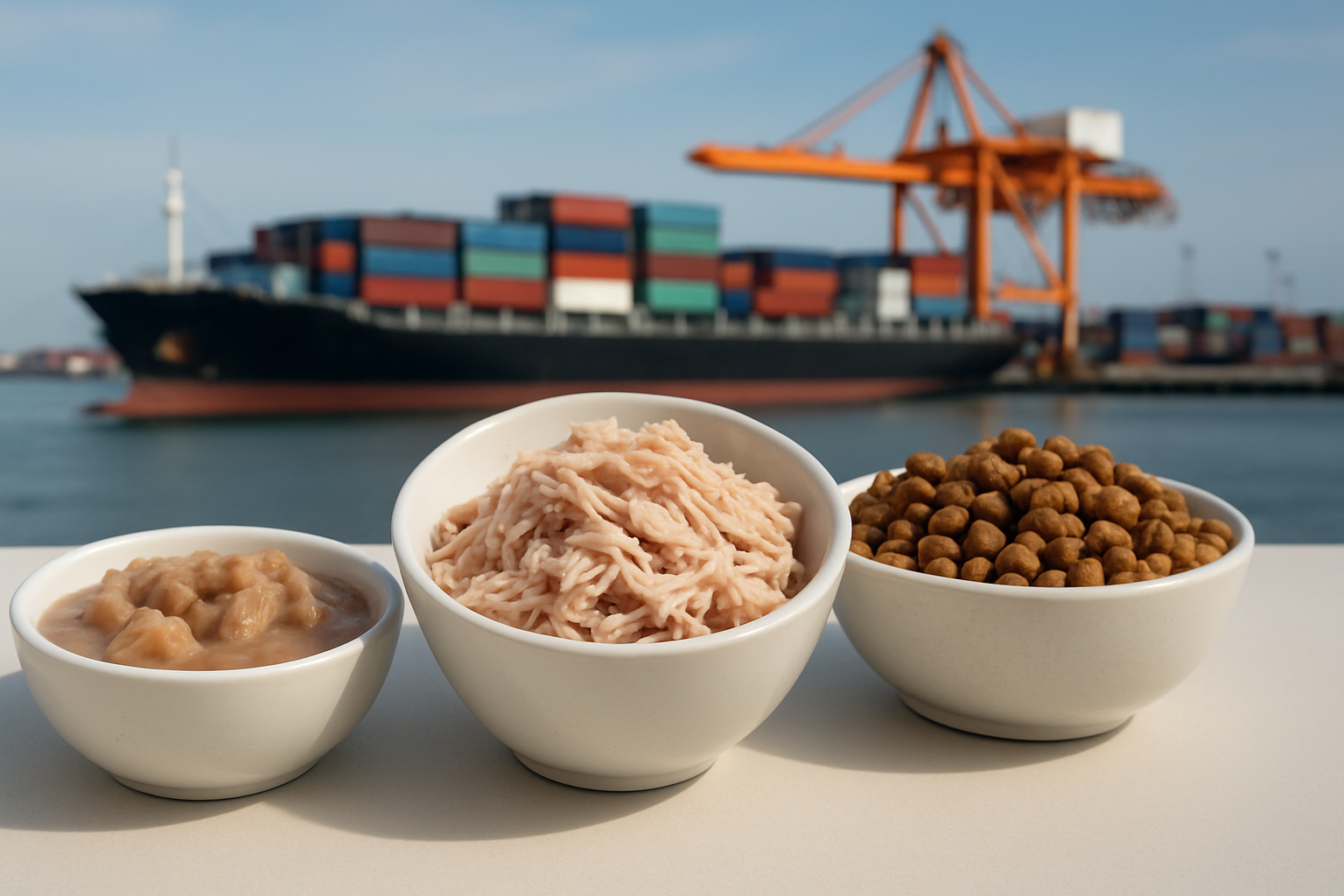
If you manufacture or export pet food, especially cat food with tuna or seafood formulas,Exporting cat food to Israel.This is a market worth watching, with a total value of around US$650–700 million, and the import segment is growing faster than the overall market. Thailand already has a market share of approximately 6–8%, focusing on wet cat food and seafood treats, areas where Eastern European factories still lag behind in terms of raw materials.
Exporting Cat Food: Why Israel is an Attractive Destination for Thai Cat Products
Israeli society has changed significantly in recent years. With more people living alone and an elderly population, the demand for cat ownership in condos and apartments has outpaced that of dogs. This group is willing to pay more for higher-quality food, especially grain-free and fish-only formulas, which aligns perfectly with what Thai factories already excel at.
Another interesting point is that during Passover festival, around April each year, there are regulations prohibiting the possession of certain grains in homes. This leads to increased orders for seafood-only or grain-free products during that time. If importers can plan shipments to arrive before the festival, they will be more interested than usual.
Models that Thailand can realistically enter: OEM and Private Label.
Thai brands are not yet well-known on Israeli shelves. A faster path would be to manufacture products for local supermarkets under their own brands. Large supermarkets like Shufersal, with over 300 branches, are looking for OEM factories for their pet product brands. Thailand has an advantage in that its FOB costs are lower than in Western Europe, and it has access to high-quality tuna raw materials that are not available in Czech or Polish factories.
However, shipping costs from Thailand to Israel are significantly higher than those of European competitors. Therefore, competing in the low-priced dry cat food segment risks losing on margins. But if the focus is on premium wet cat food and seafood treats, there is still a chance to compete.
Transportation routes and risks you need to know.
The shipping time by sea from Thailand to Israel is approximately 30–50 days. During periods of Red Sea instability, some shipping lines have to绕 around the Cape of Good Hope, adding to time and costs. It's crucial to discuss stock planning with importers from the outset, because if shipments are delayed and shelves are empty, the importers will suffer first, and long-term relationships will be strained.
Blanket orders, or orders placed in advance, allow you to reserve shipping space ahead of time and reduce the risk of fluctuating freight rates. This should be discussed with the importer during the negotiation phase, rather than waiting until the goods are ready to find a ship.
Documents to prepare before shipping.
actionExporting cat food to Israel.There are document requirements that must be met. The list below is what you should check before sending any items.
- Import Permit: Israeli importers must obtain a license from the Israeli Ministry of Agriculture before the goods are loaded onto the ship. It is important to confirm with the importer that the license has been obtained before shipment.
- Health Certificate: Issued by the Thai Department of Livestock Development, this document indicates that the product has undergone sterilization and is free from contaminants. This document must match the batch number shipped each time.
- Hebrew label: Products sold in Israel must have labels in Hebrew indicating the product name, ingredients, importer's name, manufacturing date, and expiration date. The importer should review and approve the artwork before actual printing.
- Factory standards: GMP, HACCP, BRC, or ISO certifications from the factory should be included with the sales proposal, as Israeli importers often use European standards to select suppliers.
- HS Code 2309.10: Dog and cat food prepared for retail sale falls under this tariff code, which is exempt from import duties in Israel, but is still subject to VAT 17%. The total cost should be calculated correctly from the start.
- Certificate of Origin: It's always good to be prepared, even if you're not requesting a tax reduction, because sometimes the customs at the destination may request verification of the origin of the goods.
The products we should focus on are not necessarily marketable in every segment.
The most interesting groups are wet cat food in tuna and seafood formulas, as well as cat treats made with seafood ingredients, because these are products that Thailand produces well and that are more difficult for Eastern European factories to manufacture. Freeze-dried or functional treats are also worth considering, as they have a high FOB price per unit but are lightweight, resulting in a lower freight cost per unit.
Products to avoid right now are mid-to-low-priced dry feed pellets, as the Czech Republic and Poland have logistical and cost advantages in that segment. The profit margin may not justify the risk of fluctuating freight costs.
Questions to ask the importer before signing a contract.
Before agreeing to ship the goods, there are several details that should be clearly discussed with the Israeli importer, as these directly impact costs and planning.
- What is the minimum order quantity (MOQ) and how many SKUs can be accepted per order?
- How many months' worth of stock do you have planned for in advance, and are you acceptable with a lead time of 30–50 days?
- Do you need Hebrew label artwork from the Thai side, or should I create it myself after the goods arrive?
- What factory standards are required, and is there a factory audit before the first order?
- What are the payment terms, and will an LC or TT be made in advance?
Planning before shipping is better than solving problems after the goods arrive.
The Israeli market shows positive signs for Thai seafood-based cat products, but the main risk isn't in demand; it lies in the crucial planning of logistics and documentation from the outset. If goods arrive at their destination with incomplete or incorrect documentation, they may be detained at customs or forced back, significantly impacting costs and relationships with importers.
For anyone who is researching career paths...Exporting cat food to Israel. Start by checking if your factory meets the standards required by Israeli importers, and discuss route options and advance freight bookings with an international freight forwarder. More information about international shipping can be found at [link]. smeshipping.com
Source: Department of International Trade Promotion (DITP)
Exporting cat food to other countries: Check the requirements before making a decision.
Exporting cat food internationally should begin with thoroughly checking all necessary documents, costs, and destination conditions before confirming the price. Then, use the cat food export topic in discussions with the buyer to confirm responsibilities and deadlines.
Before actually shipping, you should review the export information for cat food again, including the product code, documents, and responsible party at the destination, as the details for exporting cat food to different countries may vary depending on the market and trade conditions.
For more official information, please check: Related sources of information




 English
  Thai
Thai