


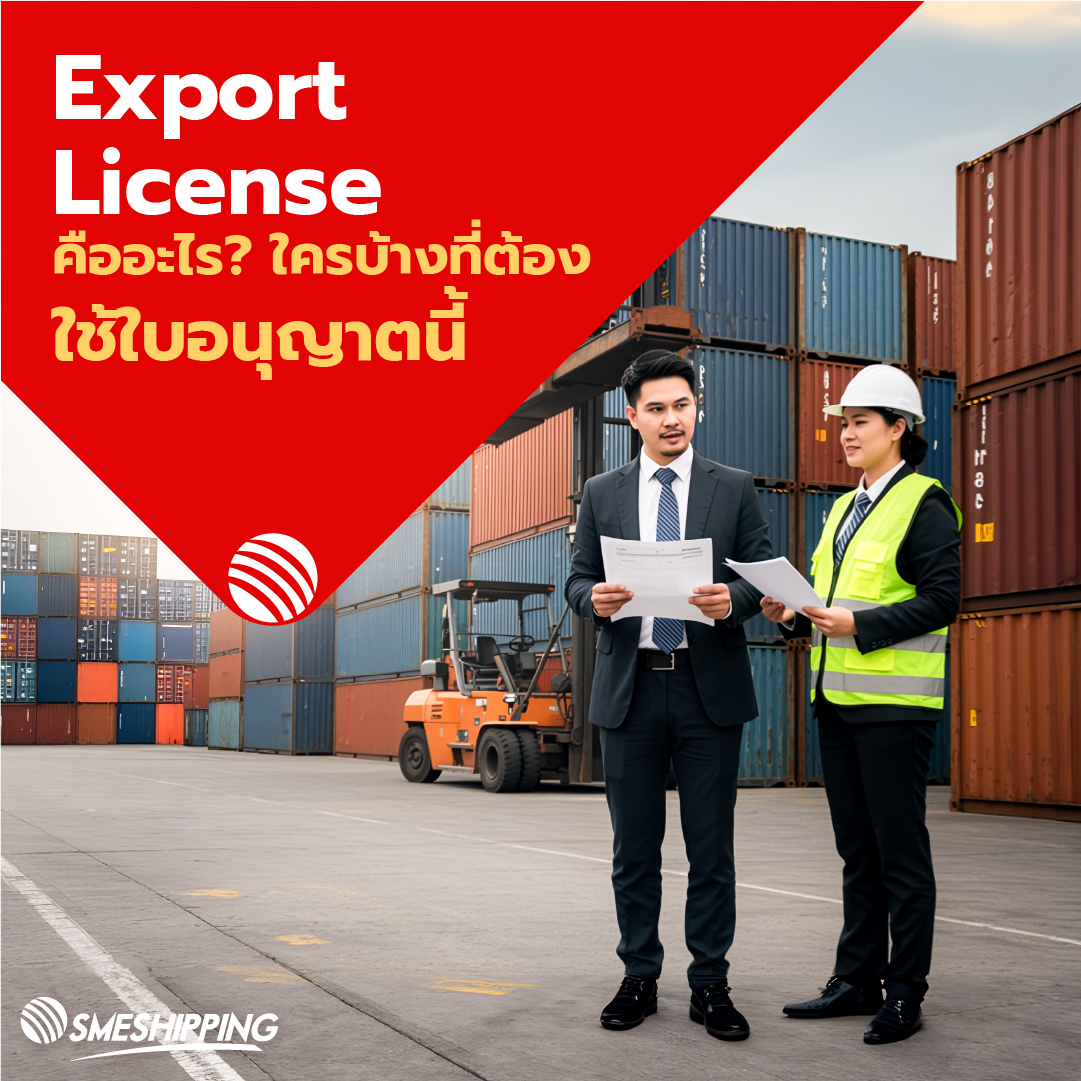
What is an Export License? Who needs this license?
Exporting goods to foreign countries is one of the key ways to expand business opportunities for Thai entrepreneurs. However, exporting is not just about preparing and shipping goods to their destination. There are also related legal requirements, especially if the goods are in the government-controlled category. In such cases, entrepreneurs may need an export license to ensure compliance. This article from SME Shipping will explain in simple terms what an export license is and who needs to obtain it before exporting goods.
What is an Export License?
An export license is a document issued by a government agency that allows businesses to legally export certain types of goods to other countries. It is typically used for goods that are government-controlled or have special export regulations, such as certain agricultural products, industrial goods with specialized technology, weapons, and goods that may harm the environment or natural resources.
Why is an export license required?
An export license is a document that shows you have been properly authorized by the government agency to export certain types of goods. This is necessary for:
- Comply with legal requirements for products under government control.
- Prevent customs issues in case the destination country requires verification documents.
- Reduce the risk of suspension or seizure of goods if inspected and found to lack the necessary licenses.
Who needs an Export License?
Not everyone who exports goods needs this license, but if you are one of the following types of businesses, you will need to apply for an Export License:
- Exporting goods that are subject to government control, such as rice, sugar, minerals, firearms, live animals, processed wood, or hazardous materials, is prohibited. A list of controlled goods can be found at the Department of International Trade.
- Exports to countries with trade controls or restrictions, such as countries on sanctions lists or countries experiencing political conflict.
- There are specific requirements from the destination country. Some countries require an export license from the country of origin as a condition for import.
- Exporting goods related to intellectual property, such as software programs and high-tech machinery, may require prior inspection and authorization.
What are the consequences of exporting without a license?
Exporting goods without the necessary licenses can have serious consequences, such as:
- The item was denied customs clearance on both the Thai and foreign sides.
- The seizure or confiscation of goods can cause financial damage.
- Subject to fines or legal action; liable to fines or imprisonment according to the law governing that product.
- This affects the business image and the trust of business partners.
The agency that issues export licenses in Thailand.
In Thailand, the agencies authorized to issue export licenses are usually the Department of International Trade, Ministry of Commerce, or specialized agencies such as...
- Department of Industrial Works (for chemical products)
- Department of Forestry (for timber and wood products)
- Department of Fisheries, Department of Livestock Development (for animals and animal products)
Export licenses are "essential" for businesses exporting controlled or specially mandated goods. Businesses should always check the type of goods and requirements of the destination country before exporting to ensure that international trade is conducted legally and to avoid unnecessary additional costs.



 English
  Thai
Thai