
BLOG

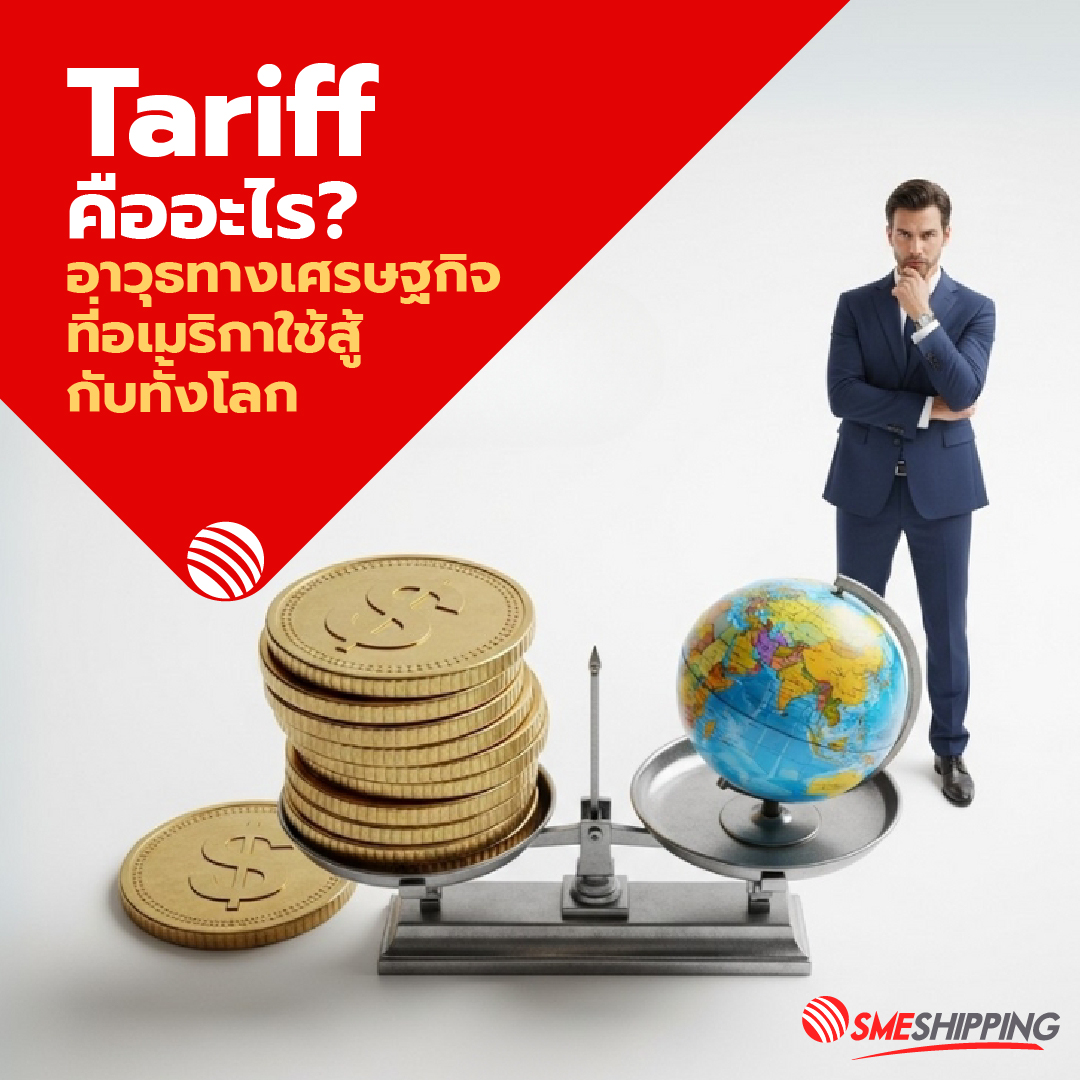
What is a tariff? It's an economic weapon that America uses against the rest of the world.

When talking about "Tariff" or... Import tax Many people may think it's just a matter of customs duties collected on imported goods, but in reality, a tariff is... Economic and political tools It has been used for a long time and remains a key "weapon" that superpowers like the United States have repeatedly used to protect their domestic economy and negotiate with trading partners.

In this article, we will explore the history of tariffs from their early days to the present, and explain why. Former President Donald Trump What if it is brought back into intensive use, and what will be the impact on global trade and Thailand?

The History of Tariffs: From Government Revenue to Political Tool

Going back to the 18th and 19th centuries, the main source of revenue for the U.S. government came from... Tariff Since there is no personal income tax, the government primarily collects import taxes on goods from Europe. Besides generating revenue for the government, tariffs are also used as a tool... Protect emerging industries. American

This concept is called... Protectionism Or "trade protectionism," which aims to drive up the price of imported goods in order to encourage people to use domestically produced goods instead.

During the same period, many European countries adopted similar measures, such as England's "Corn Laws" to protect its farmers, which eventually became the norm for future use. Import tariffs are a strategic tool.

Tariffs in the 20th Century: From the Great Depression to Free Trade

Although tariffs have been used for a long time, they have also had significant negative consequences. A clear example is: Smoot-Hawley Tariff Act, 1930 During the Great Depression, the United States imposed very high import tariffs. This measure prompted trading partners to retaliate by raising tariffs on American goods as well, resulting in a decline in global trade and a further worsening of the global economic downturn.

After World War II, America and its allies turned to creating a system... Free Trade Under GATT and later the WTO, the aim was to reduce tariffs and prevent another “trade war.”

Tariffs in the Trump era: The return of the trade war.

Even though the world is moving towards free trade, Donald Trump During the years 2017–2021, I picked... Tariff It's being used as a weapon again, especially against... China which is America's largest trading partner.

Trump imposed tariffs on hundreds of billions of dollars worth of Chinese imports, citing China's unfair trade practices and intellectual property violations as reasons. The result is what is known as… Trade War That shook global supply chains.

Besides China, Trump also used tariffs to pressure the European Union, Canada, Mexico, and developing countries like Thailand to force them to move manufacturing back to the United States and create jobs domestically.

A tariff is a barrier, but it can also backfire and harm you.

Although tariffs help protect domestic producers, they also have drawbacks. Long-term negative effects This would raise domestic prices, increasing costs for consumers, and also give trading partners the opportunity to retaliate by raising tariffs on American goods as well.

In the case of the US-China trade war, numerous studies indicate that: American businesses and consumers in the United States themselves. The entity bearing the highest tariff costs is not China, as initially intended, because imported goods are essential in the supply chain.

The impact of tariffs on Thailand and exporters.

For Thailand, US tariffs directly affect exporters selling goods to the American market. Products such as… Textiles, clothing, processed food, and electronic equipment. They were all affected.

In 2025, the United States reduced the base of the projected retaliatory tariffs 36% to... 19% However, it remains a significant pressure point, causing a noticeable slowdown in exports in the second half of the year. Analysts expect overall Thai exports to grow by only a small margin for the entire year. 1.5–4% That's all, even though the first half of the year saw high growth of 15%.

Therefore, Thai entrepreneurs need to accelerate... Adjust strategy For example, diversifying markets to other regions, reducing logistics costs, or using fulfillment centers abroad to avoid the impact of tariffs.

Lessons from Tariffs: An Economic Weapon That Will Never Die

What we learn from history is that tariffs don't disappear; they are used repeatedly whenever a superpower wants to gain an economic or political advantage.

From the 18th century, when tariffs were America's primary source of income → to the Great Depression, where tariffs crippled the global economy → to the Trump era, where tariffs have once again become a weapon in trade wars.

For Thai exporters, this is a "warning sign" that over-reliance on any single market can be extremely risky, and rapid adaptation is key to surviving the impact of global trade policies.


Source

  • Kasikorn Research Center. (2025). Thai exports grew strongly in the first half of the year before facing US tariffs, leading to a slowdown in the second half.. Kasikorn Research
  • White House. (2025). Suspending Duty-Free minimizes treatment. Whitehouse.gov
  • FedEx. (2025). Regulatory Alert: Elimination of de minimis imports. FedEx.com

WTO & Trade History. Tariffs and protectionism in historical context. WTO.org

What is a tariff? It's an economic weapon that America uses against the rest of the world.

When talking about "Tariff" or... Import tax Many people may think it's just a matter of customs duties collected on imported goods, but in reality, a tariff is... Economic and political tools It has been used for a long time and remains a key "weapon" that superpowers like the United States have repeatedly used to protect their domestic economy and negotiate with trading partners.

In this article, we will explore the history of tariffs from their early days to the present, and explain why. Former President Donald Trump What if it is brought back into intensive use, and what will be the impact on global trade and Thailand?

The History of Tariffs: From Government Revenue to Political Tool

Going back to the 18th and 19th centuries, the main source of revenue for the U.S. government came from... Tariff Since there is no personal income tax, the government primarily collects import taxes on goods from Europe. Besides generating revenue for the government, tariffs are also used as a tool... Protect emerging industries. American

This concept is called... Protectionism Or "trade protectionism," which aims to drive up the price of imported goods in order to encourage people to use domestically produced goods instead.

During the same period, many European countries adopted similar measures, such as England's "Corn Laws" to protect its farmers, which eventually became the norm for future use. Import tariffs are a strategic tool.

Tariffs in the 20th Century: From the Great Depression to Free Trade

Although tariffs have been used for a long time, they have also had significant negative consequences. A clear example is: Smoot-Hawley Tariff Act, 1930 During the Great Depression, the United States imposed very high import tariffs. This measure prompted trading partners to retaliate by raising tariffs on American goods as well, resulting in a decline in global trade and a further worsening of the global economic downturn.

After World War II, America and its allies turned to creating a system... Free Trade Under GATT and later the WTO, the aim was to reduce tariffs and prevent another “trade war.”

Tariffs in the Trump era: The return of the trade war.

Even though the world is moving towards free trade, Donald Trump During the years 2017–2021, I picked... Tariff It's being used as a weapon again, especially against... China which is America's largest trading partner.

Trump imposed tariffs on hundreds of billions of dollars worth of Chinese imports, citing China's unfair trade practices and intellectual property violations as reasons. The result is what is known as… Trade War That shook global supply chains.

Besides China, Trump also used tariffs to pressure the European Union, Canada, Mexico, and developing countries like Thailand to force them to move manufacturing back to the United States and create jobs domestically.

A tariff is a barrier, but it can also backfire and harm you.

Although tariffs help protect domestic producers, they also have drawbacks. Long-term negative effects This would raise domestic prices, increasing costs for consumers, and also give trading partners the opportunity to retaliate by raising tariffs on American goods as well.

In the case of the US-China trade war, numerous studies indicate that: American businesses and consumers in the United States themselves. The entity bearing the highest tariff costs is not China, as initially intended, because imported goods are essential in the supply chain.

The impact of tariffs on Thailand and exporters.

For Thailand, US tariffs directly affect exporters selling goods to the American market. Products such as… Textiles, clothing, processed food, and electronic equipment. They were all affected.

In 2025, the United States reduced the base of the projected retaliatory tariffs 36% to... 19% However, it remains a significant pressure point, causing a noticeable slowdown in exports in the second half of the year. Analysts expect overall Thai exports to grow by only a small margin for the entire year. 1.5–4% That's all, even though the first half of the year saw high growth of 15%.

Therefore, Thai entrepreneurs need to accelerate... Adjust strategy For example, diversifying markets to other regions, reducing logistics costs, or using fulfillment centers abroad to avoid the impact of tariffs.

Lessons from Tariffs: An Economic Weapon That Will Never Die

What we learn from history is that tariffs don't disappear; they are used repeatedly whenever a superpower wants to gain an economic or political advantage.

From the 18th century, when tariffs were America's primary source of income → to the Great Depression, where tariffs crippled the global economy → to the Trump era, where tariffs have once again become a weapon in trade wars.

For Thai exporters, this is a "warning sign" that over-reliance on any single market can be extremely risky, and rapid adaptation is key to surviving the impact of global trade policies.


Source

  • Kasikorn Research Center. (2025). Thai exports grew strongly in the first half of the year before facing US tariffs, leading to a slowdown in the second half.. Kasikorn Research
  • White House. (2025). Suspending Duty-Free minimizes treatment. Whitehouse.gov
  • FedEx. (2025). Regulatory Alert: Elimination of de minimis imports. FedEx.com

WTO & Trade History. Tariffs and protectionism in historical context. WTO.org

When talking about "Tariff" or... Import tax Many people may think it's just a matter of customs duties collected on imported goods, but in reality, a tariff is... Economic and political tools It has been used for a long time and remains a key "weapon" that superpowers like the United States have repeatedly used to protect their domestic economy and negotiate with trading partners.

In this article, we will explore the history of tariffs from their early days to the present, and explain why. Former President Donald Trump What if it is brought back into intensive use, and what will be the impact on global trade and Thailand?

The History of Tariffs: From Government Revenue to Political Tool

Going back to the 18th and 19th centuries, the main source of revenue for the U.S. government came from... Tariff Since there is no personal income tax, the government primarily collects import taxes on goods from Europe. Besides generating revenue for the government, tariffs are also used as a tool... Protect emerging industries. American

This concept is called... Protectionism Or "trade protectionism," which aims to drive up the price of imported goods in order to encourage people to use domestically produced goods instead.

During the same period, many European countries adopted similar measures, such as England's "Corn Laws" to protect its farmers, which eventually became the norm for future use. Import tariffs are a strategic tool.

Tariffs in the 20th Century: From the Great Depression to Free Trade

Although tariffs have been used for a long time, they have also had significant negative consequences. A clear example is: Smoot-Hawley Tariff Act, 1930 During the Great Depression, the United States imposed very high import tariffs. This measure prompted trading partners to retaliate by raising tariffs on American goods as well, resulting in a decline in global trade and a further worsening of the global economic downturn.

After World War II, America and its allies turned to creating a system... Free Trade Under GATT and later the WTO, the aim was to reduce tariffs and prevent another “trade war.”

Tariffs in the Trump era: The return of the trade war.

Even though the world is moving towards free trade, Donald Trump During the years 2017–2021, I picked... Tariff It's being used as a weapon again, especially against... China which is America's largest trading partner.

Trump imposed tariffs on hundreds of billions of dollars worth of Chinese imports, citing China's unfair trade practices and intellectual property violations as reasons. The result is what is known as… Trade War That shook global supply chains.

Besides China, Trump also used tariffs to pressure the European Union, Canada, Mexico, and developing countries like Thailand to force them to move manufacturing back to the United States and create jobs domestically.

A tariff is a barrier, but it can also backfire and harm you.

Although tariffs help protect domestic producers, they also have drawbacks. Long-term negative effects This would raise domestic prices, increasing costs for consumers, and also give trading partners the opportunity to retaliate by raising tariffs on American goods as well.

In the case of the US-China trade war, numerous studies indicate that: American businesses and consumers in the United States themselves. The entity bearing the highest tariff costs is not China, as initially intended, because imported goods are essential in the supply chain.

The impact of tariffs on Thailand and exporters.

For Thailand, US tariffs directly affect exporters selling goods to the American market. Products such as… Textiles, clothing, processed food, and electronic equipment. They were all affected.

In 2025, the United States reduced the base of the projected retaliatory tariffs 36% to... 19% However, it remains a significant pressure point, causing a noticeable slowdown in exports in the second half of the year. Analysts expect overall Thai exports to grow by only a small margin for the entire year. 1.5–4% That's all, even though the first half of the year saw high growth of 15%.

Therefore, Thai entrepreneurs need to accelerate... Adjust strategy For example, diversifying markets to other regions, reducing logistics costs, or using fulfillment centers abroad to avoid the impact of tariffs.

Lessons from Tariffs: An Economic Weapon That Will Never Die

What we learn from history is that tariffs don't disappear; they are used repeatedly whenever a superpower wants to gain an economic or political advantage.

From the 18th century, when tariffs were America's primary source of income → to the Great Depression, where tariffs crippled the global economy → to the Trump era, where tariffs have once again become a weapon in trade wars.

For Thai exporters, this is a "warning sign" that over-reliance on any single market can be extremely risky, and rapid adaptation is key to surviving the impact of global trade policies.


Source

  • Kasikorn Research Center. (2025). Thai exports grew strongly in the first half of the year before facing US tariffs, leading to a slowdown in the second half.. Kasikorn Research
  • White House. (2025). Suspending Duty-Free minimizes treatment. Whitehouse.gov
  • FedEx. (2025). Regulatory Alert: Elimination of de minimis imports. FedEx.com

WTO & Trade History. Tariffs and protectionism in historical context. WTO.org
When talking about "Tariff" or... Import tax Many people may think it's just a matter of customs duties collected on imported goods, but in reality, a tariff is... Economic and political tools It has been used for a long time and remains a key "weapon" that superpowers like the United States have repeatedly used to protect their domestic economy and negotiate with trading partners.

In this article, we will explore the history of tariffs from their early days to the present, and explain why. Former President Donald Trump What if it is brought back into intensive use, and what will be the impact on global trade and Thailand?

The History of Tariffs: From Government Revenue to Political Tool

Going back to the 18th and 19th centuries, the main source of revenue for the U.S. government came from... Tariff Since there is no personal income tax, the government primarily collects import taxes on goods from Europe. Besides generating revenue for the government, tariffs are also used as a tool... Protect emerging industries. American

This concept is called... Protectionism Or "trade protectionism," which aims to drive up the price of imported goods in order to encourage people to use domestically produced goods instead.

During the same period, many European countries adopted similar measures, such as England's "Corn Laws" to protect its farmers, which eventually became the norm for future use. Import tariffs are a strategic tool.

Tariffs in the 20th Century: From the Great Depression to Free Trade

Although tariffs have been used for a long time, they have also had significant negative consequences. A clear example is: Smoot-Hawley Tariff Act, 1930 During the Great Depression, the United States imposed very high import tariffs. This measure prompted trading partners to retaliate by raising tariffs on American goods as well, resulting in a decline in global trade and a further worsening of the global economic downturn.

After World War II, America and its allies turned to creating a system... Free Trade Under GATT and later the WTO, the aim was to reduce tariffs and prevent another “trade war.”

Tariffs in the Trump era: The return of the trade war.

Even though the world is moving towards free trade, Donald Trump During the years 2017–2021, I picked... Tariff It's being used as a weapon again, especially against... China which is America's largest trading partner.

Trump imposed tariffs on hundreds of billions of dollars worth of Chinese imports, citing China's unfair trade practices and intellectual property violations as reasons. The result is what is known as… Trade War That shook global supply chains.

Besides China, Trump also used tariffs to pressure the European Union, Canada, Mexico, and developing countries like Thailand to force them to move manufacturing back to the United States and create jobs domestically.

A tariff is a barrier, but it can also backfire and harm you.

Although tariffs help protect domestic producers, they also have drawbacks. Long-term negative effects This would raise domestic prices, increasing costs for consumers, and also give trading partners the opportunity to retaliate by raising tariffs on American goods as well.

In the case of the US-China trade war, numerous studies indicate that: American businesses and consumers in the United States themselves. The entity bearing the highest tariff costs is not China, as initially intended, because imported goods are essential in the supply chain.

The impact of tariffs on Thailand and exporters.

For Thailand, US tariffs directly affect exporters selling goods to the American market. Products such as… Textiles, clothing, processed food, and electronic equipment. They were all affected.

In 2025, the United States reduced the base of the projected retaliatory tariffs 36% to... 19% However, it remains a significant pressure point, causing a noticeable slowdown in exports in the second half of the year. Analysts expect overall Thai exports to grow by only a small margin for the entire year. 1.5–4% That's all, even though the first half of the year saw high growth of 15%.

Therefore, Thai entrepreneurs need to accelerate... Adjust strategy For example, diversifying markets to other regions, reducing logistics costs, or using fulfillment centers abroad to avoid the impact of tariffs.

Lessons from Tariffs: An Economic Weapon That Will Never Die

What we learn from history is that tariffs don't disappear; they are used repeatedly whenever a superpower wants to gain an economic or political advantage.

From the 18th century, when tariffs were America's primary source of income → to the Great Depression, where tariffs crippled the global economy → to the Trump era, where tariffs have once again become a weapon in trade wars.

For Thai exporters, this is a "warning sign" that over-reliance on any single market can be extremely risky, and rapid adaptation is key to surviving the impact of global trade policies.


Source

  • Kasikorn Research Center. (2025). Thai exports grew strongly in the first half of the year before facing US tariffs, leading to a slowdown in the second half.. Kasikorn Research
  • White House. (2025). Suspending Duty-Free minimizes treatment. Whitehouse.gov
  • FedEx. (2025). Regulatory Alert: Elimination of de minimis imports. FedEx.com

WTO & Trade History. Tariffs and protectionism in historical context. WTO.org

When talking about "Tariff" or... Import tax Many people may think it's just a matter of customs duties collected on imported goods, but in reality, a tariff is... Economic and political tools It has been used for a long time and remains a key "weapon" that superpowers like the United States have repeatedly used to protect their domestic economy and negotiate with trading partners.

In this article, we will explore the history of tariffs from their early days to the present, and explain why. Former President Donald Trump What if it is brought back into intensive use, and what will be the impact on global trade and Thailand?

The History of Tariffs: From Government Revenue to Political Tool

Going back to the 18th and 19th centuries, the main source of revenue for the U.S. government came from... Tariff Since there is no personal income tax, the government primarily collects import taxes on goods from Europe. Besides generating revenue for the government, tariffs are also used as a tool... Protect emerging industries. American

This concept is called... Protectionism Or "trade protectionism," which aims to drive up the price of imported goods in order to encourage people to use domestically produced goods instead.

During the same period, many European countries adopted similar measures, such as England's "Corn Laws" to protect its farmers, which eventually became the norm for future use. Import tariffs are a strategic tool.

Tariffs in the 20th Century: From the Great Depression to Free Trade

Although tariffs have been used for a long time, they have also had significant negative consequences. A clear example is: Smoot-Hawley Tariff Act, 1930 During the Great Depression, the United States imposed very high import tariffs. This measure prompted trading partners to retaliate by raising tariffs on American goods as well, resulting in a decline in global trade and a further worsening of the global economic downturn.

After World War II, America and its allies turned to creating a system... Free Trade Under GATT and later the WTO, the aim was to reduce tariffs and prevent another “trade war.”

Tariffs in the Trump era: The return of the trade war.

Even though the world is moving towards free trade, Donald Trump During the years 2017–2021, I picked... Tariff It's being used as a weapon again, especially against... China which is America's largest trading partner.

Trump imposed tariffs on hundreds of billions of dollars worth of Chinese imports, citing China's unfair trade practices and intellectual property violations as reasons. The result is what is known as… Trade War That shook global supply chains.

Besides China, Trump also used tariffs to pressure the European Union, Canada, Mexico, and developing countries like Thailand to force them to move manufacturing back to the United States and create jobs domestically.

A tariff is a barrier, but it can also backfire and harm you.

Although tariffs help protect domestic producers, they also have drawbacks. Long-term negative effects This would raise domestic prices, increasing costs for consumers, and also give trading partners the opportunity to retaliate by raising tariffs on American goods as well.

In the case of the US-China trade war, numerous studies indicate that: American businesses and consumers in the United States themselves. The entity bearing the highest tariff costs is not China, as initially intended, because imported goods are essential in the supply chain.

The impact of tariffs on Thailand and exporters.

For Thailand, US tariffs directly affect exporters selling goods to the American market. Products such as… Textiles, clothing, processed food, and electronic equipment. They were all affected.

In 2025, the United States reduced the base of the projected retaliatory tariffs 36% to... 19% However, it remains a significant pressure point, causing a noticeable slowdown in exports in the second half of the year. Analysts expect overall Thai exports to grow by only a small margin for the entire year. 1.5–4% That's all, even though the first half of the year saw high growth of 15%.

Therefore, Thai entrepreneurs need to accelerate... Adjust strategy For example, diversifying markets to other regions, reducing logistics costs, or using fulfillment centers abroad to avoid the impact of tariffs.

Lessons from Tariffs: An Economic Weapon That Will Never Die

What we learn from history is that tariffs don't disappear; they are used repeatedly whenever a superpower wants to gain an economic or political advantage.

From the 18th century, when tariffs were America's primary source of income → to the Great Depression, where tariffs crippled the global economy → to the Trump era, where tariffs have once again become a weapon in trade wars.

For Thai exporters, this is a "warning sign" that over-reliance on any single market can be extremely risky, and rapid adaptation is key to surviving the impact of global trade policies.


Source

  • Kasikorn Research Center. (2025). Thai exports grew strongly in the first half of the year before facing US tariffs, leading to a slowdown in the second half.. Kasikorn Research
  • White House. (2025). Suspending Duty-Free minimizes treatment. Whitehouse.gov
  • FedEx. (2025). Regulatory Alert: Elimination of de minimis imports. FedEx.com

WTO & Trade History. Tariffs and protectionism in historical context. WTO.org

When talking about "Tariff" or... Import tax Many people may think it's just a matter of customs duties collected on imported goods, but in reality, a tariff is... Economic and political tools It has been used for a long time and remains a key "weapon" that superpowers like the United States have repeatedly used to protect their domestic economy and negotiate with trading partners.

In this article, we will explore the history of tariffs from their early days to the present, and explain why. Former President Donald Trump What if it is brought back into intensive use, and what will be the impact on global trade and Thailand?

The History of Tariffs: From Government Revenue to Political Tool

Going back to the 18th and 19th centuries, the main source of revenue for the U.S. government came from... Tariff Since there is no personal income tax, the government primarily collects import taxes on goods from Europe. Besides generating revenue for the government, tariffs are also used as a tool... Protect emerging industries. American

This concept is called... Protectionism Or "trade protectionism," which aims to drive up the price of imported goods in order to encourage people to use domestically produced goods instead.

During the same period, many European countries adopted similar measures, such as England's "Corn Laws" to protect its farmers, which eventually became the norm for future use. Import tariffs are a strategic tool.

Tariffs in the 20th Century: From the Great Depression to Free Trade

Although tariffs have been used for a long time, they have also had significant negative consequences. A clear example is: Smoot-Hawley Tariff Act, 1930 During the Great Depression, the United States imposed very high import tariffs. This measure prompted trading partners to retaliate by raising tariffs on American goods as well, resulting in a decline in global trade and a further worsening of the global economic downturn.

After World War II, America and its allies turned to creating a system... Free Trade Under GATT and later the WTO, the aim was to reduce tariffs and prevent another “trade war.”

Tariffs in the Trump era: The return of the trade war.

Even though the world is moving towards free trade, Donald Trump During the years 2017–2021, I picked... Tariff It's being used as a weapon again, especially against... China which is America's largest trading partner.

Trump imposed tariffs on hundreds of billions of dollars worth of Chinese imports, citing China's unfair trade practices and intellectual property violations as reasons. The result is what is known as… Trade War That shook global supply chains.

Besides China, Trump also used tariffs to pressure the European Union, Canada, Mexico, and developing countries like Thailand to force them to move manufacturing back to the United States and create jobs domestically.

A tariff is a barrier, but it can also backfire and harm you.

Although tariffs help protect domestic producers, they also have drawbacks. Long-term negative effects This would raise domestic prices, increasing costs for consumers, and also give trading partners the opportunity to retaliate by raising tariffs on American goods as well.

In the case of the US-China trade war, numerous studies indicate that: American businesses and consumers in the United States themselves. The entity bearing the highest tariff costs is not China, as initially intended, because imported goods are essential in the supply chain.

The impact of tariffs on Thailand and exporters.

For Thailand, US tariffs directly affect exporters selling goods to the American market. Products such as… Textiles, clothing, processed food, and electronic equipment. They were all affected.

In 2025, the United States reduced the base of the projected retaliatory tariffs 36% to... 19% However, it remains a significant pressure point, causing a noticeable slowdown in exports in the second half of the year. Analysts expect overall Thai exports to grow by only a small margin for the entire year. 1.5–4% That's all, even though the first half of the year saw high growth of 15%.

Therefore, Thai entrepreneurs need to accelerate... Adjust strategy For example, diversifying markets to other regions, reducing logistics costs, or using fulfillment centers abroad to avoid the impact of tariffs.

Lessons from Tariffs: An Economic Weapon That Will Never Die

What we learn from history is that tariffs don't disappear; they are used repeatedly whenever a superpower wants to gain an economic or political advantage.

From the 18th century, when tariffs were America's primary source of income → to the Great Depression, where tariffs crippled the global economy → to the Trump era, where tariffs have once again become a weapon in trade wars.

For Thai exporters, this is a "warning sign" that over-reliance on any single market can be extremely risky, and rapid adaptation is key to surviving the impact of global trade policies.


Source

  • Kasikorn Research Center. (2025). Thai exports grew strongly in the first half of the year before facing US tariffs, leading to a slowdown in the second half.. Kasikorn Research
  • White House. (2025). Suspending Duty-Free minimizes treatment. Whitehouse.gov
  • FedEx. (2025). Regulatory Alert: Elimination of de minimis imports. FedEx.com

WTO & Trade History. Tariffs and protectionism in historical context. WTO.org

en_USEnglish