
International Payment Methods | SME Shipping

What are the available payment methods for international goods?

 In international trade, choosing the right payment method is crucial for both buyers and sellers, ensuring transaction security and minimizing risks related to payment and delivery. Payment methods vary depending on the agreement between the parties, considering convenience, fees, and security levels. Today, SME Shipping will introduce you to the different international payment options available.

What is international payment?

International payments are a financial process used by buyers and sellers in different countries to exchange goods and services. This may involve cross-border money transfers through banks, electronic payment systems, or international financial institutions.

How many types of international payment methods are there?

International payments can be categorized into several types based on the method and terms of payment, as follows:

1. Advance Payment / Prepayment

  • The buyer pays the full or partial amount before the seller ships the goods.
  • It reduces risk for sellers but increases risk for buyers.
  • This is often used when the seller needs upfront funding or the buyer lacks good credit.

2. Direct Payment (Open Account Payment)

  • The seller ships the goods first and sets a payment deadline, such as 30, 60, or 90 days.
  • Suitable for businesses that have established trade relationships and mutual trust.
  • There is a high risk for sellers because buyers may default on payments.

3. Documentary Collection (D/C) 

Banks act as intermediaries between buyers and sellers, sending commercial documents to buyers through the bank in two main ways:

  • Documents Against Payment (D/P) → The buyer pays before receiving the documents.
  • Documents Against Acceptance (D/A) → The buyer receives the documents first and then makes payment within a specified period.

4. Letter of Credit (L/C)

  • The buyer's bank guarantees payment to the seller according to the agreed terms.
  • It reduces risk for both parties and is commonly used in import-export businesses.
  • The fees are high, and a lot of paperwork is required.

5. Electronic Payment (E-Payment) 

Online payment platforms that offer greater convenience, speed, and lower fees compared to bank transfers, such as:

  • SWIFT (Society for Worldwide Interbank Financial Telecommunication)
  • PayPal, Wise, Payoneer
  • Alipay, WeChat Pay

6. Bank Transfer (Telegraphic Transfer – T/T)

  • The buyer's bank transfers funds to the seller's account via the SWIFT network or other international banking systems.
  • There are fees, and it may take several days depending on the receiving bank.

7. Using Digital Currency (Cryptocurrency Payment)

  • Use Bitcoin, Ethereum, or other cryptocurrencies.
  • There are no bank fees, and transactions are fast.
  • There are risks associated with price volatility and legal restrictions in some countries.

What are the available payment methods for international goods?

The choice of payment method for international goods depends on various factors such as security, fees, transaction time, and the terms and conditions fully agreed upon between the buyer and seller. There are four common payment methods found in international trade:

1. T/T (Telegraphic Transfer) - Bank Transfer This is an international money transfer via the SWIFT system or banking network, where the buyer transfers money directly to the seller's account. It is often used when there is a clear and internationally accepted sales contract.

  • strength: Suitable for general trading, businesses with regular transactions, security, and the ability to make installment payments according to agreement.
  • weakness: Transfer fees may be higher depending on the destination country, and the buyer faces risk if the seller fails to ship the goods or ships the wrong items.

2. L/C (Letter of Credit) This is a payment method where the buyer's bank issues a letter of guarantee to the seller, and payment occurs when the seller delivers the goods according to the agreed terms. It is often used in high-value businesses such as import-export.

  • strength: This is suitable for large businesses or cases where business partners have never done business together before, as it reduces risk for both parties by acting as an intermediary with a bank, increasing confidence for the seller that they will receive payment once the terms are met.
  • weakness: It has higher fees than T/T money transfers and takes longer to process because it requires a larger amount of documentation.

 3. PayPal / Wise Online Payment SystemIt is a widely used digital payment platform, ideal for online shopping and retail, as well as international money transfers at a neutral exchange rate.

  • strength: Easy and fast to use, with buyer protection (for PayPal) and lower fees compared to bank transfers.
  • weaknessNot all countries support this feature, and there are legal restrictions in some areas.

 4. Open Account (Trade Credit) This is an international payment method where the seller ships the goods first and sets payment terms, such as 30, 60, or 90 days. This method is popular when there is a high level of trust between the buyer and seller and is suitable for companies with long-term business relationships.

  • strength: It helps buyers improve their financial liquidity and reduces the complexity of paperwork and payment processes.
  • weakness: There is a high risk for the seller if the buyer fails to pay on time, and they may need to have trade risk insurance or use credit guarantees.

Which marketplace sells best? | SME Shipping

What is selling on a marketplace? Which marketplace is the best?

 Where should you start selling on a marketplace? First, you need to understand what a marketplace is and the unique advantages of each platform. Some are suitable for general goods, while others are better for handmade or imported items. Understanding the platform you choose will help you sell more easily, reach the right target audience, and utilize its features to their fullest potential. Once you have the basics, the next step is to prepare yourself, from selecting products and setting prices to promoting your store. Today, SME Shipping will guide you through the marketplace to help you determine which market is best suited for your business.

What is a marketplace?

A marketplace is an online platform that acts as an intermediary between buyers and sellers. To put it simply, a marketplace is a large online marketplace where customers buy goods 24/7. Sellers can post items for sale, set prices, and contact customers directly. Buyers can browse, compare prices, and make purchases conveniently. Marketplaces are divided into three main types:

  1. C2C (Consumer to Consumer): These are platforms where individuals can sell goods to others, such as Facebook Marketplace, Kaidee, and Shopee (for second-hand goods).
  2.  B2C (Business to Consumer): It is a platform where businesses sell products to general customers, such as Lazada, Shopee, JD Central, and Amazon.
  3. B2B (Business to Business): It is a platform used for business-to-business (B2B) trading, such as Alibaba and ThaiTrade.

Which marketplace is the best?

When choosing a marketplace to sell your products, the question arises: which marketplace is the best? The success of each marketplace depends on several factors, such as product type, target audience, selling fees, and seller support systems. In 2025, the following marketplaces are popular and suitable for selling different product categories:

  1. Facebook An online marketplace ideal for selling second-hand goods, household items, and local products, with no transaction fees.
  2. Shopee A marketplace platform suitable for a wide variety of products, with a system supporting payment and delivery, and attractive promotions to draw customers.
  3. Lazada A marketplace platform suitable for e-commerce, featuring authentic brands and a robust logistics system.
  4. JD Central An online marketplace suitable for IT products, electrical appliances, and brands requiring credibility.
  5. TikTok Shop Platforms suitable for products that can be promoted through video content are experiencing high growth because they can reach viewers quickly through live streaming.
  6. Amazon & eBay This platform is ideal for those who want to export their products internationally, offering products that better suit foreign customers than domestic ones, and increasing the value of their goods.

Comparing popular marketplaces in 2025.

MarketplaceHighlightsSuitable for the product.Limitations
FacebookFree to use, suitable for second-hand items.Secondhand goods, used items.There is no delivery system; post visibility is uncertain.
ShopeeLarge customer base, supports COD (cash on delivery) service.General merchandise, e-commerceSales fees, highly competitive.
LazadaGood online store system, Fulfillment.Electronics, household goodsHigh fees; marketing is needed.
TikTok ShopSelling through video, live streaming.Cosmetics, clothingYou have to produce content; the algorithms change frequently.
AmazonInternational market, FulfillmentBrands that want to sell internationally.High fees, high competition.
eBaySold worldwide, perfect for collectors.Collectibles, rare itemsThe sales system needs to be set up properly.

How to choose the right marketplace for your products.

  • If you want to sell used items or local products → Facebook Marketplace, Kaidee
  • If you want to sell new products on the general marketplace → Shopee, Lazada
  • To use video and live streams for selling → TikTok Shop
  • If you want to sell products to international customers → Amazon, eBay
  • If you want to sell authentic or premium branded products → JD Central

In the year 2025. Shopee, Lazada, and TikTok Shop It remains a popular marketplace in Thailand. Amazon and eBay It's a good option for those looking to expand into international markets. Facebook Marketplace It's ideal for selling general goods without fees. Therefore, before listing your products, remember to choose a platform that suits your product and sales strategy, as well as a reliable shipping system. Shipping is another crucial factor in online sales that will help you control production costs and generate profits from your business.

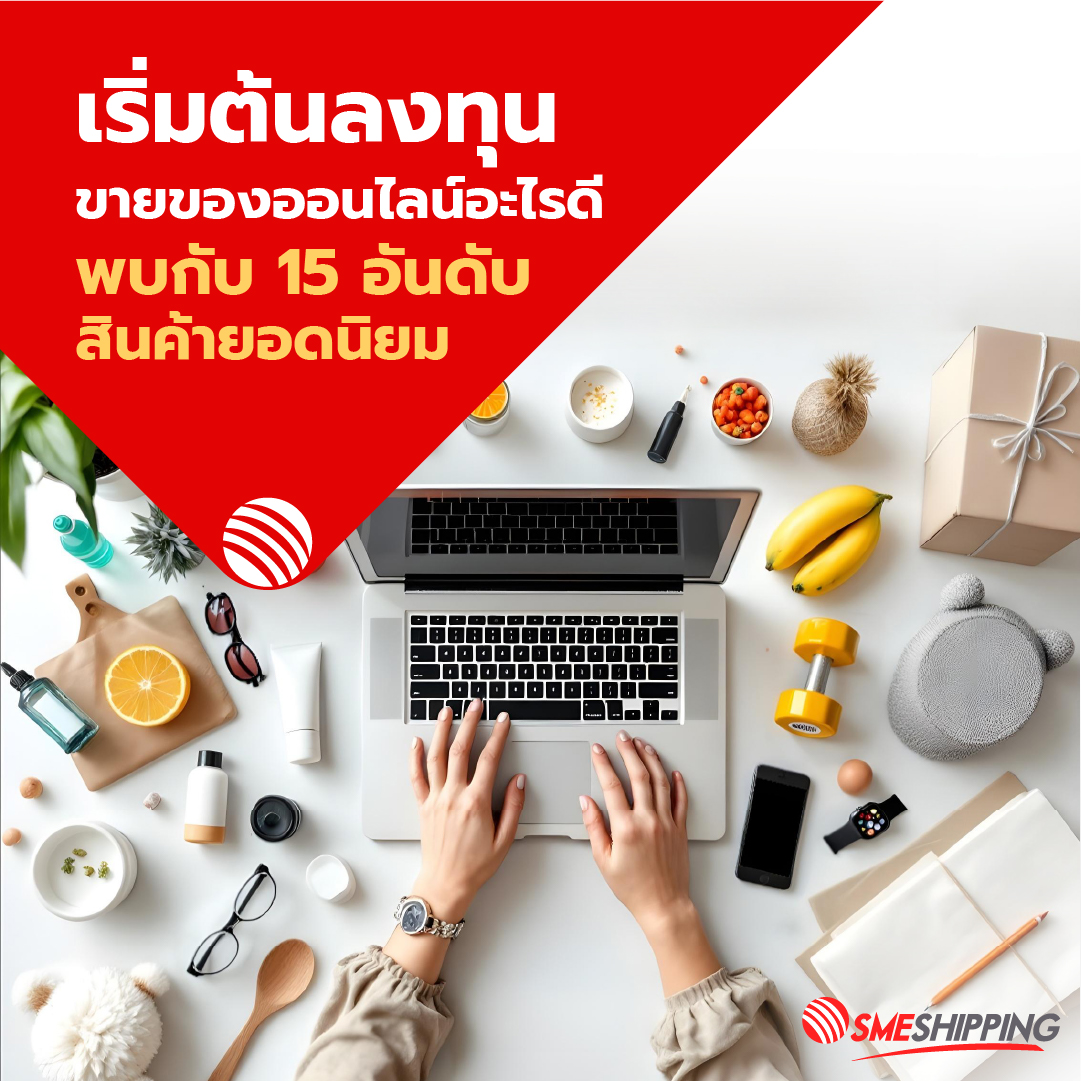
15 Popular Products for Online Trading | SME Shipping

What's a good online product to start selling? Discover the top 15 most popular products.

In the digital age, where online shopping has become a part of daily life, investing...sell products onlineTherefore, it's an attractive option for those who want to start a business with low costs and high growth potential. However, choosing the right product that meets market demand is a key factor in success. If you are looking for ideas for best-selling products, today SME Shipping has compiled 15 top-selling products with strong trends – popular products for those who are looking to start a business.What are good products to sell online? In 2025, to start a business confidently and on point.

The most popular products with steadily growing sales since 2024 can be categorized into four main categories: 

Products for fun. 

  • Water toys (trampolines and baby toys)
  • Hawaiian lei
  • Air duct

Home and garden products

  • Lawn care equipment
  • Swimming pool accessories
  • Water bag

Health and beauty products

  • Food and drinks
  • Snacks or sweets
  • Fashion clothes
  • Skincare and cosmetics
  • Vitamins and supplements

Other interesting products 

  • Art Toy Mystery Box
  • decorations
  • Pet products
  • Kitchen equipment

Top 15 most popular products

Choosing products that align with your interests and skills to build an online business is the best approach to success. Different product categories experience different growth rates over time, and the following sales data highlights promising products that may make it easier for those looking to invest online to decide. 

  1. Water toys

Sales increased by 376% during the summer. Other products, such as trampolines and playhouses, also saw increased popularity. 

  1. Hawaiian lei

Sales increased by 356% in the second quarter of 2025, and ankle garlands sold well during the festive season. 

  1. Air duct

Entertainment products that foster creativity in every activity. Sales increased by 2,74%. 

  1. Lawn care equipment

Sales increased by 234%, reflecting interest in gardening and outdoor activities.

  1. Swimming pool accessories

Top-selling items that help create a lively atmosphere, such as inflatable rings, water balls, and underwater lights, saw sales increase by 220%, while swimming pool sales increased by 156%. 

  1. Water bag

Sales increased by 215%. Popular sports products also include cheerleading and volleyball gear. 

  1. Food and drinks

Thais continue to favor food and beverages, especially sugary drinks after meals. This market is highly competitive, but there are still opportunities for beginners. 

  1. Snacks or sweets

Novelty snacks or treats are becoming more popular, especially on platforms like TikTok. 

  1. Fashion clothes

Fashion trends are constantly being updated, and Korean or vintage style clothing remains a best-seller. 

  1. Skincare and cosmetics

People are paying more attention to their skincare, and products in this category remain popular. 

  1. Art Toy Mystery Box

Mystery boxes are becoming increasingly popular, especially among collectors. 

  1. decorations

These products are in demand because they can add a stylish touch to an outfit. 

  1. Vitamins and supplements

People are paying more attention to their health, making these types of products sell well. 

  1. Pet products

Pet products, such as high-quality food, natural cat litter, and organic shampoo, are becoming increasingly popular. 

  1. Kitchen equipment

Kitchen cooking and storage appliances, such as air fryers and portable blenders, are in high demand among consumers. 

For those looking for startup ideas.sell products onlineBy 2025, these popular products will be attractive and potentially profitable options, including water toys, skincare and cosmetics, mystery boxes, art toys, and novelty foods and snacks. They cater to both current market trends and consumer behavior. Choosing the right product for your target audience and creating a unique selling proposition will significantly increase your chances of success in online investment.

How to Choose a Shipping Partner for SMEs | SME Shipping

Businesses grow through transportation: How to choose the right logistics partner for SMEs.

Freight transportation is a crucial factor in the growth of SMEs and customer satisfaction. Choosing the right logistics partner is therefore essential, and several factors should be considered, including reliability and the service provider's experience. Online transportation systemContinuous product tracking and flexible services such as express delivery, cash on delivery, and real-time parcel tracking, cost comparison, damage guarantees, and excellent customer support are key factors in ensuring businesses deliver goods on time and cost-effectively. Today, we'll introduce SME Shipping, one of the ideal logistics partners specifically for small and medium-sized enterprises (SMEs).

What are the advantages of SME Shipping?

SME Shipping is a transportation service designed to support small and medium-sized enterprises (SMEs) to help them...Online deliveryIt offers greater convenience, speed, and cost-effectiveness to meet business needs, such as cash-on-delivery (COD), same-day express delivery, and real-time parcel tracking. In addition, SME Shipping provides ongoing customer support.Online deliveryThis helps improve the efficiency of business operations, enabling sellers to deliver goods to customers efficiently and on time.

How to Choose a Logistics Partner for SMEs

Choosing the right logistics partner is a crucial factor in building customer satisfaction. It's a key strategy for reducing costs, increasing convenience, building customer confidence, and ensuring efficient business growth. Therefore, here's how SMEs can select a logistics partner to meet various sales needs:

  1. We are a reliable and experienced shipping company, and you can check reviews or comments from other businesses to ensure your package arrives safely at its destination.
  2. Our services include comprehensive options such as express shipping, cash-on-delivery (COD), and international shipping, as well as the flexibility to manage services according to business needs.
  3. Let's compare the transportation costs between several service providers to get the final cost.Online deliveryAppropriate without compromising the quality of service.
  4. We have a real-time parcel tracking system, allowing you and your customers to conveniently check the delivery status.
  5. We offer responsive customer service, including contact options like phone and chat, to assist you with any problems.
  6. We can manage increased workloads during holidays or promotions to ensure products reach customers on time.
  7. There are terms and conditions in place to guarantee goods in case of loss or damage during transportation, in order to protect business interests.

Choosing a logistics partner that meets the needs of SMEs can help increase operational efficiency, increase customer satisfaction, and enable sustainable business growth. Therefore, selecting the right logistics partner for selling goods and services is crucial.Online deliveryTherefore, it is essential for all types of startups.

What to prepare for applying to sell on Amazon | SME Shipping

What do I need to prepare to register as a seller on Amazon? How do I get approved?

Applying to sell on Amazon to start an online business is a great option for e-commerce in today's world. Before starting to sell, however, businesses need thorough preparation to increase their chances of passing Amazon's review process and launching smoothly. Preparing for every step before applying will help you navigate the application process and get started.Selling on AmazonWith confidence, today SME Shipping will guide everyone through the steps to ensure a smooth process.

Things to prepare before applying to sell on Amazon.

ApplicationSelling on AmazonThis is a crucial step for those wanting to start an online business on a global platform. Merchants should prepare their store and product information, analyze their sales profile, and choose a suitable sales plan. Additionally, preparing identity verification documents, credit cards, and Payoneer accounts, as well as email addresses for registration, will help ensure everything goes smoothly and allows for a faster start to selling products.

 1.       Prepare information about the store and the products you want to sell.

Start by preparing information about your store, such as your store name, contact address, and product details. Product information should include a clear description, high-quality images, and competitive pricing. Include your business or brand name (if applicable) and the type of products you wish to sell (specify a clear product category). Currently, Amazon offers over 30 product categories to choose from, including pet products, beauty products, skincare and hair care, pharmaceuticals and medical supplies, electronics, automotive parts and accessories, baby products, and many more. See more here >> https://sell.amazon.co.th/sell/product-category?ref_=sdth_soa_product-cat_i

 2.        Choose the appropriate sales plan.

Sales planning to define target groups and appropriate strategies will help with the application.Selling on AmazonYour application will be easier to process as Amazon has two types of sales plans:Individual and Professional Choose the selling method that best suits your product, which is:

  • Individual Account: Suitable for small retailers or those starting a business. There are no monthly fees, but there is a fee per item sold.
  • Professional Account: Suitable for those who want to sell a large volume of products. The monthly fee is approximately $39.99, but there are no fees per item.

 3.        Prepare your identification documents.

When it comes to the identity verification process, Amazon will request important documents to verify your identity. These include:

  • National ID card or passport for identity verification.
  • Current address, with proof of address such as a utility bill (no older than 90 days).
  • Bank account for receiving payments from Amazon (the recommended bank account should be able to receive international payments).
  • Phone number to receive one-time password (OTP).

4.       Sign up for a Payoneer account and a credit card.

After preparing the necessary documents, the next step is to create a Payoneer account to receive payments for goods. This is because Amazon does not accept payments via PayPal, and merchants in Thailand cannot directly receive payments via bank transfer from Amazon to a Thai bank account. Therefore, before selling any products, merchants must register for a Payoneer account and link it to Amazon for convenient withdrawal of earnings. Amazon will then use the credit or debit card you registered to deduct various fees, such as monthly fees or other additional service charges, during the transaction process.

 5.        Create an email address to use for registration.

Create a new email address to use exclusively for your Amazon seller account. This clearly separates business management from personal email. The email account must be easily verifiable and have two-factor authentication (2FA) set up to protect your account information.

 [Tips] How to get your Amazon seller application approved.

  1. Prepare all documents completely and clearly, using documents that match the name used for registration, and take accurate photos or scan the documents.
  2. The address and bank account information must match the documents submitted.
  3. Choose the appropriate product category and ensure that the product you intend to sell does not fall into categories that require additional approval (e.g., pharmaceuticals, food, or cosmetics).
  4. Track your application status. If your application was rejected, you can contact Amazon Support for inquiries and to resolve the error.

 ApplicationSelling on AmazonThorough preparation is essential. Having this information complete and accurate before applying will ensure a smooth Amazon selling process and allow you to start your business faster. *more Amazon charges various fees, such as selling fees and FBA (Fulfillment by Amazon) warehousing fees. Always review these fees before listing your products to plan your costs and set appropriate prices.

 What you should know about epacket | SME Shipping

What is ePacket? What you should know about ePacket shipping.

ePacket is a time-saving and cost-effective alternative shipping service, ideal for transporting small items internationally. Before choosing this service, it's essential to understand and familiarize yourself with it to ensure you can use it efficiently.

What is an epacket?

ePacket is an international shipping service that originated from a collaboration between China Post and USPS (United States Postal Service) to meet the needs of eCommerce businesses, especially for sending small packages from China and Hong Kong to other countries faster and more cost-effectively. This service has gained popularity because it delivers goods in a shorter time than traditional shipping, making it ideal for online sellers shipping internationally. ePacket delivery ensures customers receive their goods within a reasonable timeframe, and allows for real-time package tracking. The process begins with a courier in Hong Kong or China transporting the package to the border. From there, the package is transported to the destination country via an international courier service. Once the package crosses the border, it is delivered by a courier service in the destination country, who then delivers it to the location and using the customer's chosen shipping method.

Things you should know about ePacket shipping.

Choosing ePacket for international parcel delivery offers several advantages, especially for eCommerce businesses that need to send small items to international customers. If you're starting a business and researching ePacket shipping, follow us as we explore what you need to know before shipping this type of product.

  1. ePacket is a low-cost, faster delivery service compared to regular postal shipping. While not as fast as express services, it can still deliver goods within 7-20 business days, depending on the destination country.
  2. ePacket service is suitable for small packages weighing no more than 2 kilograms, and the package dimensions must not exceed specified limits, such as a length of no more than 60 cm and a sum of length, width, and height not exceeding 90 cm. If your item is larger than this, you may need to choose another shipping service.
  3. The real-time parcel tracking system allows senders and recipients to monitor the status of parcels at all times, from origin to destination. It supports shipping to multiple countries, including the United States, Canada, Australia, and European countries, making it a good option for businesses with customers across various countries.
  4. Shipping fees are cheaper than express shipping and can help reduce shipping costs for eCommerce businesses selling small products.
  5. If a package cannot be delivered (e.g., the destination address is incorrect or the recipient cannot be contacted), it will be returned to the sender at no additional cost, ensuring you don't incur unnecessary expenses.
  6. Not suitable for large items because ePacket limits parcel weight to a maximum of 2 kg, length to a maximum of 60 cm, and the sum of the length, width, and height to a maximum of 90 cm.

ePacket is an ideal service for shipping small items internationally, especially for eCommerce businesses that need fast and cost-effective shipping. Its low shipping costs and transparent tracking system ensure efficient delivery to customers. Therefore, ePacket is a good choice for online sellers who want to ship small packages internationally quickly and economically, particularly for eCommerce businesses with customer bases in multiple countries.

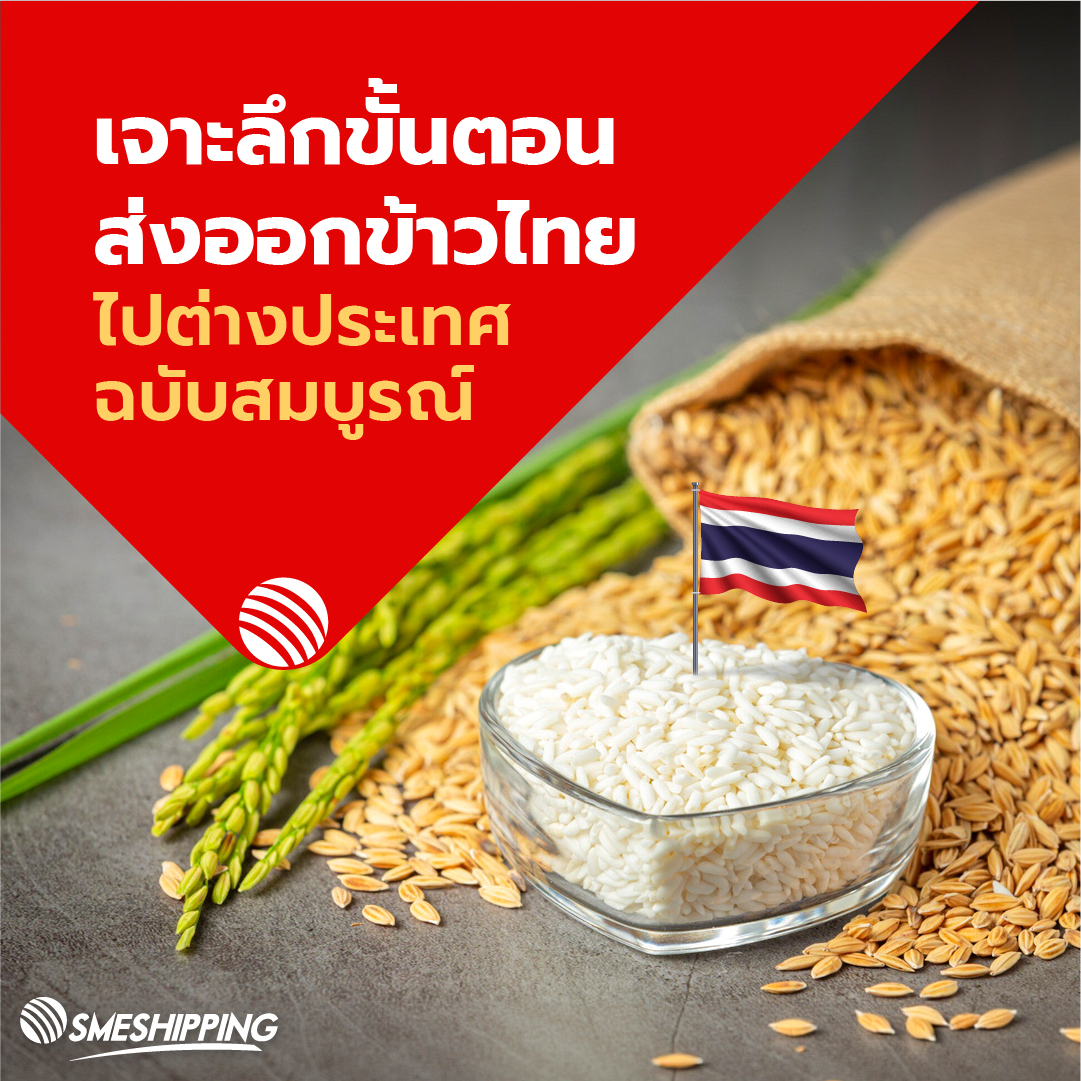
 A Complete Guide to Exporting Thai Rice | SME Shipping

An in-depth look at the complete process of exporting Thai rice to foreign countries.

This article aims to provide in-depth knowledge to entrepreneurs, rice exporters, students, farmers, and the general public by explaining the process. Exporting rice From the beginning to the payment process, including: Rice Export Law and Rice export requirements Related information, along with helpful tips.

1. Introduction: The Importance of Thai Rice Exports

Thailand is one of the producing countries and...Exporting riceOf the most important in the world.“Thai rice”"Recognized for its quality and taste, it is a product that plays a significant role in the country's economy. Therefore, the Thai government provides support in both production and..."Export to foreign countriesContinuously, in order to maintain its position in the global market.

1.1 Overview of the rice export market.

Currently, there are...Rice exportersMany Thai companies compete to export rice to various regions such as Asia, Africa, the Middle East, and the European Union. Each market demands a variety of rice, including white rice, jasmine rice, glutinous rice, and brown rice. Thailand is a leader in this diversity of rice varieties and maintains reliable production standards.

1.2 Opportunities and Challenges

  • chance
    • The demand for high-quality rice in the global market.Consumers in many countries prioritize food quality and safety, making Thai rice a top choice.
    • Government support policies.The Thai government has measures in place to promote exports, such as reducing import tariffs on raw materials, providing subsidies, and other measures to stimulate international trade.
    • Agricultural innovation and technology.Rice breeding programs and the application of IoT technology and data management systems are helping to improve production efficiency.
  • Challenges
    • Competition from other producing countries.For example, Vietnam, India, or Pakistan, which have low production costs and receive government support as well.
    • Strict requirements and laws for rice export.Each country has different quarantine and food safety standards, which means...Rice exportersYou have to adapt.
    • Market and exchange rate volatility.Economic changes and exchange rates could affect the price of Thai rice in the global market.

Given these opportunities and challenges, education...Rice export proceduresAnd comply.Rice export requirementsDoing it right will help Thai entrepreneurs expand their markets and compete effectively at the international level.

2. Procedures for exporting rice.

actionExporting riceTraveling abroad involves many steps, from initial preparations to receiving payment for goods. Businesses should plan carefully to minimize costs and manage risks for maximum efficiency.

2.1 Preparation before export.

  1. Studying the rice export market.
    • Analyze the market demands in the target country, such as rice type, quality standards, and packaging.
    • Check the tax regulations, trade barriers, and food standards set by the importing country.
  2. Plan the production and supply of quality rice.
    • Choose rice varieties that are in demand in the market.
    • Collaborate with farmers or agricultural cooperatives to obtain high-quality rice in sufficient quantities to meet demand.
  3. Estimate costs and set prices.
    • Calculate the cost of production, processing, packaging, transportation, insurance, and other expenses.
    • Set prices that are competitive in the global market, taking into account exchange rates and taxes.

2.2 Finding customers and making contracts.

  1. Find customers overseas.
    • Participate in an international trade fair.
    • Use online channels such as B2B marketplace websites or specialized social media platforms.
    • Contact the commercial attaché in the target country to request market information and a list of reliable importers.
  2. Negotiating terms and conditions and signing a contract.
    • Clearly specify the quantity and type of rice (e.g., jasmine rice, white rice, or glutinous rice).
    • Determine pricing, payment terms (Letter of Credit, T/T, D/P, etc.), as well as shipping and insurance conditions.
    • Summarize the terms of the export sales contract in detail to reduce the risk of breach of agreement.

2.3 Application for a Rice Export License

  • Rice Export License
    • In Thailand, exporting rice requires a license from the Department of Foreign Trade, Ministry of Commerce.
    • Check the latest information about...Rice Export LawObtained at Department of International Trade Or related documents, such as: One Stop Service DITP
    • Exporters must register as...Rice exportersLegally compliant and in compliance with government regulations.

2.4 Preparing documents for rice export.

Once the license is obtained, the next step is preparation.Rice export documentsVarious examples include:

  1. Commercial Invoice
    • Specify the buyer and seller details, product list, quantity, price, and trade terms (Incoterms).
  1. Packing List
    • Specify the packaging method, weight, and volume of the product.
  1. Bill of Lading (B/L) or Airway Bill (AWB)
    • This is a shipping document for sea or air transport, used as proof of shipment and for claiming receipt of goods.
  1. Certificate of Origin
    • Issued by an authorized agency, such as the Thai Chamber of Commerce or the Department of International Trade, to confirm that the "rice" originates from production sources in Thailand.
  1. Phytosanitary Certificate
    • Issued by the Department of Agriculture, Ministry of Agriculture and Cooperatives, to confirm that the rice is free from pests and suitable for export.
  1. Other certificates as required by the importing country.
    • For example, a Halal certificate, in the case of exporting to Muslim countries.

2.5 Customs Procedures and Transportation

  1. Submitting customs documents (Customs Clearance)
    • Exporters must submit export declarations through the Customs Department's electronic (Paperless Customs) system.
    • Pay customs fees, taxes, or other charges (if any).
  2. Transportation management
    • Choose the most suitable shipping method: by sea (time-consuming but cost-effective) or by air (suitable for goods requiring fast delivery).
    • Plan your transportation arrangements with a freight forwarder or international shipping company to manage containers, cargo space, and insurance.
  3. Product delivery and tracking.
    • The goods will be delivered to the destination port or airport.
    • Exporters should closely monitor the status of their goods to ensure there are no issues with documentation or customs procedures in the destination country.

2.6 Receiving payment for goods.

  1. Popular payment methods
    • Letter of Credit (L/C)Banks act as intermediaries in receiving and making payments, building trust between buyers and sellers.
    • Telegraphic Transfer (T/T)The buyer transfers money to the seller's account via electronic banking.
    • Documents against Payment (D/P)The buyer will receive the shipping documents only after full payment has been made.
  2. Track payment
    • Verify that the financial documents are accurate and complete.
    • Systematically record all income and related taxes to serve as evidence for future accounting and auditing purposes.

3. Relevant important documents.

InExporting rice There are documents that must be prepared to comply with government regulations and international standards. The main items are as follows:

  1. Rice Export License
    • Obtaining permission from the Department of International Trade, Ministry of Commerce, is a crucial step in the process of obtaining authorization for export transactions.
  2. Commercial Invoice
    • Commercial documents used to verify the value of goods specify details necessary for the customs process.
  3. Certificate of Origin
    • This is an important document for overseas buyers, especially in cases where there are preferential tax treatment under a free trade agreement (FTA).
  4. Phytosanitary Certificate
    • Confirming the hygienic safety of rice and preventing the spread of pests.
  5. Other supporting documents
    • Various certifications (such as GMP, HACCP), Halal certification for the Muslim market, etc.

4. Relevant laws and regulations.

Entrepreneurs should study and follow the guidelines.lawandRice export requirementsThe following must be strictly observed.

  1. Rice Trade Act
    • It is the primary law that regulates buying and selling.Rice exportsIn Thailand, the duties and responsibilities of business operators are clearly defined.
    • Penalties are imposed on those who violate regulations, such as exporting rice without a license.
  2. Customs Law
    • Customs proceduresThis involves submitting shipping documents, calculating taxes and fees, and clearing goods. Failure to comply may result in fines or seizure of goods.
  3. Rice product standards
    • Some importing countries may set their own standards for rice regarding quality and safety.
    • Exporters must check and obtain certification according to the relevant standards, such as Codex standards or the standards of the destination country.
  4. Requirements of the importing country.

5. Tips for Rice Exporters

BeingRice exportersTo be successful, success doesn't stop at simply delivering rice to buyers; it requires systematic planning and management.

  1. Choose your market wisely.
    • Study the specific needs of each market, such as rice type, packaging, and hygiene standards.
    • Assess the competitors and tariffs in that market. Markets with low import tariffs and high demand should be prioritized.
  2. Networking
    • Collaborate with the Thai Rice Exporters Association or other trade associations to exchange information and experiences.
    • Participate in business matching events organized by government or private sector organizations.
  3. Negotiate strategically.
    • Study the culture and business practices of trading partner countries.
    • Use cost and quality information about rice when negotiating prices, and try to agree on payment terms that are safe for both parties.
  4. Managing financial and logistics risks.
    • Consider currency hedging to protect against exchange rate fluctuations.
    • Choose an experienced transportation company and diversify your risk by using more than one service provider.
  5. Building a brand and adding value to Thai rice.
    • Design packaging that conveys the value of "Thai rice," emphasizing its unique identity, such as images of Thai temples or Thai patterns.
    • Market your products online through websites, social media, or B2B platforms to make product information easily accessible to buyers.
  6. Track and maintain relationships with customers.
    • We regularly assess customer satisfaction and improve products and services based on feedback.
    • Maintain long-term relationships with your business partners to ensure stable future orders.

6. Conclusion

actionExporting riceIt is a business with high growth potential because..."“Thai rice”"It has a reputation for quality and taste that is internationally recognized. However, entering the market..."Export to foreign countriesIt requires knowledge and understanding of the rules and regulations.Rice Export LawThis includes systematic planning and management, starting from...

  • studyRice export marketAnd analyze consumer needs.
  • Preparing for production and application processes.Rice export license
  • PreparationRice export documentsAnd comply.Customs procedures
  • Negotiating contracts, transporting goods, and receiving payments.
  • Risk management and compliance.Rice export requirementsof different countries

Promoting "Thai rice" on the global stage presents an opportunity to generate long-term revenue and enhance Thailand's reputation. If exporters are prudent in their business practices, provide complete information as required by government agencies and target markets, and prioritize product quality and marketing, "Thai rice" can enjoy sustainable demand.

References

Documents from these official sources will help exporters stay up-to-date on international trade policies, tariffs, and other promotional measures.

We sincerely hope that this article will be useful to Thai entrepreneurs who are interested in starting or expanding their market.Exporting riceTo achieve international success. Enhancing competitiveness must begin with knowledge and full adherence to international standards. Only then will "Thai rice" continue to win the hearts of consumers worldwide.

A Complete Guide to Exporting Wooden Furniture to Foreign Countries | SME Shipping

A Complete Guide to Exporting Wooden Furniture

1. Overview of the Wooden Furniture Export Market: Opportunities and Challenges for Thai Entrepreneurs.

The Thai wooden furniture industry is considered one of the industries with international potential, thanks to its high-quality wood raw materials, exquisite craftsmanship, and unique Thai designs, which have earned the products a strong reputation.“wooden furniture”"In the global market, therefore, the..."“Exporting furniture”"Therefore, it has become a significant opportunity for Thai entrepreneurs to generate revenue and expand their brands."“Export to foreign countries”"sustainably"

However, exporting wooden furniture presents not only opportunities but also several challenges, including strict international regulations, product standards, environmental hygiene, and more.“Export requirements for wooden furniture.”"Regarding the documents and..."“Customs procedures”"These procedures must be strictly followed. Therefore, this guide will help Thai entrepreneurs understand the steps involved."“Exporting wooden furniture.”"Systematic approach increases the chances of success on the global stage."

1.1 Overview of the Thai Wooden Furniture Market

  • Outstanding quality and design.Thai wooden furniture is known for its craftsmanship and durability, as it uses rubberwood, teak, or other certified woods.
  • High demand from the global market.The European Union, the United States, China, and the Middle East have a demand for wooden furniture for decorating homes, offices, and hotels.
  • Adapting to the eco-friendly trend.Currently, the world places great importance on "Green Products"—products manufactured responsibly in the environment. Thai wooden furniture certified under the Sustainable Forestry Council (FSC) or Professional Forestry Cooperative (PEFC) standard is therefore showing continuous growth.

1.2 Opportunities and Challenges

  • chance
    1. Wooden furniture export market Continued growth: With the expansion of the real estate and interior design industries, the demand for furniture is increasing in many countries.
    2. Thailand's export promotion policyThe Thai government provides support through various programs, including loans and participation in international trade fairs, to expand into overseas markets.
    3. Innovative manufacturing and design.Entrepreneurs can leverage new technologies or designs to add value and differentiate their products.
  • Challenges
    1. fierce competitionFrom major producers in the global market, such as China, Vietnam, and Indonesia, which have low production costs.
    2. Export requirements for wooden furniture. Environmental and health aspects: For example, certifying legal wood or adhering to sustainable forestry standards, which can sometimes involve significant inspection and certification costs.
    3. exchange rateThe volatility of the Thai baht may force exporters to manage costs and profits carefully.

With these opportunities and challenges, entrepreneurs need to study the steps involved.“Exporting wooden furniture.”"To provide comprehensive coverage in order to reduce risks and enhance international competitiveness."

2. Procedures for exporting wooden furniture.

process "“Exporting wooden furniture.”"There are many steps involved, from preparation to receiving payment for goods. Systematic planning can reduce errors and increase the chances of success in international markets."

2.1 Initial preparations

  1. Study and analyze the target market.
    • Explore consumer needs in each country, such as style, design, size, popular materials, and special requirements (if any).
    • Analyze competitors in terms of price, quality, and marketing strategies.
  2. Planning production and designing products.
    • Design and manufacture products that meet the tastes of the target market.
    • Calculate the costs of production, raw materials, labor, and transportation, and determine an appropriate price.
  3. Prepare environmental standards and certifications (if required).
    • Some countries require FSC or PEFC certification to confirm that the timber used does not contribute to deforestation.
    • For indoor wooden furniture, some manufacturers may require certifications regarding surface coatings and VOCs (Volatile Organic Compounds).

2.2 Finding customers and making contracts.

  1. Find customers overseas.
    • Participate in international furniture fairs, both in Thailand and abroad.
    • Register on a B2B platform such as Alibaba or Global Sources, or participate in business matching events.
    • Contact through the Thai Furniture Exporters Association network or government agencies such as: Department of International Trade Promotion (DITP)
  2. Contract and trade terms.
    • Agree on the quantity of goods, price, shipping method, delivery time, and payment terms.
    • Plan and select appropriate international trade terms (Incoterms), such as EXW, FOB, CIF, etc.

2.3 Application for an Export License for Wooden Furniture

  • Wooden furniture export license From the Department of International Trade (if required by law).
    • Businesses must check the regulations to see whether the type of furniture they are exporting requires a license.
    • Sometimes additional documents may be required, such as a Legal Wood Certificate.

2.4 Preparing documents for exporting wooden furniture.

Preparing the "Documents for Exporting Wooden Furniture" is extremely important. To smoothly complete customs procedures both domestically and at the destination country, the main documents required are as follows:

  1. Commercial Invoice
    • Specify seller and buyer information, product details, quantity, price, and terms of sale.
  2. Packing List
    • Specify packaging information such as weight, number of boxes, and volume for inspection during transit.
  3. Bill of Lading (B/L) or Airway Bill (AWB)
    • Shipping documents for sea or air freight serve as proof of shipment and authorize the consignee to collect the goods.
  4. Certificate of Origin
    • Issued by organizations such as the Chamber of Commerce to confirm that the furniture is manufactured in Thailand, this could help reduce import tariffs if an FTA agreement is in place.
  5. Safety and environmental documentation (if applicable)
    • For example, certificates such as FSC, PEFC, REACH, or others as required by the importing country.
  6. Phytosanitary Certificate (if raw wood is used, or as per requirements of the destination country)
    • Some countries require phytosanitary certificates for wood products to reduce the risk of pests or fungi that may be present in the wood.

2.5 Transportation Management and Customs Procedures

  1. Choosing a transportation method.
    • By boatSuitable for large items and for those seeking cost-effectiveness, but it takes a long time.
    • By airSuitable for products that require fast delivery but have higher costs.
    • Multimodal TransportCombining multiple modes of transportation, such as road + sea or road + air.
  2. Customs procedures
    • Submit the export declaration to the Customs Department electronically (paperless).
    • Please attach all required documents as specified by the Customs Department, such as Commercial Invoice, Packing List, and wooden furniture export license (if applicable).
    • Pay customs fees, taxes, or other service charges (if any).

2.6 Receiving payment for goods.

  1. Payment terms
    • Letter of Credit (L/C): The bank acts as an intermediary in the payment process, providing security for both the buyer and the seller.
    • Telegraphic Transfer (T/T): Electronic bank transfer, widely used.
    • Documents against Payment (D/P): The buyer will receive the product documents upon payment according to the terms of the transaction.
  2. Tracking and verifying payments.
    • Exporters must retain complete proof of money transfer for future verification or for use as collateral for loans.

3. Relevant important documents.

In addition to documents involved in the transportation process, there are also legal documents and various standards that businesses should pay attention to.

  1. Wooden furniture export license
  2. Commercial Invoice
    • It is used as proof of trade and is required for customs clearance.
  3. Certificate of Origin
    • This could help reduce tariffs under various free trade agreements (FTAs), making Thai products more competitive in the global market.
  4. Phytosanitary Certificate
    • If it's wooden furniture that still shows the wood's natural texture, or uses materials that may pose a risk of spreading plant diseases or insects.
  5. Environmental Standard Certificate
    • For furniture exported to markets with strict environmental regulations, such as the European Union, REACH or RoHS certification may be required in some cases.

4. Laws and Regulations: Product standards, environmental requirements.

action "“Export to foreign countries”"Regarding wooden furniture, there are various regulations involved, both in Thailand and the importing country. Businesses should be aware of and strictly adhere to them to avoid product rejection or incurring additional costs."

  1. Thai Customs Law
    • Exporters must submit documents through the customs system correctly and pay any fees (if applicable) as required by law.
  2. Forestry and timber laws.
    • If the product uses domestically sourced wood that requires special permits for logging or processing, the wood's origin standards must be checked, such as whether it is legally sourced (Legal Wood).
  3. Product standards and environmental requirements.
    • Some countries may require products to pass formaldehyde emission tests or tests for other volatile substances.
    • Eco-labels may increase opportunities to market to environmentally conscious consumers.
  4. Regulations of the importing country.

5. Preparation before export.

To ensure a smooth export process, businesses should prepare for production, packaging, transportation, and insurance as follows:

5.1 Designing and manufacturing furniture to meet international standards.

  • Choose wood materials that meet standards.An environmental certificate or confirmation of legal logging sources is required.
  • Designed to meet market demands.Understanding consumer preferences in style, color, and size to meet their needs.
  • Control costsFind ways to reduce costs in production, material usage, and labor management without compromising product quality.

5.2 Quality Control

  • Establish quality control (QC) standards at every stage.From wood selection and processing to assembly, coating, and packaging.
  • Test for strength and safety.Especially furniture such as tables, chairs, and beds that must be able to support weight or comply with international standards (e.g., EN, BIFMA).

5.3 Packaging

  • Choose packaging materials that protect the product.To ensure the goods are safe during transport, without breakage or scratches.
  • Use legally sourced packaging materials.For example, heat-treated wooden pallets, which some countries require to have the IPPC (International Plant Protection Convention) mark.

5.4 Choosing a transportation method.

  • By boatCommonly used for large or numerous pieces of wooden furniture. It is less expensive but takes longer to produce.
  • By airUsed for products requiring fast delivery or product samples, but where shipping costs are high.
  • Coordinating with freight forwarders.We can professionally handle container shipments, cargo arrangements, and documentation.

5.5 Insurance

  • Purchase cargo insurance.Covers damage or loss of goods due to accidents or other factors.
  • Choose the appropriate type of insurance.For example, Institute Cargo Clauses (A), (B), (C) to cover the risks of the route and the value of the goods.

6. Tips for Wooden Furniture Exporters

Being “Wooden furniture exporters”"Success is not just about producing quality products, but also about having appropriate planning and strategic adjustments."

  1. In-depth market analysis
    • Study the details of consumer behavior, regulations, and import tariffs in each country.
    • Assess the market potential; for example, countries with strict environmental regulations or low import taxes might be good targets.
  2. Create a brand and identity.
    • Develop brand storytelling, such as using sustainably sourced wood and designing to reflect Thai art.
    • Communicate your unique selling points to international markets through social media, websites, or B2B platforms.
  3. Negotiate strategically.
    • Study the business partners and business culture of the target country.
    • Establish payment and delivery terms that are mutually beneficial to both parties.
  4. Risk management
    • Consider currency hedging if you make large payments in foreign currencies.
    • Plan inventory management and diversify export markets to reduce over-reliance on any single market.
  5. Keep up to date with new laws and standards.
    • Many countries are continuously updating their environmental and sanitary laws, so exporters must stay informed.
    • Join the Thai Furniture Industry Association or the Furniture Exporters Association to receive the latest information.

7. Conclusion

action "“Exporting wooden furniture.”"Going abroad presents a promising opportunity for Thai entrepreneurs, as Thai wood and designs possess unique characteristics and quality that are recognized in the international market. However, in doing so..."“Exporting furniture”"The following factors must be taken into consideration:"

  1. Conduct a thorough market study.From customer needs, regulations, and tax policies to design trends.
  2. Strictly adhere to the "Wooden Furniture Export Requirements".This includes all necessary documentation, licenses, and environmental standards to ensure a smooth "customs clearance" process.
  3. Preparing for production.Quality control, product design tailored to target market preferences, and standardized packaging.
  4. Plan the marketing and financial strategies.Focus on brand building, managing exchange rate risk, and setting appropriate payment terms.
  5. Continuous adaptation.Because environmental laws and standards may change at any time.

When entrepreneurs have the knowledge and preparation at every stage, their chances of succeeding in international markets increase. Thai wooden furniture can be exported worldwide, generating sustainable revenue and reputation for Thailand.

Reliable sources of information.

Hopefully, this article will be useful to Thai wooden furniture entrepreneurs who wish to enter the "export market."“

Thorough preparation, from production to documentation and customs clearance, will ensure the stable and sustainable growth of Thai wooden furniture on the global stage.

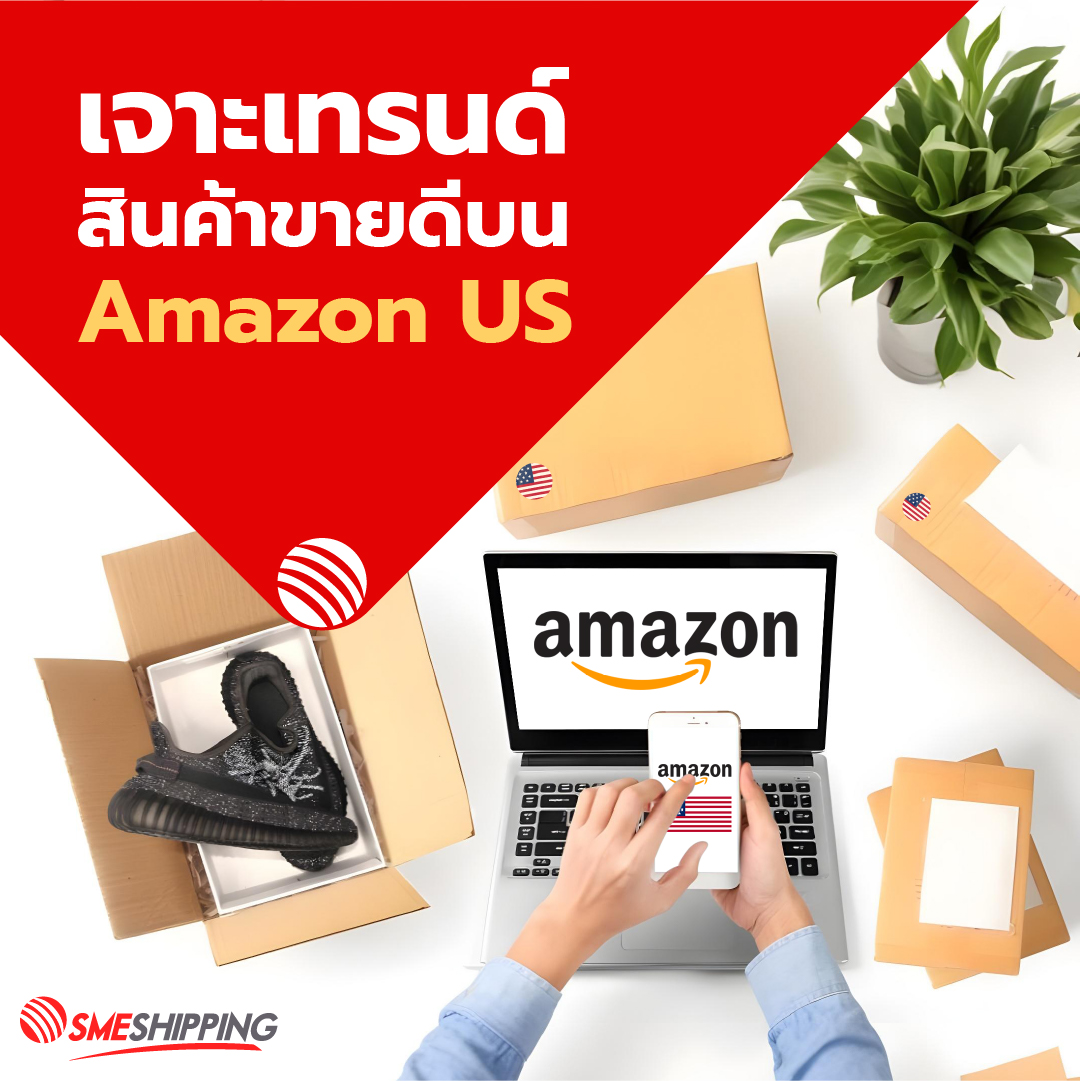
Top-selling products on Amazon US in February 2025 | SME Shipping

Analyzing Best-Selling Product Trends on Amazon US, February 2025: A Golden Opportunity for Online Sellers.

“"Amazon is like an ocean that never sleeps." I often use this phrase when I talk to friends who are starting to get interested in selling online, because in a market as large as Amazon, it's not just Americans buying things; there are people from all over the world looking for the right products at the right price.

February is a particularly interesting month for online sellers, not only because of festivals like Valentine's Day, but also because it's a time when people start making changes, drawing new inspiration from the beginning of the year, and of course, there are niche products that people buy without hesitation.

Top 5 best-selling products on Amazon US (February 2025)

1. Valentine's Day gift.

The month of love often brings phenomenal sales in this category. I once advised a client who exported minimalist sterling silver jewelry to the American market. He was amazed when his sales tripled in early February. Best-selling items included:

Jewelry: Heart-shaped pendant, ring with personalized engraving.

Chocolate: Premium or beautifully designed, emphasizing novelty.

What I think makes these products sell well is that people want "something meaningful" more than just the price, because buying something as a gift often reflects thoughtfulness.

2. Fitness and health equipment

At the beginning of the year, people often set goals like "I will be healthy this year," and Amazon is the perfect place to buy the right equipment. I've seen specially designed mini dumbbells sell out in days because they're not only easy to use but also convenient to store.

Trending products in this category:

Adjustable dumbbells

Extra non-slip yoga mat

Smartwatches for fitness

Importantly, if you're selling these products, remember to include "New Year Resolution" or "Healthy Lifestyle" in your product description, as it helps attract customers.

3. Supplies for DIY Crafts

This is an often overlooked category that sells surprisingly well during Valentine's Day. Many people prefer making their own gifts because it feels more valuable, such as candle-making kits or sewing kits.

I once met a Thai customer who sold "wooden keychain making kits" on Amazon. What made him successful wasn't just the product itself, but the easy-to-follow instructions in the user manual.

4. Pet supplies.

It's not just people who receive gifts during Valentine's Day; pets receive them too! This year's trend shows that the number of animal lovers continues to grow.

Pet clothing: like a heart-shaped shirt.

Pet toys: Especially those that help with brain development.

5. Books and stationery

The beginning of the year is a time when many people set goals to read more books or start keeping a daily journal. Products in this category are often purchased as gifts or as motivational aids, such as:

Notebook: With inspirational messages.

How-to or self-help books: such as "Atomic Habits".“

Summary

“"Amazon is a world of opportunity, but opportunities only have meaning when we know how to plan and look for the right products."”

February is an ideal time for online sellers, especially those with products ready to ship to the US. If you choose products that meet customer needs and pay attention to small details such as packaging design or product descriptions, success is within your reach.

Add your heading text here.

New opportunities in overseas markets arising from export promotion policies.

Section 1: The Importance of Export Promotion Policies and the Potential for Market Expansion.

1.1 Introduction: Why are “export promotion policies” important?

Over the past several years,“Trade between Thailand”"Continuous adaptation and development have occurred as a result of the rapidly changing global economy and increased competition in international markets. The Thai government, particularly the Ministry of Commerce, recognizes the importance of measures that can support Thai entrepreneurs in expanding into foreign markets in a stable and sustainable manner. Therefore, it has announced..."“Export promotion policy”"New initiatives to enhance overall business potential."

Recently, according to reports from... Website of the Department of International Trade Promotion (DITP)11. It states that the latest policy focuses on three main issues:

  1. Opening up opportunities for Thai entrepreneurs to access new markets in promising regions.
  2. Accelerating the development of digital and e-commerce skills for international trade.
  3. Utilizing government tools and measures to provide funding and build business networks.

1.2 Key Drivers for Thai Entrepreneurs

  • The demand for high-quality products.
    In many emerging markets, consumers demand high-quality products with certified safety standards and environmental friendliness. This presents a great opportunity for Thai entrepreneurs with outstanding products that excel in creativity, quality, and internationally recognized production standards.
  • Technological tools
    Both the public and private sectors have invested in infrastructure and new technologies to support online trade and e-commerce. Export promotion policies therefore focus on providing knowledge and technological tools to reduce costs, increase sales, and reach consumers abroad more quickly.

2. Overview of the Current Situation: Statistics and Examples of Success.

2.1 Growth in export value over the past year.

Updated information from... Thai News Agency22. It was stated that over the past year (latest data as of 2024), the value of Thailand's exports increased by approximately 3-5% compared to the same period of the previous year. The product groups with the highest growth included:

  1. Processed agricultural products such as canned fruit, frozen fruit, and rice products.
  2. Health-focused consumer goods such as herbal products, spa products, and organic cosmetics.
  3. Technology products and the electronics industry.

According to an analysis by global market experts, it has been found that: “"A new market for Thai entrepreneurs"” Thai products are expanding significantly in South Asia, including India, Pakistan, and Bangladesh, as well as in the Middle East, Africa, and Latin America, where they are increasingly receptive to the Thai market. This is due to the fact that Thai products are often distinguished by their taste, quality, and unique cultural identity.

2.2 Examples of successful entrepreneurs.

  • Food and beverage businessA Thai restaurant brand from Chiang Mai was selected to exhibit at an international trade show in Dubai and successfully penetrated the market of importers from the Middle East, thanks to its healthy menu and authentic Thai flavors adapted to local tastes.
  • Herbal cosmetics businessSME entrepreneurs in northeastern Thailand are choosing local ingredients to produce herbal cosmetics and organic shampoos, earning international certifications and securing continuous orders from the European market, where consumers are interested in environmentally friendly products with natural ingredients.

These examples of success are clear evidence that government export promotion policies have created real opportunities for Thai entrepreneurs and have also helped to increase the visibility of the "Made in Thailand" brand on the global stage.

3. Guidelines and recommendations for Thai entrepreneurs.

3.1 Make full use of government policies and measures.

  • Register to join the training program.
    Entrepreneurs can apply to participate in training programs and seminars organized by the Department of International Trade Promotion (DITP) to enhance their knowledge and understanding of international trade, digital marketing, and product development to meet international standards.
  • Request for advice or funding.
    The Ministry of Commerce, in collaboration with financial institutions, has implemented programs to provide low-interest loans or short-term working capital, enabling small and medium-sized enterprises (SMEs) to expand production while reducing their financial burden.

3.2 Prepare an international marketing strategy.

  • Analyze the target market and consumer behavior.
    Before exporting, it is essential to thoroughly research the culture, trade practices, and standards of each country. This may include import documentation, sanitary regulations, or labeling requirements.
  • Create brand differentiation.
    In a global market filled with competing products, unique differentiating factors for Thai products, such as distinctive flavors, unique ingredient recipes, or a distinctly Thai image, can help build brand recognition and attract new consumer groups.

3.3 Use digital technology as a driving force.

  • Marketing through multiple online channels.
    Investing in opening stores on global e-commerce platforms such as Amazon, Alibaba, or Shopify, as well as utilizing social media, will make it easier for consumers from various countries to access Thai products.
  • Manage logistics and supply chains efficiently.
    It is advisable to collaborate with international shipping companies that have extensive networks to ensure fast and secure delivery. Furthermore, it is important to study tracking technologies to reduce costs and errors in transportation.

Summary: Opportunities and the future of Thai entrepreneurs in international trade.

From the information and examples presented in this article, it is clear that..."“Export promotion policy”"Thailand's current system is strong and comprehensive across various dimensions, including government measures, human resource development, and the promotion of digital technology, all of which contribute to..." “"A new market for Thai entrepreneurs"” It has become a very attractive channel for business expansion.

In addition to providing Thai entrepreneurs with opportunities to grow in international markets, this promotion plan also strengthens the "Made in Thailand" image on the global stage. However, sustainable success can only be achieved if entrepreneurs are prepared with the right strategies, stay informed, and adapt to rapidly changing market trends and digital technologies.

Therefore, if you are planning to expand your business into the international market, don't miss the opportunity to take advantage of this export promotion policy. Follow more information on the website of the Department of International Trade Promotion (DITP) and related agencies to start developing effective international trade strategies and stay up-to-date with global trends.

References

  1. Department of International Trade Promotion (DITP)
  2. Thai News Agency – Report on the Export Situation in 2024 (Accessed January 2025)