


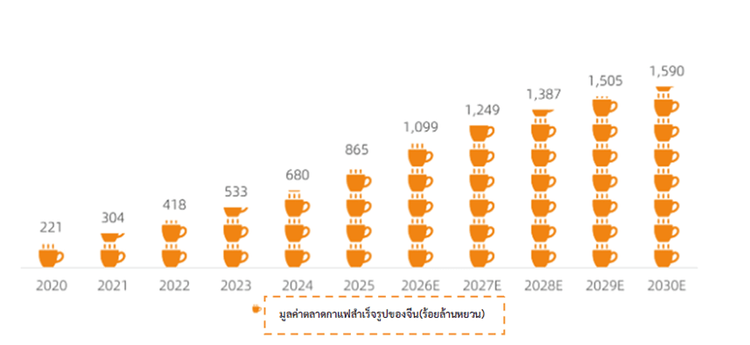
If you're already exporting instant coffee to China, or considering starting, recent signals are telling you something you shouldn't ignore. The instant coffee market in China is growing incredibly fast. Available figures show the market value increasing from around 22.1 billion yuan in 2020 to 86.5 billion yuan in 2025, and potentially reaching 159 billion yuan by 2030. That's almost four times the market size in ten years. But even more significant than these figures is that China isn't just increasing consumption; it's also building its own increasingly complete supply chain.
If you're planning to ship instant coffee to China, it's crucial to check the labeling, documentation, and the readiness of your Chinese trading partner from the start. These three points significantly impact both costs and customs risk.
Why is the Chinese coffee market growing, and what does it mean for you?
The driving force behind the instant coffee market in China right now is working professionals in large cities who demand convenience, speed, and higher quality, no longer just cheap bagged coffee. The clear trend is premiumization, where consumers are willing to pay more for products they perceive as better, more distinctive, or having a more compelling story. For Thai SMEs producing premium freeze-dried, cold brew, and RTD (Ready-to-Drink) coffee, this is the direction the market is heading. However, it's crucial to understand that market growth doesn't automatically mean every product will sell more easily.
China is developing its own coffee growing regions, particularly in Yunnan, and investing in highly advanced processing plants domestically. This means that coffee products without a clear differentiating factor may face pressure from local products that may have lower prices and easier logistics in the long run. Therefore, if you plan to export coffee to China, the question you need to answer first is not just whether you can ship it, but why would Chinese buyers choose your product over local products?
Shipping instant coffee to China: 7 things to check before actually sending it.
Before discussing sales channels or marketing, there are fundamental things that need to be taken care of. Because if the product fails customs or the labeling is incorrect, everything you've planned will be meaningless. Below is a basic checklist to check before shipping coffee products to the Chinese market.
- Chinese labels (中文标签)— Food and beverage products imported into China must have legally compliant Chinese labels covering ingredients, expiration date, nutritional information, and the name of the importer in China. Verify with the importer or agent in China before printing the actual labels.
- Registering as a manufacturer with GACC.— Since 2022, food factories exporting to China have been required to register with the General Administration of Customs of China (GACC). If your factory is not yet registered, your goods may be held at customs.
- Health Certificate— Instant coffee products containing milk, cream, or flavorings may require a health certificate from a Thai agency such as the Thai Food and Drug Administration (FDA) or the Department of Livestock Development, depending on the ingredients. Please check the details according to the actual product type.
- The correct HS Code (Customs Tariff Code)— Freeze-dried coffee, coffee mixed with milk, and RTD coffee have different HS Codes. Therefore, tariff rates and import conditions may differ. It is advisable to confirm the HS Code with an expert before preparing documentation.
- Certificate of Origin (Form E)— To utilize tariff benefits under the ASEAN-China FTA, you must have a Form E issued by the Department of International Trade or the Thai Chamber of Commerce. Please also check the local content requirements for your product.
- Information on additives and preservatives.— China has a different list of permitted substances in food and beverages than Thailand. If your product recipe contains additives or preservatives, you should check that they are on China's permitted list before shipping the product.
- Packaging and size suitable for the channel.— Coffee sold through e-commerce in China often requires packaging that is durable for shipping and sizes suitable for single-serve or gift sets, while modern retail may require different formats. It's advisable to discuss this with the buyer before production.
Sales channels in China that require precise product preparation.
The Chinese market isn't a single-channel system, and each channel has significantly different demands. If you plan to export coffee to China via e-commerce platforms like Tmall Global or JD Worldwide, you'll need to prepare the correct labeling, sturdy packaging, and the ability to meet the platform's strict deadlines, which are often tighter than those of traditional importers.
If your target is modern retail, such as supermarkets in large cities or convenience stores, you need to have complete product documentation, the ability to deliver consistent quantities, and competitive pricing compared to local products. This is where many Thai SMEs find it more difficult than they realize, because modern retail in China often requires manufacturers with the capability to scale quickly.
The differentiating factors that allow Thai coffee to maintain its place in China.
Although China has developed its domestic coffee industry, imports of coffee from Thailand have continued to grow in recent years, indicating that the market is still open. However, what has changed is that Chinese buyers have more choices and are more discerning in their selections. Therefore, the differentiating factors that will ensure Thai coffee products continue to sell in China need to be clearer than before.
A clear example is coffee from niche growing regions, such as Doi Chang, Doi Tung, or other northern Thai plantations with verifiable stories and certifications. These often attract the attention of Chinese consumers who seek something more distinctive than ordinary coffee. Similarly, coffee with special processing methods, such as natural process or honey process, clearly indicated on the packaging, has a greater opportunity to establish a premium positioning.
However, a good story must be accompanied by verifiable documentation. Buyers in China, especially in e-commerce, often verify product credibility before making a purchase. If you claim your coffee comes from a specific growing region but lack supporting documentation or certifications, it might actually decrease its credibility instead of increasing it.
Documentation and standards are matters that should not be overlooked.
One of the risks that Thai SMEs often face when exporting food products to China for the first time is that their goods are detained or returned due to incomplete documentation or labels that don't meet Chinese requirements. Besides incurring additional shipping costs, this can also damage relationships with buyers.
Before shipping your first batch of goods, it's crucial to have your labels and documentation reviewed by an experienced importer or agent in China before final printing. Correcting labels after printing is significantly more costly than pre-screening. If you don't yet have a trusted importer in China, consider gathering information from sources specializing in exporting to China, such as...smeshipping.comThat's a good starting point for understanding the process.
Risks to consider before exporting coffee to China.
There are two main levels of risks to consider. The first level is related to products and documentation, which has already been discussed. The second level is the increased competitiveness risk as China further develops its domestic coffee industry.
If your product competes primarily on price without other differentiating factors, this risk becomes increasingly apparent. Coffee from Yunnan has lower logistics costs and no import taxes. However, if your product has clear differentiating features—whether in taste, production process, origin, or packaging that appeals to urban consumers—this risk is much easier to manage.
Another thing to be aware of is that China's food regulations and standards are constantly changing. What was right this year may need to be updated next year. Therefore, regularly monitoring information from importers in China or relevant agencies is something that should be done, not just at the beginning.
Planning before shipment is better than solving problems after the goods reach customs.
What I want you to think about isn't whether the Chinese coffee market is good or bad, because it certainly is. The more important question is: how ready is your product for that market? This includes documentation, standards, labeling, packaging, and the differentiating factors that Chinese buyers will perceive.
If you want to ship instant coffee to China with minimal risk, checking the importer's documents, labels, and terms and conditions before actual shipment is still the most worthwhile step for Thai SMEs.
If you haven't yet checked your GACC registration or are unsure if your label complies with Chinese law, that's the first place you should address before considering sales channels or marketing. Preparing the necessary documentation and standards is fundamental to ensuring your plans can move forward.
In short, exporting instant coffee to China will be much easier if you check all the documents, labels, and customs conditions thoroughly before you start selling.
Source: DITP / Thai Trade Center in Xiamen (China), June 22, 2026


 English
  Thai
Thai