


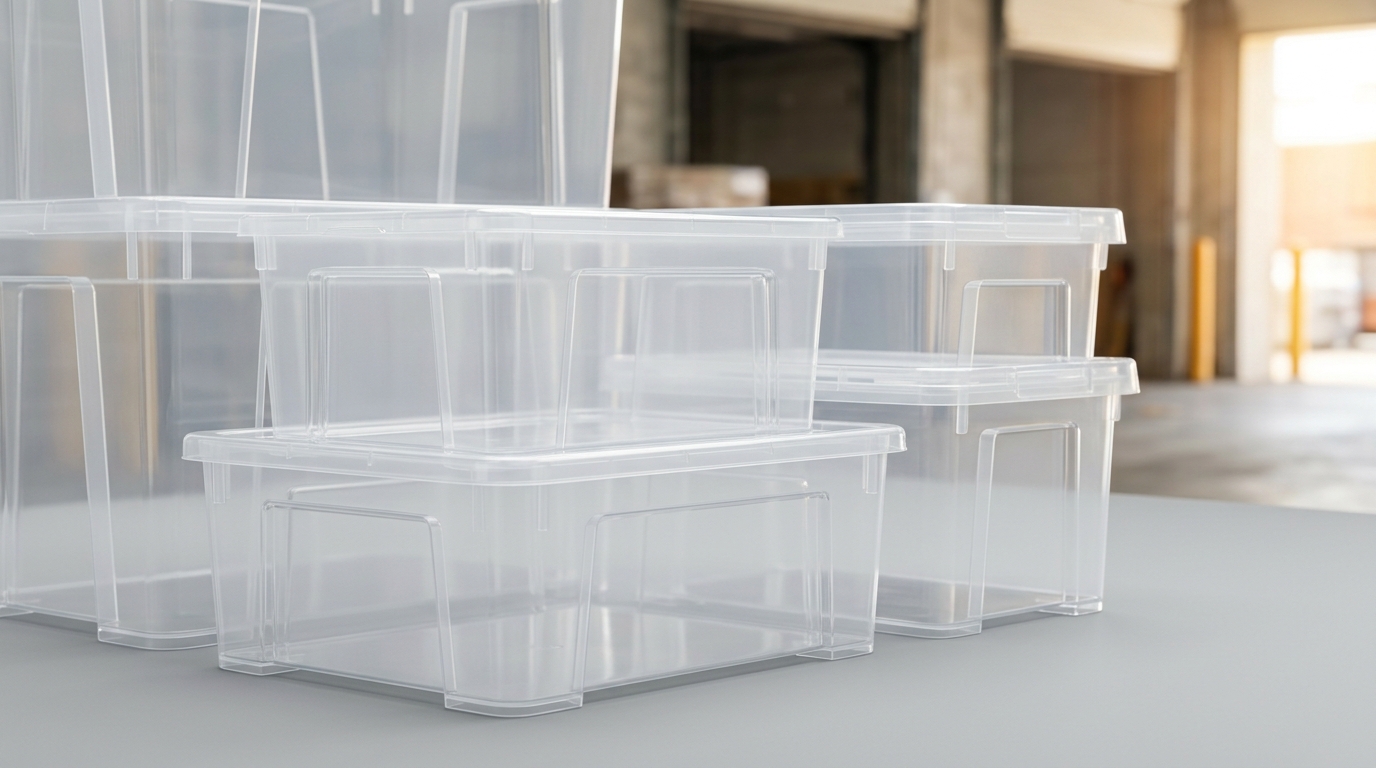
If you already manufacture or export clear plastic boxes to the Netherlands, or are considering this market as your first target, the main concern isn't just whether your products will sell, but whether they will pass customs, be tariff-correctly classified, and whether the buyer at the destination will accept your documents. If you don't prepare for these questions beforehand, there's a high chance you'll encounter problems when the goods arrive at the port of Rotterdam.
The Dutch home and living market is projected to have online sales of around €2 billion by 2025, representing a growth of approximately 121%3 trillion USD from the previous year. This figure doesn't necessarily mean immediate sales after delivery, but it indicates a real and growing demand for home storage products. This is a signal that Thai SMEs producing clear plastic containers should be aware of and plan accordingly.
But before we get there, there are several things to address, including customs tariffs, chemicals in plastics, Dutch-language labeling, and the new EU packaging legislation that recently came into effect. This article will guide you through what you need to prepare and where the risks lie.
Why is the Netherlands attractive for clear plastic boxes?
The Netherlands is not just a consumer market, but a distribution hub for Western Europe. The Port of Rotterdam is a distribution point for goods to Germany, Belgium, France, and other EU countries. Therefore, if you can ship goods to the Netherlands, there's a chance that the buyer will re-export them to other countries, truly expanding the size of the market you can reach.
Netherlands imports of goods under HS code 3923 in 2025 are projected at around US$2.8 billion, an increase of 81 TP3T from the previous year. However, Thailand ranks 37th among suppliers, with a value of only US$4.1 million, mostly consisting of plastic sacks and bags, not storage boxes. This gap presents an opportunity for Thai SMEs producing high-quality clear plastic boxes, provided they prepare correctly.
The main competitors are Germany (36% of the market), China (11%), and Belgium (10%). Germany and Belgium have an advantage in terms of distance and delivery time, but China has proven that if price and quality are consistent, the Dutch market can accept goods from outside the EU. Thailand has a similar opportunity, but must not be hindered by documentation and standards.
The HS code traps 3923 and HS 3924 to watch out for.
This is the number one risk that Thai SMEs often overlook. Clear plastic boxes can be classified under two HS codes: HS 3923, which covers plastic containers for packaging or transporting goods, and HS 3924, which covers household articles of plastics. The difference between these two codes directly affects import duties and regulations.
The classification principle is "principal use." Shoe boxes designed for home storage might be classified under HS 3924 instead of HS 3923, depending on how the buyer markets the product and how the destination customs interpret the classification. Quoting the wrong product using the wrong classification could result in the buyer's actual cost being higher than expected and cause problems during customs clearance.
The best way to prepare for shipping is to check the tariff classification through the EU's TARIC database, which is updated according to the import date. If you are still unsure, request Binding Tariff Information (BTI), which is a binding tariff ruling for customs authorities throughout the EU. BTI takes approximately 30-120 days to issue, so if you are planning to ship a item, you should start this process well in advance.
Transparent plastic boxes from the Netherlands: Checklist of required documents and standards.
Before actually shipping the goods, prepare all the necessary documents and check that they meet the standards on this list, as each point affects customs clearance and acceptance by the final buyer.
- Confirm HS code at SKU level. — Always verify via TARIC or request BTI before quoting commercial prices. Do not use the same tariff code for all SKUs without verification.
- Material Composition document — Prepare material composition data for all plastic SKUs, including the names of chemicals used in the manufacturing process, so that importers in the EU can verify SVHC.
- Certificate from the raw material supplier. — Request a Certificate of Compliance or Material Safety Data Sheet (MSDS) from the plastic resin supplier to confirm that the amount of SVHC does not exceed 0.1% by weight.
- Dutch label — Safety information, warnings, and manufacturer/importer information must be in Dutch, in accordance with GPSR (EU) 2023/988, which has been in effect since December 2024.
- Economic Operator data in the EU. — There must be an importer, authorized agent, or fulfillment provider located in the EU responsible for compliance with GPSR.
- Check the latest REACH SVHC List. — As of February 2026, there were a total of 253 SVHC substances, including bisphenol AF (BPAF) and the recently added n-hexane. It was verified that the plastics used did not exceed the limits for these substances.
- Prepare to deal with PPWR. — The new packaging law (EU) 2025/40, which will come into partial effect from August 2026, ensures that packaging used to ship goods is actually recyclable on an industrial scale.
- Technical Documentation — Prepare technical documentation for post-market surveillance in accordance with GPSR, including risk assessments for each SKU.
The REACH regulation and SVHC substances directly affect plastic packaging.
REACH is an EU chemical regulation that Thai exporters are not directly bound by, but importers in the EU are responsible for it. If you provide incomplete information about the materials, the importer may refuse the shipment or request additional documentation, resulting in port delays and increased costs.
The SVHC substance to watch out for in plastic containers is the bisphenol group, which is used in some types of plastics, particularly bisphenol AF (BPAF), which was added to the list of SVHCs in February 2026. If the plastic you use contains more than 0.1% by weight per piece, the importer must notify the next recipient in the supply chain under Article 33(1) of REACH.
The preventive measure is to request a Material Safety Data Sheet from your plastic resin supplier and have them provide written confirmation that the raw materials used do not exceed the permitted SVHC levels. This document should be updated whenever the raw material source changes, as the SVHC list is periodically updated.
GPSR, a new product safety law, has been in effect since December 2024.
General Product Safety Regulation (GPSR) No. (EU) 2023/988 came into effect on 13 December 2024. This legislation affects all types of products sold in the EU, including transparent plastic containers sold online, which is the main market channel in the Netherlands.
A key requirement directly impacting Thai SMEs is the need for an "economic operator" based in the EU responsible for compliance. This operator could be an importer, an authorized representative, or a fulfillment provider. Selling directly to consumers through a marketplace without an EU representative poses a compliance risk.
GPSR product labeling requirements include clear information about the manufacturer or importer, contact address, and product references. Warnings or usage instructions must be in a language understandable to consumers (Dutch in the Netherlands). If your label only contains English or Thai, there is a possibility your product may undergo further inspection or be rejected.
The NVWA, or the Netherlands Food and Consumer Goods Authority, is the main regulatory body in the country. It has the authority to inspect products in the market and order recalls of products that do not comply with GPSR (Programmable Reference Responsibility). Therefore, preparing technical documentation before shipment helps mitigate this risk.
The PPWR packaging legislation is set to come into full effect between 2026 and 2030.
The Packaging and Packaging Waste Regulation (PPWR) No. (EU) 2025/40 came into effect on 11 February 2025, and most of its requirements will come into force on 12 August 2026. This legislation affects not only the packaging used to sell goods but also the packaging itself. Transparent plastic boxes may fall within this scope depending on their use.
Article 6 of PPWR requires that commercially available packaging be industrially recyclable. If your clear plastic container is classified as packaging under the law, you must verify that the materials used meet this criterion. Article 7 sets minimum proportions of recycled material in plastic packaging, details of which will be further defined in secondary legislation.
What you should do now is check with your buyer whether they define your product as “packaging” or “consumer goods,” because if it’s packaging, PPWR will have a direct impact. You should also start inquiring with your raw material suppliers about whether they have recycled plastic options (recycled content) that meet future requirements.
Impact on actual costs and price quotes.
Customs tariff risk directly impacts the buyer's actual cost. If different tariffs are used, import duties may vary, causing the quoted price to misrepresent the buyer's actual cost. If the buyer finds costs higher than expected after shipment, there's a risk of payment issues or problems with future orders.
In addition to import duties, other costs to consider when quoting landed costs include transportation costs from Thailand to the port of Rotterdam (currently approximately 25-35 days, depending on the route and shipping line), customs clearance fees in the Netherlands, EU VAT (which is 21% in the Netherlands), and costs for testing or certifying the goods if the buyer requires additional documentation.
If you have never shipped goods to Europe before, working with an experienced customs broker in the EU market can help reduce the risks associated with tariff classification and documentation. More information on international exporting can be found at [link]. smeshipping.com
Sustainability and the Circular Economy: The Future of the Plastics Market in the EU
The EU's Circular Economy policy is changing the long-term direction of the plastics market. While demand for clear plastic containers remains, growth trends may slow between 2026 and 2035 as the EU focuses on reducing single-use plastics and promoting recyclable or reusable materials.
For Thai SMEs, it's important to consider that products made from recycled plastic or designed for reuse will have a significant advantage in the EU market over generic plastic products. Buyers in the Netherlands, especially online, are increasingly inquiring about product sustainability, and some are even making it a condition for purchases.
If you are still using only virgin plastic, you should start exploring whether your raw material suppliers offer recycled content options and, if so, how much the cost will increase, in order to prepare for future regulations.
Questions that Dutch buyers often ask before placing an order.
Based on experience in the EU market, Dutch buyers purchasing from Asia often ask these questions before making a purchase. Having the answers prepared in advance can speed up the onboarding process.
- Does the product comply with GPSR, and does it have an authorized representative in the EU?
- Are there REACH compliance documents available for SVHC substances?
- Does the product label include Dutch language, and is the manufacturer's information complete?
- What is the HS code used, and is BTI supported?
- What materials are the product made from? Does it contain recycled content? And is it recyclable?
- What are the MOQ and lead time, and can you send samples before placing a real order?
If you can answer these questions completely and provide supporting documentation, the chances of the buyer considering your product increase. However, if you cannot answer them or the documentation is incomplete, most buyers will stop the process and look for another supplier.
Logistics risks and delivery route planning.
The Netherlands primarily receives goods through the Port of Rotterdam, the largest port in Europe. Shipping time from Thailand is generally around 25-35 days by sea, depending on the route and shipping line chosen. If you are shipping LCL (Less than Container Load), you should factor in an additional 5-10 days for consolidation.
A logistical risk to be aware of is delays at Rotterdam customs if documentation is incomplete or the product classification is unclear. Demurrage and detention costs can significantly increase in such cases, especially if a physical inspection of the shipment is selected, which can add an extra 3-7 days.
For SMEs just starting to export to the Netherlands, an initial FCL (Full Container Load) shipment may not be necessary if the order quantity is small. Using LCL (Less Than Container Load) through an experienced consolidator on the Asia-Europe route can help mitigate cost risk in the initial period.
Things to watch over the next 6-12 months.
The market for clear plastic containers in the Netherlands is constantly changing. If you are planning to export during this period, you should continuously monitor these factors.
- ECHA's SVHC list is updated periodically, with new ingredients added. Always check for any changes in raw material sources.
- Subordinate legislation to the PPWR that will define details regarding recyclability and recycled content is expected to be released before August 2026.
- The EUR/THB exchange rate affects our price competitiveness against suppliers from China and Europe.
- The EU's policy towards Chinese plastic products, if it includes additional anti-dumping or safeguard measures, could create an advantage for Thailand.
- The Dutch real estate market, which ING expects to expand in 2026, often drives demand for home furnishings.
This market is neither easy nor overly difficult, but preparation is key. The main risk isn't whether your product is good enough, but whether the documentation and tariff classification are correct, and whether the end buyer receives all the information they need. If you prepare these aspects well, the chances of a smooth shipment increase.
Clear plastic boxes (Nether): Double check before discussing the price and before closing the container.
Before submitting a quote to a buyer in the Netherlands, you should clearly separate the cost of the goods, packing costs, shipping costs, insurance, documentation fees, and destination charges. If you combine everything into a single lump sum, you won't know where your profit goes when shipping costs change.
For transparent plastic boxes/plastic storage containers, the first step before quoting a price is to obtain complete destination information from the buyer. This includes the desired port, Incoterms terms, required delivery date, payment method, and customs clearance documents. This information helps you assess the risk before accepting the order.
If a buyer requests a price quote, you should check it carefully. Avoid giving a broad, approximate price; instead, provide a price range, specify the quotation's expiration date, and mention that freight surcharges or other additional costs may vary depending on the shipping booking date. This helps prevent disputes when the goods are ready for shipment.
Documentation issues should be checked from the beginning, not waiting until production is complete to inquire. Some documents require time to obtain from relevant agencies or labs. Missing documents on delivery day can result in costs beyond just penalties, including delays and decreased buyer trust.
The key points to discuss with your freight forwarder are: Use the Netherlands as both a consumer market and a possible EU distribution point; for shipping, prepare SKU-level HS evidence, ensure packaging/labeling meets EU expectations, and consider re-export potential beyond the Dutch market. Ask about transit times for standard routes, alternative routes in case of risk, costs not included in the freight quote, and insurance terms and conditions in case of damage or delays.
Another point to watch out for is that the main risks are tariff misclassification, price pressure from nearby European suppliers, and possible headwinds from EU policies that favor recyclable or reusable materials over conventional plastics. These issues may not be visible in the initial quotation but will emerge when the buyer reviews documents or when customs at the destination request additional information. Therefore, preparing information in advance can help speed up the deal.
- Separate the cost of goods, shipping, insurance, and documentation onto different lines before submitting a price quote.
- Clearly confirm the Incoterms with the buyer, specifying who is responsible for the final delivery costs.
- Verify that the HS Code and product name in the invoice match the packing list and shipping documents.
- Please provide a freight quote that includes all applicable surcharges, not just the base freight price.
- Specify the expiration date of the quotation to mitigate the risk of fluctuating freight rates.
- Keep product certification documents and product photos ready to respond to buyers immediately.
- Start with a sample shipment if you haven't shipped to this market before, to reduce risk before placing a large order.
If you use this checklist before starting pricing discussions, your first export transaction won't be guesswork, but rather a decision based on actual costs, real documentation, and real risks. This will help you negotiate with the buyer with more confidence.
Source: Department of International Trade Promotion (DITP)
Transparent plastic box (Nether): Check the terms and conditions before making a decision.
Before confirming a price for clear plastic boxes, it's crucial to thoroughly review documentation, costs, and end-use conditions. This approach minimizes risk and allows for informed planning.
For more official information, please check: Related sources of information



 English
  Thai
Thai