


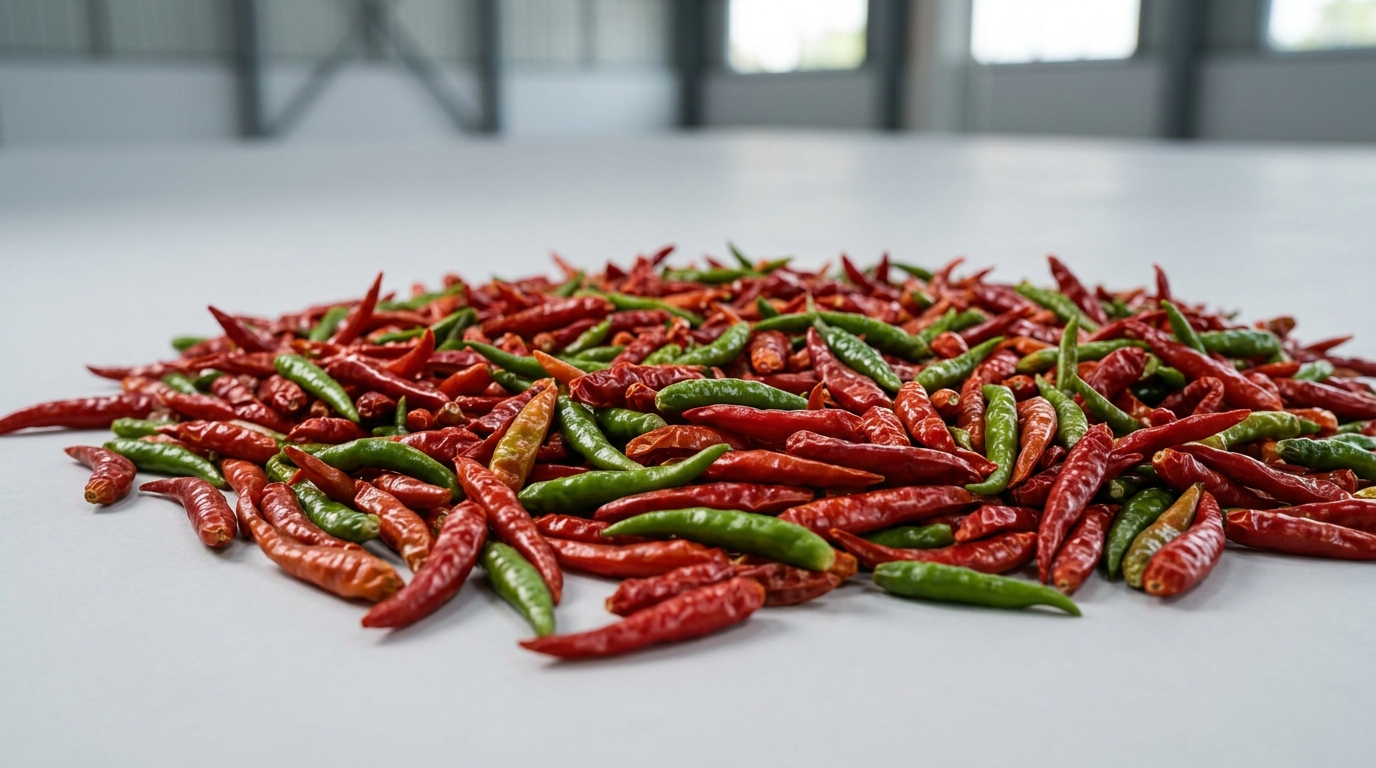
If you're involved in exporting Lao chili peppers, whether as a trader, processor, packaging service provider, or logistics manager handling projects from Laos, there are signals you should recognize before the market moves forward. The Lao PDR government, in conjunction with the FAO, is actively working to promote Lao chili peppers as a strategic agricultural export product, with China and South Korea as key markets. They aim to prepare an Investment Brief to attract investors by 2026.
I'm not saying this is an opportunity you should rush to seize, but I want you to read this entire message carefully because it contains both interesting aspects and points that, if you act without preparation, could have a greater impact on your costs and time than you think.
Where do Lao chili pepper exports stand in the bigger picture of ASEAN trade?
Laos has approximately 15.4 million hectares of suitable land for chili cultivation, with an average yield of 7–8 tons per hectare currently. However, with investment in technology and infrastructure, that figure could reach 46 tons per hectare. This means that its production potential is still far from being truly competitive in the export market.
Laos has an advantage in the Chinese market due to duty-free import arrangements under the ASEAN-China FTA and RCEP, as well as access to the Laos-China railway, which reduces travel time and costs compared to land routes. If you are in business related to exporting agricultural products through Laos to China, this route is one to watch closely.
However, the South Korean market has a distinctly different tax structure. Fresh and dried chilies are subject to high import taxes, while frozen and ground chilies receive lower rates. This means that the form of product you export will directly determine the cost at the destination.
Why Thai traders and processors should read this as well.
If you're a Thai SME that doesn't grow Lao chili peppers yourself, you might think this doesn't concern you. But consider whether you belong to one of the following groups: traders who buy chili peppers from Laos for processing or resale; packaging service providers who handle contracts from Lao exporters; cold storage or logistics service providers that handle agricultural products crossing the border; or investors looking for agricultural supply chains in the sub-region. If so, this directly impacts your planning.
This news doesn't just indicate that Laos is developing chili peppers for export; it also shows that the standards demanded by buyers in China and South Korea are not yet fully met by Laotian producers. This is a gap that Thai service providers could potentially fill if they prepare correctly.
GAP standards and traceability: Why they are more important than you think.
The FAO has clearly stated that Lao chili peppers still need to develop Good Agricultural Practice (GAP) systems, traceability, and residue control before they can firmly enter international markets. If you receive products from Laos for processing or re-export, you must ask yourself whether the documentation received from the original producer is complete.
In practice, if the goods lack a GAP Certificate or a traceability system that can be verified by the buyer at the destination, there is a chance that the shipment will be rejected or delayed at the customs checkpoint, especially in South Korea, which has a relatively strict inspection system for imported agricultural products.
If you are a processor who sources chili peppers from Laos to make chili powder or frozen chili peppers, you need a clear system for recording the origin of your raw materials. This is because buyers in South Korea and China often inquire about this during supplier audits before placing orders.
Residue control: A mistake that can affect the entire shipment.
Pesticide residues in chili peppers are a major concern for both China and South Korea. Both countries have established Maximum Residue Limits (MRLs) for pesticides in chili peppers, and if levels exceed these limits, the entire lot may be detained or returned.
If you are sourcing chili peppers from Laos for processing, the first step before accepting the goods into your factory is to request pesticide residue test results from an accredited laboratory and verify that the results cover the substances specified by the end market. Testing in a standard laboratory in Thailand takes approximately 5-10 business days, depending on the number of substances to be tested, which must be factored into your export planning.
If you are not conducting the tests yourself and are relying solely on documentation from the Lao manufacturer, you should verify whether the laboratory providing the results is accredited by an agency recognized by the end market. Test results from unaccredited laboratories may not be accepted at import customs.
Lao chili peppers for export: Check product options before deciding to ship to South Korea.
This is a point many exporters overlook. South Korea imposes high import tariffs on fresh and dried chilies, but frozen and ground chilies receive lower tariff rates. This tariff difference directly impacts the price the end buyer pays for the product and determines your competitiveness.
If you are planning to ship Lao chili peppers to South Korea, whether fresh or dried, you should calculate the total landed cost before making a decision. This includes import duties, shipping costs, cold storage fees, and documentation fees. Compare this to processing them into frozen or ground chili peppers before shipping, which may result in a lower landed cost despite the added processing fees.
For example, if the tax on fresh chilies in South Korea is 270% (this is the rate South Korea used for some types of dried chilies in the past), but ground chilies might be taxed lower at 50%, this difference makes the additional processing cost more worthwhile than shipping them raw. It's important to check the current tax rate against the correct HS Code before making a decision, as tax rates may change according to South Korea's fiscal year.
Cold chain and packaging: Costs that must be counted from the source.
The FAO stated that Laos' cold storage and packaging infrastructure still needs improvement. This means that if you receive goods from Laos for further processing in Thailand, you need to plan for the condition of the goods upon receipt and determine what additional investment is required before export.
For frozen chili peppers shipped to South Korea, maintaining a consistent temperature throughout the journey, from the processing plant to the port and shipping container, is crucial. If the temperature fluctuates during transit, the goods may be rejected at import customs, or the buyer may claim compensation. It's essential to check if your shipping provider has a temperature logging system and can provide supporting documentation.
The cost of a reefer container for the Thailand-South Korea route is generally higher than a regular container, ranging from approximately 20–401 TP3T, depending on the time of year and shipping line. This cost must be included in the landing cost calculation from the outset, not added later after booking confirmation.
The Laos-China railway route: It has real advantages, but there are conditions you need to know.
The Laos-China railway is one of the strengths that the FAO has identified as giving Laos a competitive advantage in the Chinese market. However, for Thai traders who want to use this route, there are things they need to understand first.
Transporting agricultural products via the Laos-China railway requires passing through the Boten-Mohan customs checkpoint, which has strict Chinese inspection procedures. These include checks for pesticide residues, phytosanitary certificates, and packaging inspections. Incomplete or incorrect documentation may result in goods being detained at the checkpoint, directly impacting perishable agricultural products.
Furthermore, when transporting refrigerated goods by rail, it is also necessary to verify whether the containers used are compatible with a Reefer system and whether there are electrical connections along the route. These are details that must be confirmed directly with the transport provider.
Documents required before exporting Lao chili peppers to China and South Korea.
Regardless of how you ship your chili peppers, there are several sets of documents to prepare, each with a different application timeframe. Proper time management helps minimize the risk of unnecessary delays at customs.
- GAP Certificate Issued by a certification body in Laos or Thailand, it is necessary to check whether the destination market accepts the issuing body.
- Phytosanitary Certificate Issued by the Department of Agriculture, this document must be obtained before shipping goods and must correctly specify the product type according to the HS Code.
- Certificate of Origin (C/O) To utilize FTA benefits, it is necessary to verify that the goods meet the Rules of Origin of the applicable agreement.
- Pesticide Residue Test Report From an accredited laboratory, requests should be made at least 10 business days prior to the delivery date.
- Traceability documents Specify the source of raw materials starting from the farm level, which buyers in South Korea and China often request during audits.
- Temperature Record / Cold Chain Log For frozen goods, temperature records must be kept throughout the entire journey from the factory to the port.
- Commercial Invoice and Packing List The product description, weight, and packaging details must accurately reflect the actual product.
Calculating Actual Landed Cost: Key Figures to Know Before Agreeing on a Price with the Buyer
One of the common mistakes when exporting agricultural products to new markets is agreeing on a price with the buyer without calculating the true "landed cost," which includes all costs from the point of origin to the buyer's hands.
For frozen chili peppers shipped from or through Thailand to South Korea, the costs to be included are: the price of the raw chili peppers from Laos, processing and packaging costs, domestic transportation to the port, Reefer container costs and shipping fees, cargo insurance, import duties in South Korea according to the correct HS Code, inspection and documentation fees at the import customs, and domestic transportation costs in South Korea to the buyer's warehouse.
If you haven't calculated these figures properly, negotiating FOB or CIF prices with the buyer could result in a loss at the actual cost. You should use Incoterms you understand and are familiar with, and consult with a logistics expert before confirming the price.
Frequently asked questions by buyers in China and South Korea before placing their first order.
If you are preparing to present Lao chili peppers or processed Lao chili pepper products to buyers in China or South Korea, you should have answers to these questions ready before the meeting.
China frequently requests GAP certification from recognized Chinese agencies, residue test results according to China's GB Standard, a traceability system capable of identifying the cultivation plot, and packaging conditions requiring Chinese-language labeling.
South Korea frequently requests information regarding residue test results according to South Korean MFDS (Ministry of Food and Drug Safety) standards, a Phytosanitary Certificate issued by a South Korean-recognized agency, a valid HS code to verify the applicable tariff rate, and the export history of the producer or exporter.
Things to watch over the next 6–12 months.
The Lao Chili Pepper Investment Brief is scheduled for release in August 2026, which will be the point at which many investors and traders begin to take a serious look at this supply chain. If you want to get into this supply chain before the competition intensifies, the right time to prepare is now, not after that document is released.
Key issues to watch in the coming period include: progress on the development of GAP and traceability systems in Laos; changes to South Korea's import tariffs on chili peppers in the next fiscal year; the readiness of cold storage infrastructure in Laos to support actual exports; and changes to Chinese agricultural import regulations that may affect the HS Code used.
If you provide logistics or packaging services to agricultural exporters, understanding the Lao chili supply chain now will help you prepare your services and pricing to meet future demand. For basic information on international agricultural exports, you can view an overview here. smeshipping.com
Checklist before entering the Lao chili export supply chain.
- Check whether the Lao manufacturer you will be purchasing from has a GAP (Good Agricultural Practices) and traceability system that is accepted by the end market.
- Request residue test results from an accredited laboratory and verify that they cover substances specified by China or South Korea.
- Calculate the total landed cost, including import duties, reefer container fees, documentation fees, and final delivery charges, before agreeing on the price with the buyer.
- Verify the correct HS Code for the form of goods to be shipped (fresh chilies, dried chilies, frozen chilies, or ground chilies) and confirm the current tariff rate with your customs broker.
- Prepare a temperature logging system for frozen goods throughout their journey from the factory to the port.
- Check if the transport provider you use supports Reefer containers and has experience with the routes you will be using.
- Prepare the Phytosanitary Certificate and Certificate of Origin at least 2 weeks prior to the shipment date.
- Monitor changes in import regulations in China and South Korea that may affect agricultural products over the next 6–12 months.
Precautions to take before investing in this supply chain.
This is an interesting signal, but there are several uncertainties that should be acknowledged. Firstly, the import demand for chili peppers in China and South Korea, as indicated in this report, does not yet have precise quantitative figures. This means that further research is needed to assess the market size before making any actual investment decisions.
Secondly, Laos' GAP and traceability systems are still under development. This means that if you import goods from Laos at this stage, you may need to invest in additional quality inspection and certification yourself, which is a cost that must be factored in the cost-effectiveness assessment.
Thirdly, the development of cold storage infrastructure in Laos will take time, which may initially limit the quantity of quality-certified export products. This uncertainty should be taken into account when planning purchase orders with buyers.
Lao chili peppers for export: Double-check prices before negotiating and before closing the container.
Before submitting a price quote to a buyer in Laos, you should clearly separate the cost of the goods, packing costs, shipping costs, insurance, documentation fees, and destination charges. If you combine everything into a single lump sum, you won't know where your profit is lost when shipping costs fluctuate.
For chili peppers/food ingredients, the first thing to do before quoting a price is to request complete destination information from the buyer. This includes the preferred port, Incoterms terms, desired delivery date, payment method, and customs clearance documents. This information helps you assess the risk before accepting the order.
If a buyer requests a price quote, you should check it carefully. Avoid giving a broad, approximate price; instead, provide a price range, specify the quotation's expiration date, and mention that freight surcharges or other additional costs may vary depending on the shipping booking date. This helps prevent disputes when the goods are ready for shipment.
Documentation issues should be checked from the beginning, not waiting until production is complete to inquire. Some documents require time to obtain from relevant agencies or labs. Missing documents on delivery day can result in costs beyond just penalties, including delays and decreased buyer trust.
The key points to discuss with your freight forwarder are: Watch the product form and cold-chain needs. Fresh/dried chilies face tariff pressure in Korea, while frozen or ground forms may be more viable. The Laos-China rail route is presented as a transit advantage. Ask about transit times for the usual route, alternative routes in case of risk, costs not included in the freight quote, and insurance claim conditions in case of damage or delays.
Another point to be aware of is that this is mainly a Laos export-development story, so the direct benefit to Thai SMEs is indirect unless they source, process, package, invest in, or trade with Lao chili supply chains. Market demand is mentioned but not deeply evidenced. This might not be visible in the initial quotation but will emerge when the buyer reviews documents or when customs at the destination request additional information. Preparing information in advance can therefore help speed up the deal.
- Separate the cost of goods, shipping, insurance, and documentation onto different lines before submitting a price quote.
- Clearly confirm the Incoterms with the buyer, specifying who is responsible for the final delivery costs.
- Verify that the HS Code and product name in the invoice match the packing list and shipping documents.
- Please provide a freight quote that includes all applicable surcharges, not just the base freight price.
- Specify the expiration date of the quotation to mitigate the risk of fluctuating freight rates.
- Keep product certification documents and product photos ready to respond to buyers immediately.
- Start with a sample shipment if you haven't shipped to this market before, to reduce risk before placing a large order.
If you use this checklist before starting pricing discussions, your first export transaction won't be guesswork, but rather a decision based on actual costs, real documentation, and real risks. This will help you negotiate with the buyer with more confidence.
Lao chili exports: Documents, standards, and evidence that the buyer should receive.
For chili peppers/food ingredients entering Laos, you should separate product documents from shipping documents from the outset. Product documents may include specifications, ingredient lists, certificates, test reports, and labels. Shipping documents should be checked to ensure the invoice, packing list, bill of lading, and original documents match in terms of product name and quantity.
If a product requires lab testing, don't wait until production is complete to send samples. Ask the buyer beforehand what standards are required, which labs are reputable, and how long the test results are valid. This helps reduce duplicate testing and allows for more realistic delivery dates.
Labels and packaging should be reviewed from the artwork before actual printing. The buyer should confirm the product name, ingredients, weight, country of origin, production date, expiration date, and any warning messages required by the target market. Revising the artwork is also cheaper than modifying a finished product.
It's advisable to keep a complete set of evidence for each lot, including product photos, labels, outer boxes, batch numbers, and quality control documents. When the buyer or customs ask, you'll be able to answer with a single set of information, avoiding the need to search multiple parties during rush orders.
- Please provide a written checklist of documents from both the buyer and the customs broker.
- Confirm that the product name, HS Code, and details in the invoice are consistent.
- Check that the certificate and test report are valid for the specified dates and cover the import period.
- The buyer must approve the label artwork before ordering the actual packaging production.
- Link the lot number to the packing list and include photos of the product before sealing the box.
- Allow time for document revisions and requests for additional information from the recipient.
Lao chili pepper exports: Signals to monitor after sample delivery.
After sending samples to Laos, don't just focus on whether the buyer likes the product. You should also ask: what price would allow them to resell? What packaging size is suitable for this distribution channel? And what documents are causing the purchasing team to spend a long time reviewing them? Answering these questions will help you adjust your products and costs before accepting large orders.
You should record the time taken for each step, from preparing samples and obtaining documents to booking transportation, clearing customs, and finally receiving the goods from the buyer. If any step takes longer than expected, you'll know whether to allow extra time or change the shipping method for the next time.
When raw material prices, exchange rates, or freight costs change, review your landed cost. Do not automatically use prices from previous shipments, as seemingly sufficient margins may be lost due to surcharges, storage, inspection, or destination documentation correction fees.
A review date should be scheduled jointly with the sales, production, and export departments after the buyer receives the sample. This ensures that all information is consistent across all departments, including quality, price, packaging, documentation, and shipping time. If each department keeps separate data, subsequent revisions will be delayed, and responses to the buyer may be inconsistent.
For the first order, it's advisable to set conditions for increasing the quantity in advance, such as the product damage rate, customs clearance time, the number of document revisions, and the margin after including actual costs. Once the data meets the criteria, then increase the quantity. This approach ensures evidence-based growth, not just expectations.
- Ask the buyer about the trial sales figures and any actual complaints received.
- Review the lead time from production to the final delivery date.
- Compare the actual costs with the quotation item by item.
- Record the questions from the customs broker to prepare for the next document preparation round.
- Determine a decision point to expand the order, adjust the product, or stop the trial.
- Assign a data owner for each set of data so that the same data can be used to respond to buyers.
- Track actual costs incurred for storage, inspection, and document corrections.
- Review the results after each shipment before confirming the price and quantity for the next order.
- Keep records of your decisions and results for comparison with the next shipment.
A short summary is compiled after each shipment, detailing what passed, what needs fixing, the person responsible, and the date for a follow-up inspection. This allows the team to immediately utilize past lessons learned and avoids starting the analysis from scratch with every new order.
Source: Department of International Trade Promotion (DITP)
Exporting Lao chili peppers: Check the conditions before making a decision.
Exporting Lao chili peppers should begin with a thorough review of documentation, costs, and destination conditions before confirming the price. This approach helps reduce risk in Lao chili pepper exports and allows for planning based on accurate information.
For more official information, please check: Related sources of information

 English
  Thai
Thai