


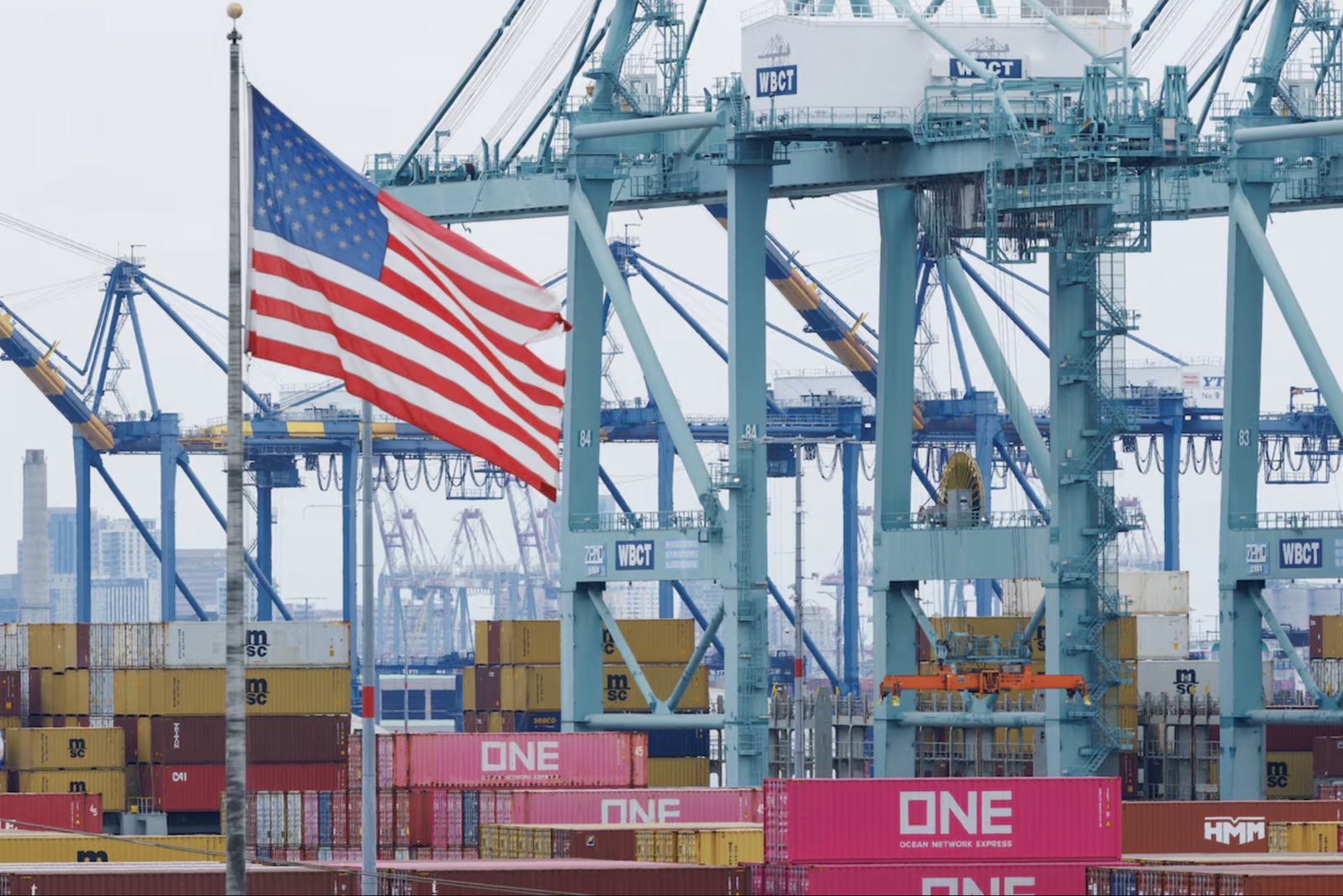
Mandatory labor tax in the United States. Effective at 00:01 Eastern Time on July 24, 2026, goods entering the United States remain unchanged in appearance and packaging, but customs clearance costs change immediately as the U.S. Trade Representative (USTR) begins applying a new Section 301 tariff to goods from 60 economies.
Mandatory labor taxes: Why the U.S. uses this measure.
This didn't start with tax figures; it started with people. The International Labour Organization estimates that approximately 27.6 million people worldwide are in forced labor. The United States therefore uses trade laws as a tool to pressure trading partners to create safeguards for these types of goods.
The USTR began its investigation on March 12, 2026, opening for comments and conducting public hearings, stating that the 60 economies under investigation covered 99.4% of U.S. imports.
Forced Labor: Where does Thailand stand in the 12.5% ratio?
Under these forced labor measures, countries that have enacted laws prohibiting the import of goods obtained through forced labor, and are obligated to implement or have some form of such a system, receive a tariff rate of 10%. This includes 17 countries such as Canada, Mexico, India, Indonesia, Malaysia, and the United Kingdom. Other countries are subject to a rate of 12.5%, and Thailand is in this group.
The key point of the mandatory labor tax for Thai employers is 12.5%. “"Additional tax"” From the normal rate, or MFN, it is not the highest total rate. For example, if the original goods were taxed MFN 5% and were not on the exemption list, the total tax liability would essentially become 17.5%.
This rule differs from the European Union and Taiwan, where the US stipulates that MFN combined with Section 301 equals 10%, while Japan, South Korea, and Switzerland combine it to equal 12.5% under conditions defined by the USTR.
Labor taxes are collected based on the country of origin, not by inspecting each factory individually.
This forced labor tax is not levied only on goods found to be produced using forced labor, but is a nationwide measure. Therefore, even if Thai factories have good labor standards, their goods may still be subject to the increased tax if they are not exempt under the customs tariff.
This does not mean that the U.S. is accusing every Thai exporter, but rather that goods from Thailand are categorized under measures based on country of origin.
Which products may be exempt from the new forced labor tax?
Not all goods will be subject to the new tariff. Exclusions include information media, donated items, personal baggage, goods and parts under Section 232, as well as raw materials and certain tariffs that the U.S. deems may be in short supply or have a broader economic impact.
Goods loaded onto ships and in transit before 00:01 U.S. Eastern Time on July 24, 2026, and imported for consumption before 00:01 on July 28, 2026, are subject to a transitional exemption.
Forced labor costs: Importers of record pay duties, but exporters may lose profits.
According to U.S. Customs regulations, the Importer of Record is responsible for paying duties, but the costs don't stop at customs. Importers may ask sellers to lower prices, change shipping terms, delay orders, or find suppliers from countries with lower taxes.
If a Thai seller offers a pricing strategy that includes bearing the customs duties themselves, the impact will directly affect their profits. The lower the profit margin on the product, the greater the impact of the 12.5% tax rate, which can turn a seemingly profitable deal into a loss.
Checklist for dealing with forced labor before exporting Thai goods to the United States.
When dealing with forced labor, Thai exporters should not immediately add the 12.5% price to every item, but should check each item in this sequence.
- Confirm HTS coordinates. It must match the actual product, because exceptions are considered based on tariff classification.
- Check the original MFN rate. To calculate the total burden after adding Section 301.
- Check the list of exceptions. Based on the USTR annex, this is not a guess from the product name.
- Review country of origin. And supporting evidence before boarding the ship.
- Specify the Importer of Record. And Incoterms should clearly state who bears the burden of the end-user duty.
- Recalculate landed cost. Including the cost of goods, shipping costs, duties, insurance, and fees.
- Talk to the American customer before shipping. To agree on a price, terms, and distribution of responsibilities that are acceptable to all parties.
This round of mandatory labor taxes highlights that the cost of a packaged product isn't solely determined by weight and distance. Sometimes, a rule announced in Washington overnight can change the selling price, profit, and purchasing decisions of people on the other side of the world. For Thai SMEs, knowing product coordinates, trade terms, and end-costs is therefore not just back-office paperwork, but an integral part of their sales strategy.
Note: This article is for business planning purposes only. Exporters should always confirm HTS codes and duty rates with a U.S. Customs expert before making any decisions.
These are the questions Thai SMEs commonly ask about taxes.
Is this 12.5% tax inclusive of tax?
This applies not to goods from Thailand. The 12.5% rate is a Section 301 tariff added to the original MFN, therefore it must be calculated from the actual tariff classification of each product. The same figure should not be used for all quotations.
Does a factory with good labor standards still have to pay fees?
Taxes may still apply because these measures are based on country of origin and product classification. Good factory standards are still important for customers and supply chain management, but they do not automatically exempt you from national taxes.
For more information on trade signals and preparation strategies for SMEs, please visit... Trade Radar



 English
  Thai
Thai