


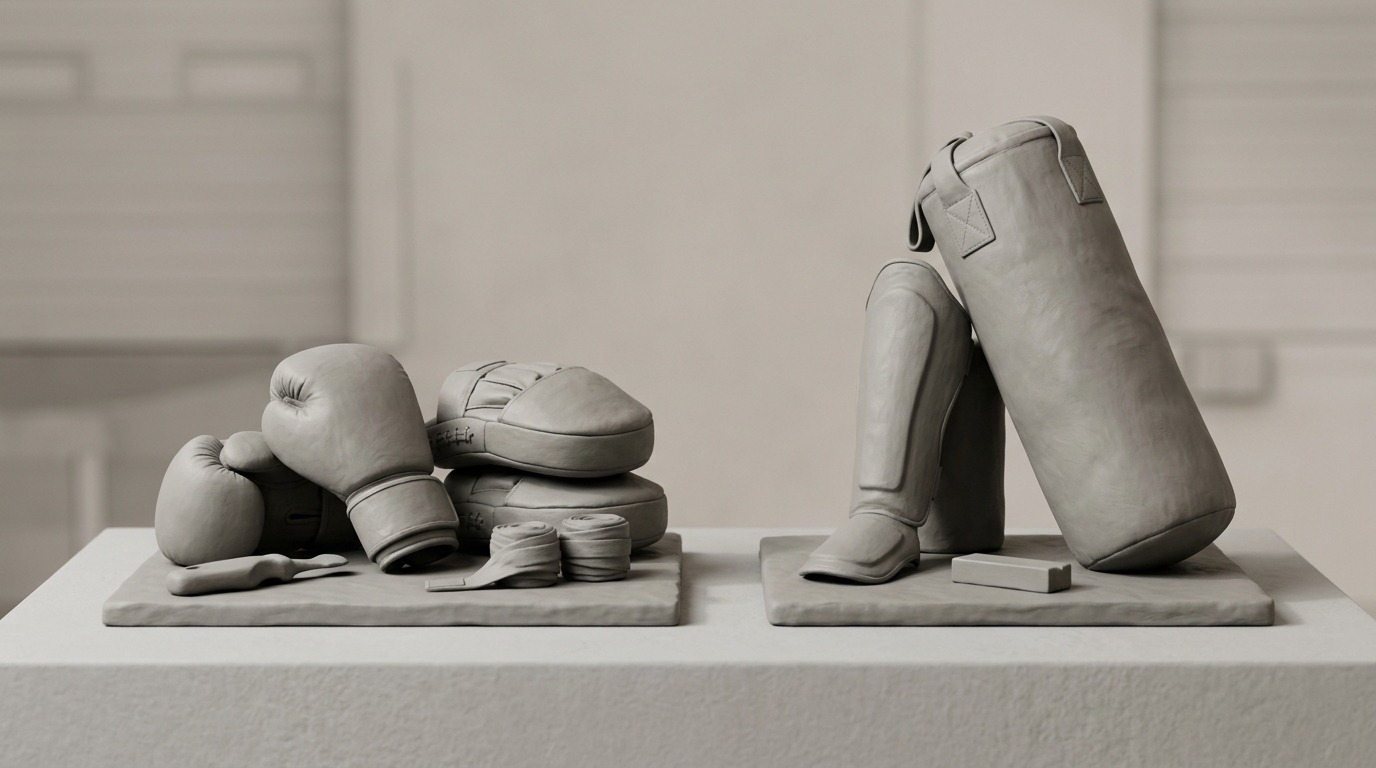
If you manufacture or export boxing equipment, gloves, or combat sportswear and are looking at the European market, then... Exporting Muay Thai equipment to Germany. It's probably already on your radar. The German boxing equipment market is valued at approximately US$136–140 million in 2025 and is expected to continue growing at an annual rate of around US$7% to approximately US$250 million by 2034. But what's even more interesting is that Thailand still has a very small market share across all relevant HS Codes, even though Thai brands like Fairtex, Twins Special, Top King Boxing, and YOKKAO are far more well-known in the German market.
The problem isn't the demand, but that most small Thai exporters aren't adequately prepared for the standards, documentation, and market channels that Germany truly requires before exporting. This article isn't telling you to rush into exporting, but rather to give you a clear picture of what you need to prepare if you want to seriously pursue this market.
Why is the German market attractive to exporters of Muay Thai equipment?
Germany has approximately 217 Muay Thai gyms throughout the country, concentrated in Baden-Württemberg, North Rhine-Westphalia, and Bavaria. There are also gyms in major cities like Berlin, Munich, Hamburg, and Frankfurt, where demand for training is steadily increasing. Membership fees per gym are around 60–120 euros per month, and each gym has an average of 120–180 members, meaning they require consistent training equipment.
It's worth noting that most Muay Thai gyms in Germany are run by Germans or foreigners who are passionate about Muay Thai, not by Thai owners. This means that their purchasing decisions depend more on brand reliability, product standards, and accessibility than on personal relationships with Thai manufacturers.
The main channels used by the German market to purchase boxing equipment include specialized online stores such as KHUNPON.de, combatarena.de, and oneteam-fightshop.de, as well as direct brand websites and purchases within boxing gyms. Amazon and eBay are used for entry-level products, but buyers seeking authentic Thai brands often avoid marketplaces to prevent the sale of counterfeit goods.
Thailand still has low import figures: HS Codes you should know.
German import data from January–April 2016 shows that Thailand remains at the bottom of the list of suppliers across all relevant HS Codes. Don't be discouraged by these figures, as they indicate there's still room for growth, but it's crucial to understand who the main competitors are.
- HS 4203.21 – Boxing gloves and training gloves (leather): Thailand ranks 10th with a value of US$0.14 million and a market share of 2.631 TP3T. Its main competitors are Pakistan (22.951 TP3T) and the Netherlands (20.371 TP3T).
- HS 9506.91 – General training equipment (sandbags, punching targets, dummy targets): Thailand ranks 30th with a value of US$0.14 million and a market share of 0.061 TP3T. Its main competitors are China (31.891 TP3T) and the Netherlands (27.441 TP3T).
- HS 9506.99 – Protective equipment (headguards, shin guards, groin protector): Thailand ranks 26th with a value of US$0.41 million and a market share of 0.261 TP3T. Its main competitors are China (32.831 TP3T) and the Netherlands (11.411 TP3T).
- HS 6203.43 – Boxing shorts (synthetic fabric): Thailand ranks 45th with a value of US$0.17 million, representing 0.051 TP3T, but showing growth of +118.621 TP3T year-on-year. Its main competitors are Bangladesh (21.441 TP3T) and Poland (9.371 TP3T).
An interesting figure is the boxing shorts (HS 6203.43), where Thailand saw a significant increase of +1181 TP3T. Although the base is small, this indicates real demand and that the market is beginning to recognize Thai products in this category. However, the decrease of -56.381 TP3T in leather boxing gloves (HS 4203.21), where Thailand ranks 10th, is more concerning. This could mean that German importers are shifting to other sources.
CE standards and EU regulations that need to be understood before exporting Muay Thai equipment to Germany.
This is where many Thai SMEs stumble, thinking that simply producing high-quality products is enough. However, the German and EU markets have very clear legal frameworks, especially for injury prevention devices.
Personal protective equipment (PPE) used in combat sports, such as gloves, shin guards, headguards, elbow pads, knee pads, and groin protectors, is classified as PPE under Regulation (EU) 2016/425 Category I. This means that these products must undergo a risk assessment and have a CE mark before being sold in the EU market. If your product does not have a CE mark, German importers may refuse to accept it or it may be detained at customs.
In addition to the CE Mark, there are several other related laws, including the General Product Safety Directive (EU) 2566/988, which covers all types of consumer goods, and REACH (EC) No. 1907/2006, which regulates the use of hazardous chemicals in materials such as leather, paints, foams, adhesives, and plastics used to manufacture boxing equipment. If your materials contain SVHC compounds, azo dyes, or heavy metals exceeding specified limits, your product may be rejected.
The EN 13277 standard for combat sports equipment is another set of requirements that professional buyers in Germany frequently inquire about. This standard is divided into several sections, such as EN 13277-1 (general requirements), EN 13277-4 (headguards), EN 13277-5 (groin protectors), and EN 13277-7 (knuckle and foot protectors), etc. Having certifications for these standards reduces the risk of rejection from importers and facilitates price negotiations.
Checklist of documents and standards to prepare before exporting.
Before you send product samples or begin negotiations with your German importer, check this list first. Missing even one item could delay the deal or result in a return of goods.
- CE Mark: Protective equipment (gloves, shin guards, headguards, groin protectors, knee pads) must be approved before being sold in the EU.
- Declaration of Conformity (DoC): The declaration of compliance with Regulation (EU) 2016/425 is required from the manufacturer.
- REACH Compliance Report: The report confirms that the materials used in production did not contain any prohibited substances exceeding the specified limits.
- EN 13277 Test Report: Test results from accredited laboratories for each type of protective equipment.
- OEKO-TEX Standard 100: For textile products such as boxing shorts, hand wraps, and training clothing, this is to confirm that they are free of harmful substances.
- Packaging Registration (PPWR 2568/40): German importers may be required to register their packaging system under German law. You should discuss with your importer what packaging information they need from you.
- The correct HS Code: Please check which HS Code your product uses (4203.21, 9506.91, 9506.99, or 6203.43) as this affects tax rates and required documentation.
- Country of Origin Certificate: Documents proving the origin of goods may affect GSP or FTA benefits that Thailand has with the EU.
Time and costs to consider before making a decision.
Obtaining a CE mark and passing the EN 13277 standard test is not an overnight process. Generally, testing and certification for Category I equipment takes approximately 4–12 weeks, depending on the laboratory used and the number of items to be tested. If you have many items, you should plan at least 3 months in advance before sending samples to importers.
The cost of testing and certification varies depending on the type of product and the laboratory chosen. Generally, REACH testing for a single material can cost thousands to tens of thousands of baht, while EN 13277 testing for a single protective device can cost tens of thousands to hundreds of thousands of baht, depending on the complexity of the test. These costs should be factored into the landed cost before setting prices for importers.
If you ship goods by sea from Thailand to Germany, the typical transit time is approximately 25–35 days, depending on the route and the destination port (Hamburg or Bremen are the main ports in Germany), plus customs clearance time at the destination, which can take 3–7 business days if all documents are complete. However, if the documents are incomplete or there are quality control issues, it may be delayed for longer.
Questions that German importers often ask before making a purchase.
If you're negotiating with an importer or specialty retailer in Germany, there's a set of questions you should have answers ready for, because failing to answer them could halt the deal.
- Does your product have a CE mark, and can you provide a Declaration of Conformity document?
- Have the materials used been REACH tested? Are there any certified lab reports available?
- Does the product meet the EN 13277 standard in the aspect relevant to that product?
- What is the MOQ (Minimum Order Quantity), and can you send a sample first?
- What is the lead time from ordering to delivery to the German port in weeks?
- Is it ISO 9001 or BSCI certified? Because large importers often require it.
- Does the packaging comply with EU PPWR requirements?
Preparing these responses in advance can speed up negotiations and demonstrate to importers that you truly understand their market, rather than just sending them the goods and expecting them to handle it on their own.
Special requirements for equipment used in the competition.
If you want to penetrate the Muay Thai equipment market in Germany, there are additional requirements you need to know. The German Muay Thai Federation (Muay Thai Bund Deutschland eV: MTBD) stipulates that competitors must use only gloves from certified brands, such as Jefferson, Malpaso, Taurus, Quicksilver, Windy (Thailand), Multi, White Snake, Las Dos MM, and Hernandez, among others.
The MTBD (Metropolitan Boxing Federation) specifies weight requirements for gloves; for example, athletes weighing under 66.68 kg should use 8-ounce gloves, and athletes weighing over 66.68 kg should use 10-ounce gloves. If your brand isn't yet certified by MTBD or other European competition organizations, entering the competition equipment market may require building relationships with federations, a process that takes time—it's not simply a matter of shipping products and waiting.
Conversely, the market for general training equipment for boxing gyms doesn't have a specific brand quota. Buyers make decisions based on quality, price, and supplier reliability. Therefore, if you don't yet have a reputation in a competitive market, starting with the training market might be a more accessible starting point.
Assessing Landed Costs Before Setting a Selling Price.
One of the most common mistakes in initial exports is setting the selling price without fully calculating the landed cost. Costs that must be included when exporting Muay Thai equipment to Germany include: product cost, testing and certification costs, shipping costs, insurance, port fees and THC, customs clearance fees in Germany, EU import duties, and final storage costs.
EU import tariffs for this product category vary depending on the HS Code. For example, HS 4203.21 (leather gloves) has a different tariff rate than HS 9506.91 or HS 6203.43. It's crucial to verify the correct tariff rate with your broker or customs expert before setting prices, as incorrect calculations can significantly reduce your profit margin.
If Thailand still has GSP benefits with the EU for certain product categories, you should check whether your products meet the requirements and what Form A or REX (Registered Exporter) documents are needed. These benefits can help reduce import duties, but you must prepare the documents correctly.
Market entry channels that Thai SMEs should consider.
For SMEs that don't yet have a customer base in Germany, participating in trade fairs is a popular option for German entrepreneurs. Relevant events include ISPO Munich (held every two years in Munich), an international trade fair for the sporting goods industry, and FIBO (held annually in Cologne), which focuses on health, fitness, and exercise equipment. Attending these events allows you to meet importers and specialty retailers directly.
Another interesting option is to approach specialized online stores that already import Thai brands, such as KHUNPON.de, which is well-known among German boxers. Contacting these stores directly, with standard documentation and product samples readily available, may be a more effective shortcut than waiting for large importers to contact you.
For more information on export planning and international logistics, you can refer to the following references. smeshipping.com This compilation gathers useful information for SMEs planning to export.
What to watch out for in the German boxing equipment market.
Import figures for January–April 2016 show a decrease across all relevant HS Codes compared to the same period of the previous year: HS 4203.21 (-13.15%), HS 9506.91 (-9.89%), HS 9506.99 (-5.25%), and HS 6203.43 (-11.87%). This may reflect a slowdown in the German economy or importers clearing old stock. Figures for the second half of the year should be monitored to determine whether this is a short-term or long-term trend.
In addition, you should monitor changes to relevant EU regulations, particularly GPSD (EU) 2566/988, which recently came into effect, and PPWR 2568/40 concerning packaging, as these laws may be updated with details that affect your product documentation and specifications.
If you're seriously considering this market, the immediate step is to check which HS Code your product falls under, identify required documentation, and estimate the cost of standard testing before sending samples to importers. Preparing correctly from the start helps minimize the risk of unnecessary time and expense.
Exporting Muay Thai equipment: Double-check before negotiating prices and before closing the container.
Before submitting a quote to a buyer in Germany, you should clearly separate the cost of the goods, packing costs, shipping costs, insurance, documentation fees, and destination charges. If you combine everything into a single lump sum, you won't know where your profit goes when shipping costs change.
For boxing/martial arts equipment, the first step before quoting a price is to obtain complete destination information from the buyer. This includes the preferred port, Incoterms terms, desired delivery date, payment method, and customs documentation. This information helps you assess the risk before accepting the order.
If a buyer requests a price quote, you should check it carefully. Avoid giving a broad, approximate price; instead, provide a price range, specify the quotation's expiration date, and mention that freight surcharges or other additional costs may vary depending on the shipping booking date. This helps prevent disputes when the goods are ready for shipment.
Documentation issues should be checked from the beginning, not waiting until production is complete to inquire. Some documents require time to obtain from relevant agencies or labs. Missing documents on delivery day can result in costs beyond just penalties, including delays and decreased buyer trust.
A point to discuss with the freight forwarder is: Useful for exporters of sports goods and apparel into Germany; HS codes mentioned include 4203.21, 9506.91, 9506.99, and 6203.43, which can support product and document planning. No route or freight advantage is identified. Ask about transit times for standard routes, alternative routes in case of risk, costs not included in the freight quote, and insurance claim conditions in case of damage or delays.
Another point to be aware of is that this is a market overview, not a regulatory or buyer-specific sourcing notice. It supports product-market planning, but not immediate compliance or logistics decisions. This might not be visible in the initial quotation but will emerge when the buyer reviews documents or when customs at the destination request additional information. Preparing this information in advance can help speed up the deal.
- Separate the cost of goods, shipping, insurance, and documentation onto different lines before submitting a price quote.
- Clearly confirm the Incoterms with the buyer, specifying who is responsible for the final delivery costs.
- Verify that the HS Code and product name in the invoice match the packing list and shipping documents.
- Please provide a freight quote that includes all applicable surcharges, not just the base freight price.
- Specify the expiration date of the quotation to mitigate the risk of fluctuating freight rates.
- Keep product certification documents and product photos ready to respond to buyers immediately.
- Start with a sample shipment if you haven't shipped to this market before, to reduce risk before placing a large order.
If you use this checklist before starting pricing discussions, your first export transaction won't be guesswork, but rather a decision based on actual costs, real documentation, and real risks. This will help you negotiate with the buyer with more confidence.
Source: Department of International Trade Promotion (DITP) – Thai Trade Office in Frankfurt, Germany Boxing Products Market Data Report 2026.
Exporting Muay Thai equipment: Check the conditions before making a decision.
Exporting Muay Thai equipment should begin with a thorough review of documentation, costs, and end-use conditions before confirming the price. This approach helps reduce risk in exporting Muay Thai equipment and allows for planning based on factual information.
For more official information, please check: Related sources of information

 English
  Thai
Thai