


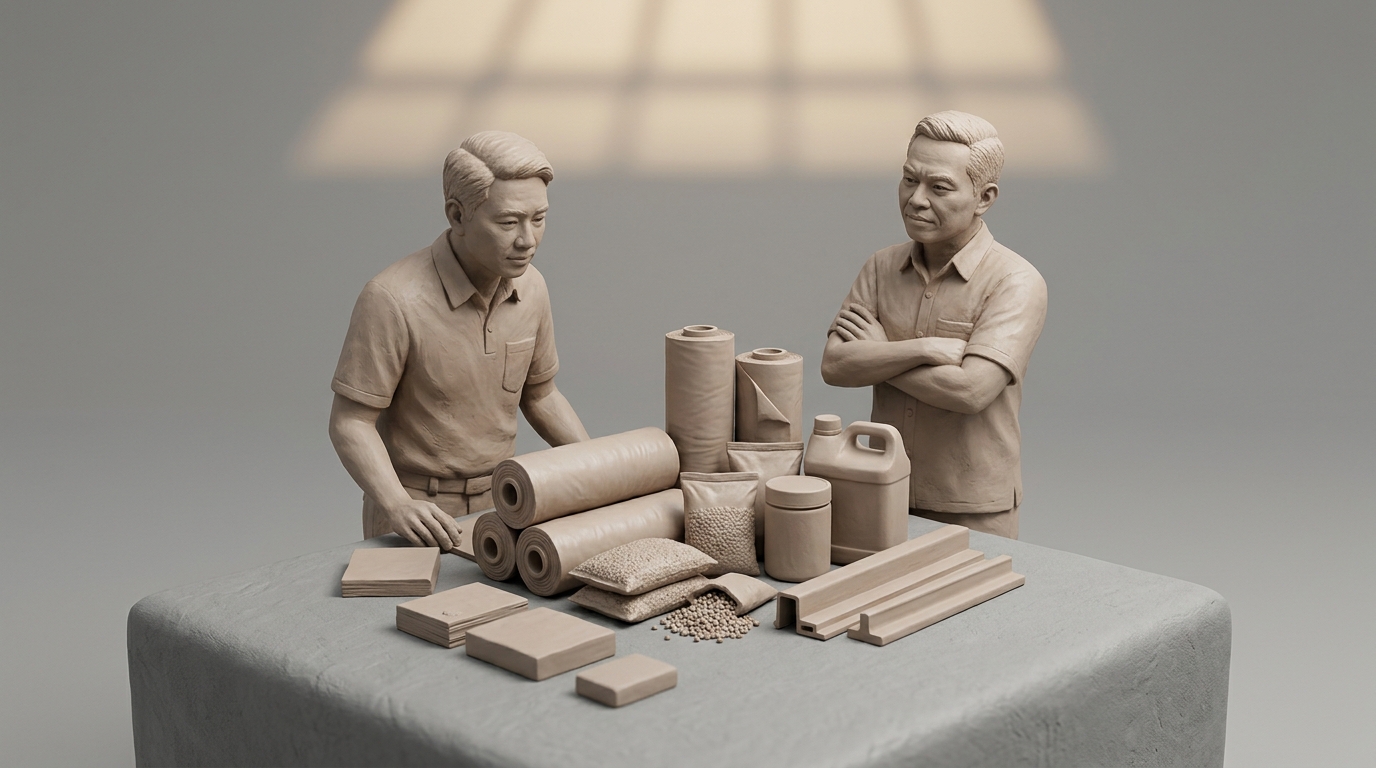
If you are thinking of... Exporting plastics to Indonesia. The first thing to know is that this market isn't closed to Thailand; in fact, it's become much more selective. Indonesian buyers in the food and beverage, FMCG, e-commerce, and manufacturing sectors still want to import certain plastics, packaging, and chemicals. However, what they look for before making a purchase isn't just price; it's documentation, quality consistency, and regulatory readiness.
By 2025, Indonesia is projected to import approximately US$3.38 billion worth of plastic products under HS code 39. Thailand ranks second as a supplier, with a value of approximately US$363.5 million. This sounds impressive, but when compared to China's growth figures, which are projected to increase from US$408 million in 2017 to US$1.28 billion in 2025, it becomes clear that while Thailand remains in the game, it's not growing at the same rate. This signal prompts some serious consideration before planning export shipments.
Why does the Indonesian market still need to import when it has domestic industries?
Indonesia already has domestic plastics and packaging manufacturers, but the domestic supply does not cover all product categories, especially specialty resins, additives, food-grade films, pharmaceutical-grade raw materials, and products requiring high technical performance. Therefore, Indonesian processors and packaging manufacturers still rely on imports for these product categories.
Industrial activity is concentrated in key areas including the Jakarta metropolitan area, Banten in West Java, Bekasi, Cikarang, Karawang, Tangerang, as well as Surabaya, Gresik, and Siduarjo in East Java. If you are unsure of your buyer's location, choosing a local supplier with networks covering these areas can significantly impact delivery speed and the development of long-term relationships.
The demand for imports also comes from multiple industries simultaneously, including food and beverages requiring food-grade packaging, automotive and electronics needing engineering plastics, and construction requiring coatings, adhesives, and sealants. This diversity of end-users means that opportunities exist, but it is crucial to choose product groups that align with each individual's strengths.
What are Thailand's strengths, and what areas should it avoid?
Thailand has clear strengths in upstream raw materials, namely polymers and resins under HS 3901, HS 3902, and HS 3907, which are used as primary materials by plastic processors and packaging manufacturers in Indonesia. In addition, Thailand also has opportunities to compete in specialty films, self-adhesive materials, tapes, labels, and raw materials for food-grade packaging.
However, in downstream product categories such as general packaging film, finished plastic products, and low-cost packaging, China dominates the market share at approximately 52–641 TP3T. In some product categories, price competition in this segment is highly risky because of the significant differences in China's cost structures. Unless you have a genuine technical differentiation or the specific documentation required by buyers, competing in this segment may severely impact your profit margins, making it unprofitable.
For the HS 29 and HS 32 chemical groups, Thailand's market share in Indonesia is approximately 3.3% and 3.8%, respectively, which is very small compared to China, India, Singapore, and Malaysia. However, Thailand still plays a role in non-water-based paints and varnishes, sealants, mastics, and certain types of construction chemicals, which are groups with potential for growth if the necessary documentation is in place.
Exporting plastics to Indonesia: Documents to prepare before actual shipment.
This is where many people miss the mark. Indonesian buyers in regulated industries such as food and beverage, cosmetics, pharmaceuticals, and construction often request a specific set of documents before confirming an order. If you can't provide them the first time, there's a high chance they'll turn to another supplier.
Documents that should be prepared before starting negotiations include: Technical Data Sheet (TDS), Safety Data Sheet (SDS), Certificate of Analysis (COA), Product Specification Sheet clearly outlining physical and chemical properties, Test Report from an accredited laboratory, and Food Contact Certificate for relevant products.
Furthermore, for products entering the food, cosmetic, or certain types of products containing animal or plant ingredients, a Halal certificate may be required by buyers. For some technical products, it may be necessary to check whether your product meets SNI (Standar Nasional Indonesia) standards. If it does meet the requirements but lacks the necessary certification, there is a chance of customs detention or rejection of import.
Checklist of documents and preparations for exporting plastics and chemicals to Indonesia.
- Verify that the customs tariff code (HS Code) is correct. Before processing any documents, you must accurately confirm the tariff classification of your goods, as different classifications may have significantly different tax rates and import requirements.
- Ensure you have complete and up-to-date TDS and SDS documents. These documents must specify complete technical and safety information, not just the product name and price.
- Every lot shipped comes with a Certificate of Analysis (COA). Industrial buyers typically require a Certificate of Analysis (COA) that matches the actual lot shipped, not just a generic sample.
- Check if a Food Contact Certificate is required. For plastics and packaging that come into contact with food, buyers in the F&B sector often mandate this as a requirement.
- Check the Halal requirements for related products. Indonesia is a large Muslim market, and buyers in some industries may require halal certification even for packaging materials.
- Check if the product meets SNI standards. If it falls under the criteria, you need to find out whether you need to apply for prior certification before shipping the goods.
- Prepare a test report from an accredited laboratory. Particularly for chemical products and technical plastics, some buyers require the use of laboratories accredited by an agency they trust.
- Confirm the specific import requirements for the product with your local distributor. Indonesian regulations may change, so having a partner in a country that keeps track of the information is very beneficial.
The time and cost involved in preparing documents are often overlooked.
Many people think that preparing the documents is easy, but in practice, requesting a test report from an accredited laboratory can take 2–4 weeks or more, depending on the type of test and the lab's workload. If you wait for the buyer to ask for it before you proceed, that means you might have to wait an extra month before you can actually ship the goods.
Testing and certification costs are also part of the landed cost that must be calculated in advance. TDS and SDS fees may not be expensive, but if you need to obtain a Food Contact Certificate or Halal Certificate, the cost and time will be significantly higher. Not including these costs in the sales price calculation could reduce the projected margin.
Additionally, if your products require SNI inspection and you don't yet have certification, the certification process can take several months. This means you can't immediately ship those products even if you have orders. It's crucial to check this before beginning price negotiations with buyers.
Price and cost risks to monitor in 2026.
In 2026, several variables directly impacted the cost of plastics and chemicals. Tensions in the Middle East and the risk of disruptions to shipping through the Strait of Hormuz led to rising global prices for polyethylene and polypropylene. If you use these resins as raw materials, your production costs could increase while the agreed-upon selling price with your buyers remains the same.
The exchange rate between the Thai baht and the Indonesian rupiah is also a variable to monitor. Currency fluctuations can directly impact the landed cost for Indonesian buyers, potentially causing them to delay orders or negotiate price reductions in subsequent rounds. Therefore, entering into long-term contracts without a mechanism to adjust prices based on raw material costs carries risks that should be considered.
Shipping rates on the Thailand-Indonesia route should be closely monitored. Although this route doesn't usually experience major problems, disruptions in the global supply chain could cause rates to rise faster than expected, impacting the overall cost of exports.
How to communicate with Indonesian buyers more effectively than just competing on price.
Indonesian buyers in industries with high technical requirements often prioritize supplier reliability and quality consistency over the lowest price. If you can consistently deliver goods that meet specifications and have all necessary documentation, that's where you can compete with China without lowering prices.
Technical communication is also crucial. If you can provide a clear and easy-to-understand TDS (Test Data Sheet), identify the appropriate application, and guide buyers on how to use it correctly, they will see you as a technical partner, not just a seller, which will make subsequent price negotiations easier.
Working through local distributors who have market knowledge and networks with processors in key industrial areas can often significantly reduce the time it takes to build relationships with new buyers, especially for products requiring demonstrations or testing before purchase.
Questions you should ask your customs broker before your first shipment.
Before shipping plastic or chemical products to Indonesia for the first time, there are a set of questions you should ask your customs broker or Indonesian import expert to ensure there are no surprises at the destination port.
- Are the HS codes used correct for this type of product in Indonesia? Are there any sub-codes that need to be specified?
- What is the current import tariff rate under the ASEAN FTA for this product, and what Form D or type of C/O document is required?
- What inspections must this product undergo before passing through Indonesian customs?
- Are there any registration or notification requirements for this type of product?
- If the documents are incomplete, how long does the correction process at the destination port take on average, and what additional costs are involved?
Product groups that Thailand should focus on and groups that should be viewed with caution.
Based on the observed market structure, product groups where Thailand has a real competitive advantage in Indonesia include upstream polymer resins used as raw materials for processors, specialty films with unique properties, self-adhesive materials, industrial tapes and labels, food-grade packaging materials, non-water-based coatings and varnishes, sealants, mastics, industrial adhesives, and certain types of construction chemicals.
Groups to be wary of are cheap commodities where China already dominates the market, such as common packaging films, low-cost finished plastic products, and powdered pigments or coloring agents, which India and China have significantly lower costs for. Competing in these segments without clear differentiation may force companies to lower prices to the point of no profit.
For high-value organic chemicals under HS 29 and specialty chemical intermediates, Thailand still faces market share limitations compared to China, India, Singapore, and South Korea. If you are in this sector, you should first assess what unique strengths would make Indonesian buyers choose you over those suppliers.
Things to watch closely over the next 6–12 months.
The Indonesian plastics and chemicals market is dynamic, with several factors to watch closely. These include potential changes to SNI (Self-Initial Regulation) requirements for plastic and packaging products, the Indonesian government's import policies (which may include adding items requiring prior import permits), and the direction of global resin prices, which are tied to oil prices and the situation in the Middle East.
Additionally, it's important to monitor whether Indonesian manufacturers are expanding production capacity for the product lines you export. If domestic supply increases, import demand for those products may decrease in the medium term. Having this information allows you to adjust your product portfolio before it impacts sales.
For logistics planning, more information about international export can be found at: smeshipping.com This compilation gathers useful information for SMEs planning to export to the ASEAN market.
In summary, the Indonesian market still has a real demand for imported plastics, packaging, and chemicals, but the real opportunities lie in product categories where buyers demand technical precision, consistent quality, and complete documentation, not in categories where competition is solely based on price. Having documentation ready before buyers even request it is the most tangible advantage right now.
Exporting plastics to the UK: Double-check prices before negotiating and before closing the container.
Before submitting a quote to a buyer in Indonesia, you should clearly separate the cost of the goods, packing costs, shipping costs, insurance, documentation fees, and destination charges. If you combine everything into a single lump sum, you won't know where your profit goes when shipping costs change.
For plastics, packaging, and chemicals, the first step before submitting a price quote is to obtain complete destination information from the buyer. This includes the preferred port, Incoterms terms, desired delivery date, payment method, and customs clearance documents. This information helps you assess the risk before accepting the order.
If a buyer requests a price quote, you should check it carefully. Avoid giving a broad, approximate price; instead, provide a price range, specify the quotation's expiration date, and mention that freight surcharges or other additional costs may vary depending on the shipping booking date. This helps prevent disputes when the goods are ready for shipment.
Documentation issues should be checked from the beginning, not waiting until production is complete to inquire. Some documents require time to obtain from relevant agencies or labs. Missing documents on delivery day can result in costs beyond just penalties, including delays and decreased buyer trust.
The key points to discuss with your freight forwarder are: focus on Indonesia-bound shipments that can support technical and compliance-heavy buyers; verify HS codes, prepare SDS/COA/test documents early, and confirm food-contact, halal, and SNI requirements before booking. Ask about transit times for standard routes, alternative routes in case of risk, costs not included in the freight quote, and insurance claim conditions in case of damage or delays.
Another point to watch out for is that competition is intense, and China dominates several downstream plastic and packaging categories. The article also notes Thailand's weaknesses in some chemical and packaging segments, so price-led commodity trading looks risky. This issue might not be visible in the initial quotation but will emerge when the buyer reviews documents or when customs at the destination request additional information. Preparing information in advance can therefore speed up the deal.
- Separate the cost of goods, shipping, insurance, and documentation onto different lines before submitting a price quote.
- Clearly confirm the Incoterms with the buyer, specifying who is responsible for the final delivery costs.
- Verify that the HS Code and product name in the invoice match the packing list and shipping documents.
- Please provide a freight quote that includes all applicable surcharges, not just the base freight price.
- Specify the expiration date of the quotation to mitigate the risk of fluctuating freight rates.
- Keep product certification documents and product photos ready to respond to buyers immediately.
- Start with a sample shipment if you haven't shipped to this market before, to reduce risk before placing a large order.
If you use this checklist before starting pricing discussions, your first export transaction won't be guesswork, but rather a decision based on actual costs, real documentation, and real risks. This will help you negotiate with the buyer with more confidence.
Exporting plastics to the UK: Documents, standards, and evidence that buyers should receive.
For plastics, packaging, and chemicals entering Indonesia, you should separate cargo documents from shipping documents from the outset. Cargo documents may include specifications, ingredient lists, certificates, test reports, and labels. Shipping documents should be checked to ensure the invoice, packing list, bill of lading, and other originating documents match in terms of product name and quantity.
If a product requires lab testing, don't wait until production is complete to send samples. Ask the buyer beforehand what standards are required, which labs are reputable, and how long the test results are valid. This helps reduce duplicate testing and allows for more realistic delivery dates.
Labels and packaging should be reviewed from the artwork before actual printing. The buyer should confirm the product name, ingredients, weight, country of origin, production date, expiration date, and any warning messages required by the target market. Revising the artwork is also cheaper than modifying a finished product.
It's advisable to keep a complete set of evidence for each lot, including product photos, labels, outer boxes, batch numbers, and quality control documents. When the buyer or customs ask, you'll be able to answer with a single set of information, avoiding the need to search multiple parties during rush orders.
- Please provide a written checklist of documents from both the buyer and the customs broker.
- Confirm that the product name, HS Code, and details in the invoice are consistent.
- Check that the certificate and test report are valid for the specified dates and cover the import period.
- The buyer must approve the label artwork before ordering the actual packaging production.
- Link the lot number to the packing list and include photos of the product before sealing the box.
- Allow time for document revisions and requests for additional information from the recipient.
Exporting plastics to India: Signals to watch out for after sending samples.
After sending samples to Indonesia, don't just focus on whether the buyer likes the product. You should also ask: What price point would allow them to resell? What packaging size is suitable for this distribution channel? And what documents are causing the purchasing team to spend a long time reviewing them? Answering these questions will help you adjust your products and costs before accepting large orders.
You should record the time taken for each step, from preparing samples and obtaining documents to booking transportation, clearing customs, and finally receiving the goods from the buyer. If any step takes longer than expected, you'll know whether to allow extra time or change the shipping method for the next time.
When raw material prices, exchange rates, or freight costs change, review your landed cost. Do not automatically use prices from previous shipments, as seemingly sufficient margins may be lost due to surcharges, storage, inspection, or destination documentation correction fees.
A review date should be scheduled jointly with the sales, production, and export departments after the buyer receives the sample. This ensures that all information is consistent across all departments, including quality, price, packaging, documentation, and shipping time. If each department keeps separate data, subsequent revisions will be delayed, and responses to the buyer may be inconsistent.
For the first order, it's advisable to set conditions for increasing the quantity in advance, such as the product damage rate, customs clearance time, the number of document revisions, and the margin after including actual costs. Once the data meets the criteria, then increase the quantity. This approach ensures evidence-based growth, not just expectations.
- Ask the buyer about the trial sales figures and any actual complaints received.
- Review the lead time from production to the final delivery date.
- Compare the actual costs with the quotation item by item.
- Record the questions from the customs broker to prepare for the next document preparation round.
- Determine a decision point to expand the order, adjust the product, or stop the trial.
- Assign a data owner for each set of data so that the same data can be used to respond to buyers.
- Track actual costs incurred for storage, inspection, and document corrections.
- Review the results after each shipment before confirming the price and quantity for the next order.
- Keep records of your decisions and results for comparison with the next shipment.
A short summary is compiled after each shipment, detailing what passed, what needs fixing, the person responsible, and the date for a follow-up inspection. This allows the team to immediately utilize past lessons learned and avoids starting the analysis from scratch with every new order.
Source: Department of International Trade Promotion (DITP), Report on the Market Situation and Opportunities for Exporting Thai Plastics, Packaging, and Chemical Products to Indonesia, prepared by the Trade Promotion Office in Jakarta.
Exporting plastics to India: Check the conditions before deciding.
Exporting plastics to the international market should begin with a thorough review of documentation, costs, and end-use conditions before confirming the price. This approach helps reduce risk and allows for planning based on accurate information.
For more official information, please check: Related sources of information



 English
  Thai
Thai