


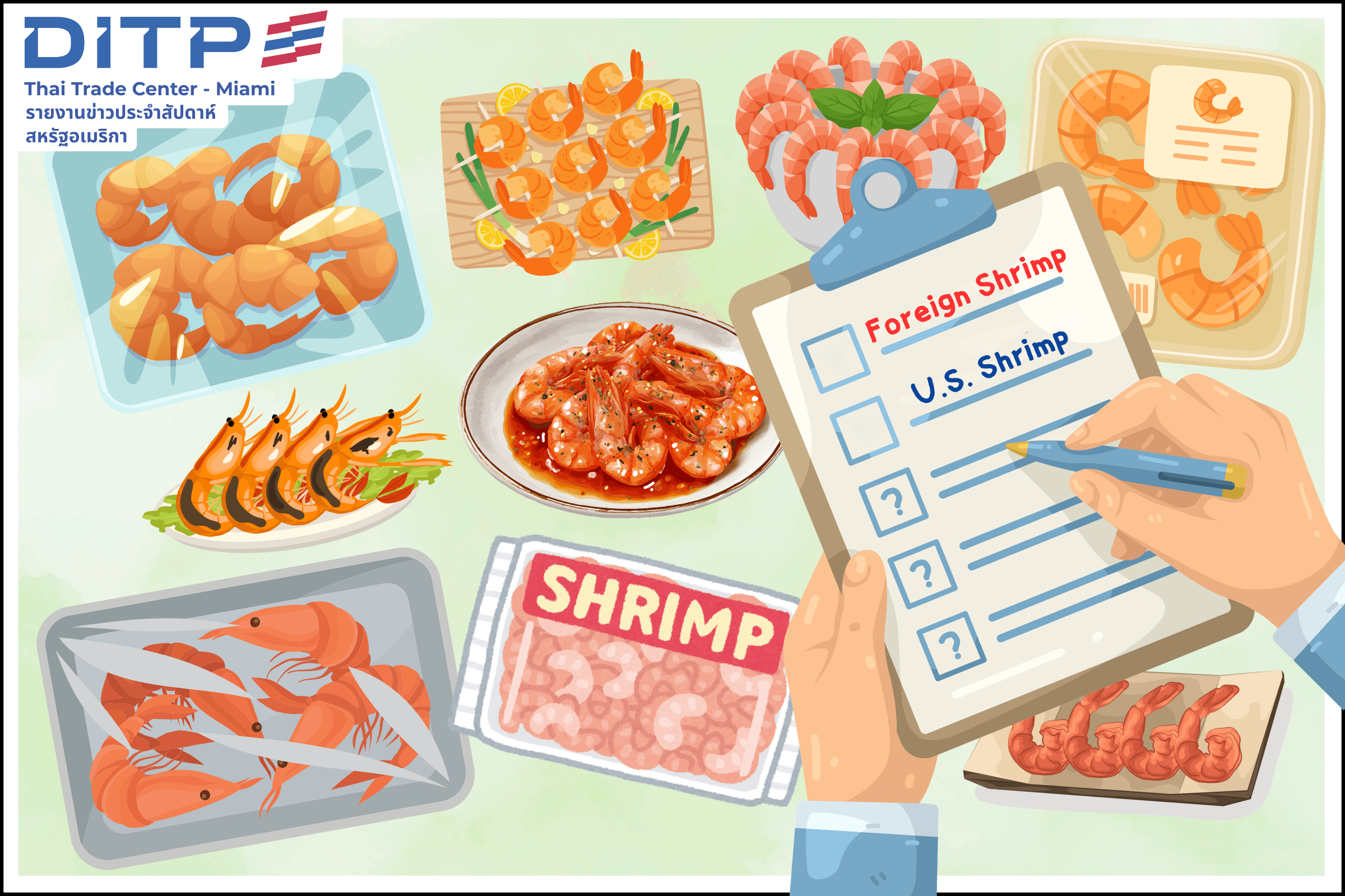
If you're already exporting Thai shrimp or seafood to the US market, there's one thing you should know beforehand that could become a problem: US shrimp import regulations. At the state level, there is a growing trend towards greater transparency regarding the origin of goods. This isn't about closing markets, but rather a signal that end buyers will demand more detailed documentation and traceability.
What are state-level regulations for importing U.S. shrimp, and why are they important?
What's happening isn't a new federal law, but rather a movement at the state level, particularly in Georgia and several other states, that are beginning to require restaurants or establishments to clearly state that the shrimp they sell is imported. Some areas are even considering requiring clearer identification of the country of origin. This doesn't mean the market is closed, but it means that if you don't have documentation that answers these questions, there's a high chance the buyer will choose a different supplier who is better prepared.
From the sender's perspective, the issue isn't about the freight cost or the shipping route, but whether the documents you send with the goods are complete and valid. Because if the buyer is questioned by a government agency and they can't find the documents from you, the problem will ultimately fall on you.
What does this signal tell Thai shrimp exporters?
The US shrimp market remains a viable export market for Thailand, but end buyers' expectations are changing. Previously, they were only interested in price and quality, but now traceability is also a key concern. If you ship shrimp to the US and the documentation is incomplete or the lot tracking is unclear, some buyers may choose not to renew the contract because they are also liable under the laws of their respective states.
This isn't something to panic about, but it's something you should plan for a little in advance. Preparing the necessary documents isn't difficult if you know what you need to prepare.
The main documents you need to prepare for shipping shrimp to the United States.
To summarize in short, what end buyers in the US want is proof of the origin of the shrimp batch, the processing methods used, and whether it meets quality standards. The documents you should have on hand include:
- Origin Document — Clearly states that the shrimp originates from Thailand and is certified by the relevant authority.
- Lot/Batch Tracking Record — Records indicating which farm or production source this batch of shrimp came from and where it was processed.
- Health Certificate - A sanitary certificate issued by a Thai agency, such as the Department of Fisheries, or an agency recognized by the U.S. FDA.
- Quality / Lab Test Records — Quality test results, such as residue tests or microbial tests, conducted by an accredited laboratory.
- Certificate of Origin (CO) — Valid Certificate of Origin (CO) for use in import procedures and tax privileges.
- Complete packing list and commercial invoice. — Clearly specify the details of the goods, weight, and value, ensuring they match all other documents.
- Traceability Summary Sheet — A concise summary document that buyers can use to answer questions from government agencies immediately, without needing to request further information from you.
What is Lot Tracking, and why do buyers need it?
Lot tracking is a system that tells you which farm or production source the shrimp in a box came from, when it was harvested or processed, and what processes it underwent before being packaged and shipped. In the past, this might have been just internal information for the factory or exporter, but now many buyers in the US need this information to answer questions from their clients or regulatory agencies in their state.
If you don't yet have a clear lot tracking system, you should start discussing with your factory or supplier whether they can issue such documentation. If you can't answer when the buyer asks, your credibility will immediately decrease.
Who must issue a health certificate, and how long is it valid?
Health certificates for shrimp exported to the United States are generally issued by the Department of Fisheries, Ministry of Agriculture and Cooperatives, an agency certified by the U.S. FDA. This document is typically valid for the specified batch number and is not indefinitely valid. Therefore, always verify that the attached Health Certificate matches the actual batch in that shipment and is not an older copy from a previous batch.
A common problem is discrepancies between the Health Certificate and the Packing List, or a mismatch between the lot number and the documents. This causes delays for customs or the buyer, and sometimes results in goods being held at the port.
Risks you should be aware of before making a decision.
It's important to understand that this move is still at the state level, not a federal law binding nationwide. The scope, enforcement, and timeline are unclear in all states. Therefore, it's crucial to regularly monitor information from reliable sources such as DITP or the Seafood Exporters Association, rather than waiting for problems to arise before seeking solutions.
Another thing to be careful about is not to confuse state laws with FDA import regulations, which are two different things. The FDA has its own requirements that apply to all shipments, while state regulations affect the end buyer in terms of what information they must provide to consumers.
How to have an effective conversation with the buyer about documents.
If you already have a buyer in the US, try asking them directly what additional documentation they require to meet the requirements in their respective state. This question doesn't make you look weak; instead, it shows you're a thoughtful and prepared supplier, which is what most buyers value more than just low prices.
If the buyer is unsure of their needs, you can offer a traceability summary sheet beforehand to demonstrate that you have complete information and are ready to answer questions from government agencies at any time. This approach builds more confidence than waiting for them to ask first.
Checklist before shipping shrimp to the US in an era demanding greater transparency.
Before your next shrimp shipment to the U.S., be sure to check this list thoroughly.
- have Origin Document Clearly stating that the product originates from Thailand and issued by a certifying authority.
- have Lot / Batch Number All documents match, from the packing slip to the Health Certificate.
- have Health Certificate The current version, which corresponds to the batch of goods in that shipment.
- It has an effect. Lab Test That has not expired and meets the parameters specified by the FDA and the buyer.
- have Certificate of Origin (CO) Correct and matches the invoice.
- have Traceability Summary This allows the buyer to answer the question immediately without waiting for additional information.
- We have verified the information in the Packing List, Invoice, and Health Certificate. Matches perfectly in every detail. There is no conflict.
Additional information for export planning.
If you are planning to ship shrimp or seafood to the United States and want to understand the overall export process, from documentation to shipping, you can find more information here. SME SHIPPING This compiles information about international exports for Thai SMEs in one place.
For the latest policy information and market signals from the Thai Trade Center in Miami, please follow DITP directly, as state-level data is subject to change, and DITP often updates before news is disseminated through other channels.
In summary: The US shrimp import regulations are not a threat, but a signal to prepare.
In short, the US shrimp market remains open, but expectations for transparency and traceability are increasing. Thai exporters who have complete documentation and can immediately answer questions about lot tracking and origin will be in a better position than those who wait for buyers to ask before scrambling for the necessary documents.
What we should be doing now is not waiting for the law to be fully implemented, but rather checking how well the documents we currently have meet the needs of the end buyer. If anything is missing, we should start preparing them today, before they become conditions that cause us to lose the deal.
Source: Department of International Trade Promotion (DITP) / Thai Trade Center, Miami, USA (TTC, Miami, USA) Read the original article.





 English
  Thai
Thai