


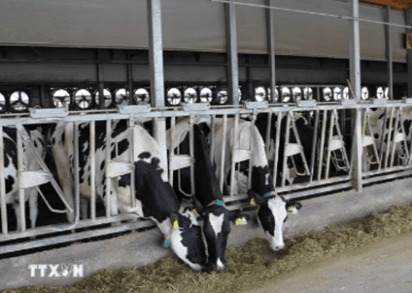
At first glance, this news might simply indicate increased milk consumption in Vietnam. However, from an export business perspective, I believe the Vietnamese milk market is sending more interesting signals. Demand continues to grow, while domestic raw materials are insufficient to meet the demand. This doesn't mean we need to rush in immediately, but rather it signals that the market still has room for those who enter with proper preparation.
If we look at it from the perspective of the language many people use to search for information abroad, this is... Vietnam dairy market Or consider the "Vietnamese milk market," which indicates that demand still exists. However, those looking to enter the market should consider the entire picture, including the product, trading partners, documentation, and end-costs, not just import figures alone.
Initial data from DITP indicates that Vietnam still imports over US$1 billion worth of milk annually, while domestic raw milk supply can only meet approximately 40% of demand. These figures clearly illustrate that, despite having established domestic players in the market, imports remain a significant part of the supply chain.
Vietnam dairy market: What do the signals from the Vietnamese dairy market tell Thai SMEs?
What's interesting isn't just that Vietnam "imports a lot," but that they import because their market structure still relies considerably on external supplies. From a Thai business perspective, opportunities may not only lie in ready-to-drink milk products on store shelves, but also in dairy ingredients, milk powder, or food products that use milk and require a consistent supply.
In this type of market, success is often not determined by advertising claims, but by product specifications, consistent quality, price relative to end costs, and the readiness of documentation. If your product clearly meets the needs of factories or importers, the chances of success will be more tangible than broadly advertising your product and hoping the market will accept it on its own.
Opportunities exist, but they are not readily available for all products.
I want to emphasize that this news is a market signal, not a purchase announcement, and it doesn't confirm that Thai sellers will easily enter every product segment. If it's ready-to-eat milk products for end consumers, you will face competition from local brands, international brands, retail channels, and the consumer behavior of Vietnam itself.
However, in the B2B market, such as raw materials for food and beverage factories, bakeries, or manufacturers needing additional supply sources, the opportunities may be much clearer. This is because buyers will focus more on specifications, continuity of delivery, and overall cost rather than just brand image.
On the other hand, it's important to remember that Vietnam also has a policy of supporting its domestic dairy industry. This means that in the long term, this market may not remain open indefinitely. If you plan to enter, you should do so knowing exactly where you fill a gap in the supply chain, rather than simply hoping that the market currently has a shortage.
What should I check before shipping goods to Vietnam?
The original article didn't go into detail about shipping routes or freight costs, but from a shipping perspective, I see the proximity to Vietnam as advantageous in terms of distance and might be suitable for starting with trial lots for certain product types. However, dairy and food products require more detailed checking than general goods.
- What tariff code does our product fall under, and what documents are required besides the invoice and packing list?
- Are there any additional hygiene requirements, product standards, or certifications?
- What information must be displayed on a Vietnamese-language label?
- Is the remaining inventory shelf life sufficient for transportation, customs clearance, and distribution?
- If a product requires temperature control, what are the acceptable costs and risks of the cold chain?
- If claiming tariff preferences under the ASEAN framework, does the product truly meet the criteria for origin?
This point is very important because sometimes a product may be sellable, but it's held up due to incomplete documentation, improper labeling, or insufficient shelf life. When goods are delayed at customs or in warehouses, costs increase very quickly, especially for food products.
What is a safer way to start a conversation with a business partner?
If you're a Thai SME interested in this market, I recommend starting with a simple question: who are you targeting? Importers, factories, distributors, or end-retailers? Each type requires different documentation, pricing conditions, and transportation methods.
For B2B marketing, you may need to prepare samples, spec sheets, ingredient lists, MOQ, and lead times in more detail than for sales materials. For the end-consumer market, you'll need to consider branding, pricing, labeling, and distribution channels comprehensively.
I see the Vietnamese milk market as... Vietnam dairy market It's interesting to consider companies with clear strengths, such as consistent quality, unique formulas that meet factory needs, or efficient cost and delivery management. However, don't rush to conclusions just because you're seeing news of growth; prioritizing documentation, standards, and partner relationships is always more important.
A few questions to consider before using this news to make a decision.
- Is our product more suitable for the B2B market or the end consumer market?
- What types of product documents, food standards, or certifications do our Vietnamese trading partners require?
- Is the landed cost, after including transportation, taxes, and documentation fees, still competitive?
- What are the limitations on shelf life and temperature control for dairy and food products?
- Should we start with a trial batch or sample shipment before discussing a large order?
Summary for Thai business owners.
In short, this news indicates that Vietnam remains a market with significant demand but also relies considerably on imports. This presents opportunities for Thai businesses, particularly in the dairy raw materials, milk powder, and related food products sectors. However, opportunities will favor those who are well-prepared in terms of products, documentation, and transportation methods, rather than those who blindly follow market figures and rush in.
If you're using this news as a starting point, I think you're on the right track. However, the next steps should be to check product specifications, discuss specs with partners, and estimate actual costs before sending the first batch. That would be safer than viewing it as an easy opportunity. In my opinion. Vietnam dairy market Therefore, it should be used as a signal to ask a question, rather than as a ready-made answer.
Source of initial data: DITP
Next thing to read:
Source: DITP



 English
  Thai
Thai