


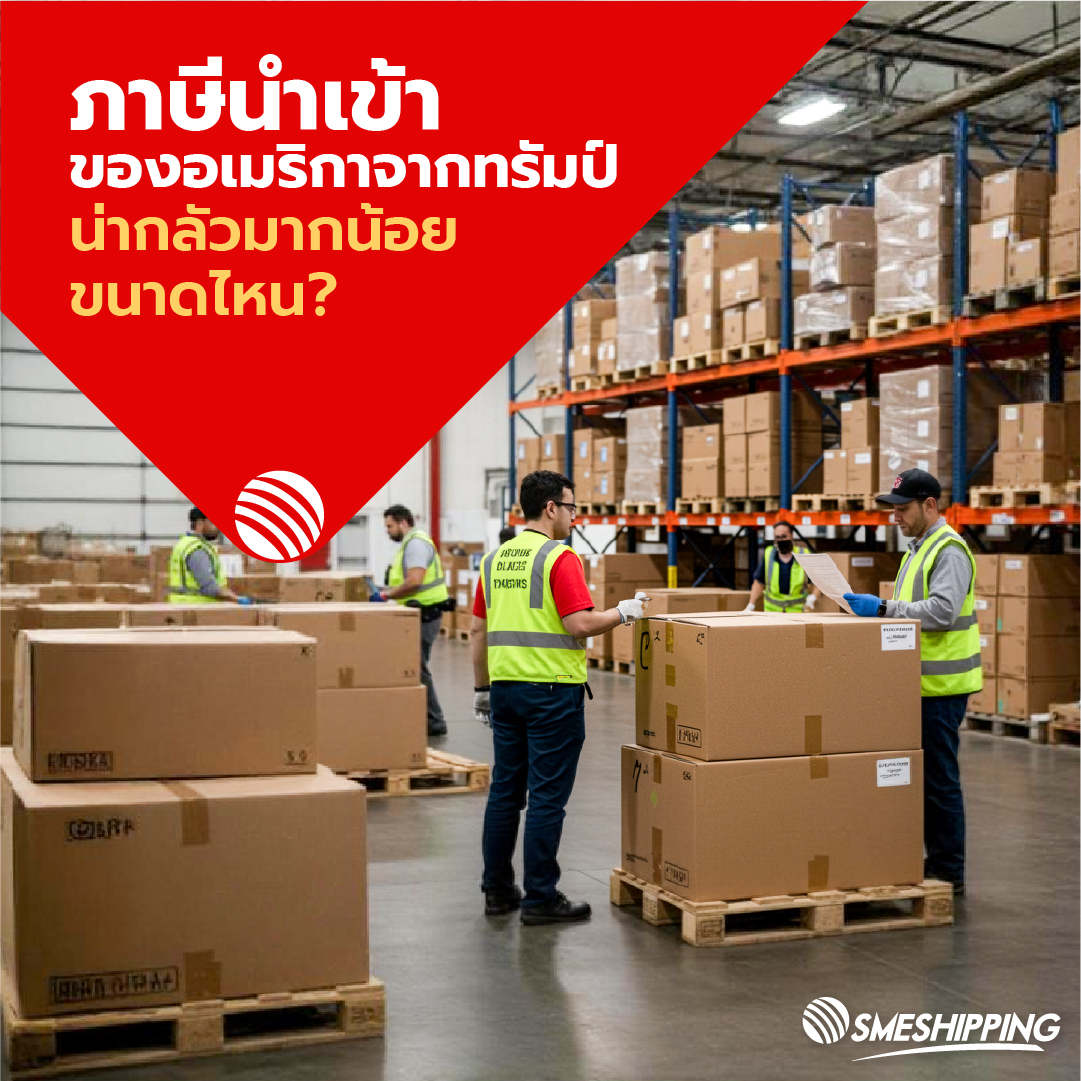
Just how "terrifying" are US import tariffs under Trump's policy for exporters?
During President Donald Trump's term, the United States pursued an aggressive trade policy under the "America First" concept, which focused on protecting domestic industries. One of the key tools was imposing tariffs on imported goods, particularly from China, which had a widespread impact on global supply chains. Businesses in trading partner countries, including Thailand, also faced repercussions.
The question is…how "dangerous" are Trump's import tariffs for Thai exporters? This article from SME Shipping will take you through a study of former President Donald Trump's import tariff policies during the US-China trade war, which created significant repercussions in the international trade system and continues to have an impact today.
The origins of Trump's import tariff policy.
Trump implemented the "America First" policy to protect domestic industries by imposing tariffs on imported goods, particularly from China, which was the U.S.'s largest trading partner at the time. Examples of key measures include:
- Tariffs were imposed on steel and aluminum from several countries.
- Impose tariffs on over $300 billion worth of imported goods from China.
- Tariffs have been increased to as much as 25% for various categories of goods, such as electronics, household goods, industrial raw materials, etc.
So how concerned should Thai entrepreneurs be?
Caution
- If you export goods containing raw materials or components from China to the United States, they may be classified as "Chinese goods" and subject to additional tariffs.
- Some types of goods may be unknowingly classified as subject to increased taxes.
- Customers in the United States may request price negotiations to offset higher costs resulting from import tariffs.
Hidden opportunities
- Countries not on the tariff list (such as Thailand) may have a competitive advantage.
- Thai manufacturers could be a "new alternative" to China in the eyes of US businesses.
How should exporters cope?
- Check if the items are on the list of items subject to taxation.
- This can be checked through the USTR's Harmonized Tariff Schedule (HTS) system.
- Consider the source of raw materials/manufacturing plants.
- If goods or raw materials originate from China, there should be clear documentation indicating that they are manufactured in Thailand to avoid misinterpretation.
- Negotiate selling prices and import taxes with customers.
- Sometimes clients may bear the tax burden themselves, or find ways to share the risk.
- Utilize the Generalized System of Preferences (GSP).
- Some products from Thailand also receive GSP benefits, which help reduce/exempt taxes.
Trump's import tariff policy is "daunting" for businesses that don't understand international tax mechanisms. However, if you are an importer and exporter who stays informed about tariffs, pays attention to product details, verifies the origin of goods, and knows how to use trade tools like GSP or FTA, you can still export to the United States safely, and in some cases, may even gain an advantage from this crisis.

 English
  Thai
Thai