


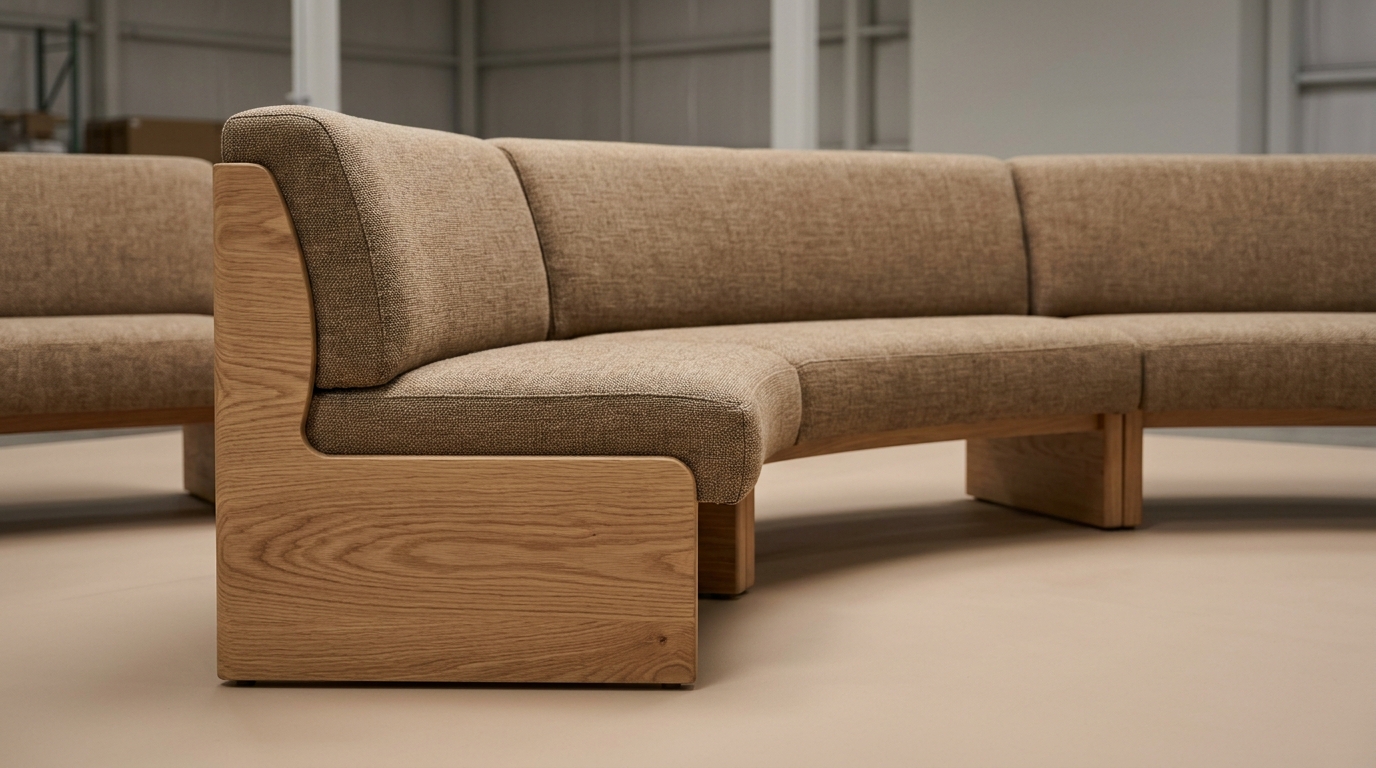
If you're exporting furniture to the US, or considering entering this market, the signals from NeoCon 2026 in Chicago last June revealed something more than just design trends. It indicated that US buyers are changing their purchasing decisions, and if you continue offering the same products with the same information, reaching this buyer segment will become increasingly difficult.
Furniture Exports: What NeoCon 2026 Says About the US Furniture Market
NeoCon is the largest commercial furniture trade show in the United States, held at The Merchandise Mart in Chicago. This year marks its 57th edition, featuring over 400 exhibitors and attracting over 50,000 visitors. The primary product categories are office furniture, hotel, hospital, and educational furniture; it is not a typical retail market.
Interestingly, this year's People's Choice award didn't go to the most aesthetically pleasing product, but rather to products that tell a story about their materials and truly meet the needs of users. This is a clear signal that buyers in this market are purchasing for different reasons than they did five years ago.
Four directions the US market is looking for.
Based on the award results and products that attracted attention at the event, four main trends can be summarized:
- Recycled materials and bio-based materials — This year's winner is a surface made from recycled materials. Buyers aren't just asking, "Is it recyclable?" but "Where does the material come from? How much carbon is reduced?"“
- Wellness Design Furniture and lighting that promote concentration, comfort, and the health of users, especially in offices and hospitals.
- Modular and flexible system — In the post-hybrid work era, organizations need spaces that can adapt to the number of people and activities. Modular desks and workstations are therefore playing an increasingly important role.
- Natural materials and biophilic design — Textured surfaces, warm colors, and materials associated with nature are gaining popularity in all types of commercial spaces.
Why this is a signal that Thai SMEs should understand.
Thailand possesses strengths that align with these trends more than many realize. Rubberwood, bamboo, rattan, natural fibers, and unique handicrafts are the raw materials the biophilic design market is seeking. The problem, however, is that many Thai products haven't yet communicated this in a way that US buyers can understand and verify.
The US commercial furniture market is no longer solely driven by price, but by information and product reliability. If you export furniture to the US but lack environmental certification, commercial interiors buyers are likely to bypass you and go to a more well-equipped supplier.
Documents and requirements that should be prepared before entering this market.
This is an area often overlooked. The US commercial interiors market has a stricter supplier vetting system than the retail market because the majority of buyers are architects, interior designers, and project contractors, who have an additional layer of responsibility to their end clients.
Things to prepare and check:
- Environmental Product Declaration (EPD) — This document provides carbon and environmental impact data throughout the product's life cycle. Project-level buyers often request this document.
- Source of raw materials (Chain of Custody) — Especially wood and natural materials should be certified by FSC or an equivalent.
- VOC emission standards — Products used in enclosed spaces such as offices and hospitals must meet CARB or GREENGUARD standards, depending on the type of product.
- Recycled Content Information — Clearly stated as a percentage, with verifiable sources.
- U.S. Customs Documents — The correct HS code for each type of furniture, including complete identification of raw materials to avoid additional inspections at customs.
Things like sample shipping and logistics need to be planned in advance.
If you're approaching buyers in the US commercial interiors market, sending samples is an unavoidable step, and furniture isn't a lightweight item. Sending samples incorrectly can lead to inflated costs and unnecessary wasted time.
Things to plan before sending samples:
- Choose between courier express and air freight based on weight and size. Small items might be suitable for express shipping, but for larger items, air freight should be calculated considering the expected value of the deal.
- Accurately state the sample value on the document. Understating the actual value may lead to scrutiny and delays at U.S. Customs.
- If shipping for display at a trade show, an ATA Carnet or temporary import bond is required to avoid import duties on returned goods.
- For actual B2B orders, it's advisable to discuss with the buyer in advance the Incoterms that will be used, as project-level buyers often have different delivery requirements than typical retail sales.
How to effectively communicate with buyers in this market.
The majority of buyers in the US commercial interiors market are architects and interior designers, not typical consumers. Their approach to selecting suppliers is different; they want information that can inform their designs and presentations to clients, not just catalogs and prices.
If you export furniture to the US and want to reach this group, you should prepare a spec sheet detailing dimensions, materials, weight, certified standards, and environmental information in a downloadable format. Additionally, participating in trade shows or building relationships with showrooms in the US allows Thai products to reach decision-makers more directly than sending "cold emails."
Risks that should be assessed before making a decision.
The US commercial interiors market has potential, but it also has complexities that should be understood beforehand. Project lead times in this market are often longer than in the retail market; some projects can take 6-18 months from supplier selection to actual ordering. If you don't have sufficient cash flow to support your operations during this waiting period, it can negatively impact your business.
Furthermore, if the products do not meet the standards specified in the contract, such as VOCs or agreed-upon recycled content, they may be rejected or require modifications before delivery, incurring costs in both time and expense. It is crucial to clearly check the specifications before accepting an order.
For more information on planning international shipments, general guidelines can be found at: smeshipping.com
Checklist before entering the US commercial furniture market.
- Does your product have verifiable environmental certifications (EPD, FSC, GREENGUARD)?
- Are the HS codes used for each item correct and do they fully specify the raw materials?
- Do you have an English specification sheet that includes material information, standards, and environmental data?
- If you're going to send samples, have you already planned the logistics and temporary import documentation?
- Do you know whether the buyer you're approaching is an end buyer or a designer/specifier? Because the communication methods are different.
- Have you estimated the lead time and cash flow for a project that might take 6-18 months?
- Have the Incoterms to be used with US buyers been agreed upon and understood consistently?
The US furniture export market is shifting, and signals from NeoCon 2026 clearly indicate that this direction aligns with many of Thailand's strengths. However, entering this market requires more than just good products; it also requires comprehensive information, documentation, and communication strategies tailored to the purchasing decisions of buyers in this market.
Source: Department of International Trade Promotion (DITP)
Furniture for export: Check the terms and conditions before making a decision.
Exporting furniture should begin with a thorough review of documents, costs, and destination conditions before confirming the price. Then, use furniture export as a topic of discussion with the buyer to confirm responsibilities and deadlines.
Before actual shipment, it's advisable to review the export specifications, required documents, and the responsible party at the destination, as the details of export furniture may vary depending on the market and trade conditions.
For more official information, please check: Related sources of information





 English
  Thai
Thai