


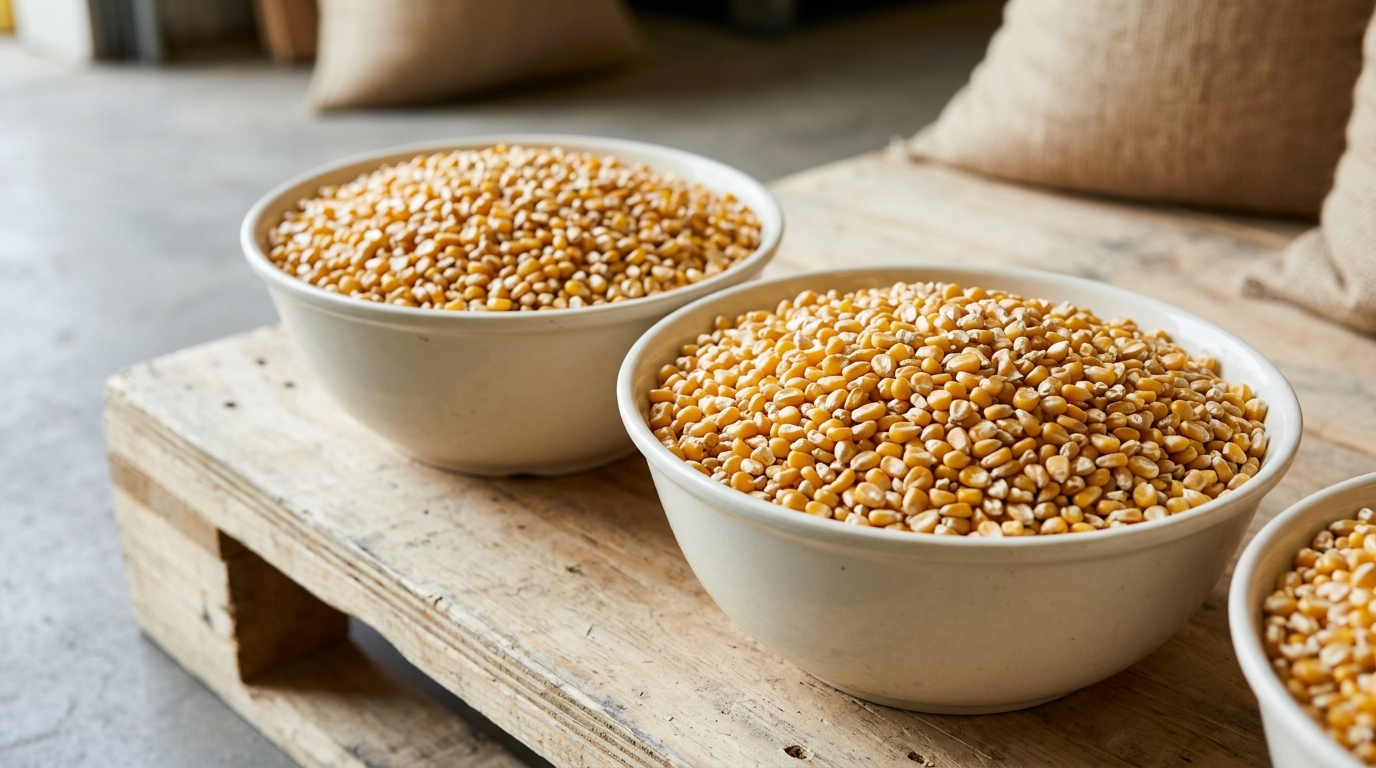
If you're in business importing corn from Myanmar or buying animal feed raw materials from Myanmar, there are some things you need to know before planning your next shipment. Thailand recently extended the ASEAN corn import window by two months, from the original end date of June 2026 to August 2026. This sounds like good news, but if you haven't checked all the necessary documents and conditions, the extension won't be very helpful.
The open timeframe is February to August 2026, during which corn from ASEAN countries, including Myanmar, can enter Thailand duty-free under the ASEAN FTA. However, this privilege is not automatic; you must have the correct and complete documentation and understand whether the batch of corn you are purchasing meets Thai criteria.
I want you to look at this from two perspectives simultaneously. The first is: if you are importing corn from Myanmar, what preparations do you need to make? The second is: if you want to export Thai products to the Myanmar market, there's a mechanism Myanmar offers – Export Earnings paired with Import Licenses – which many people don't know how it works.
Why is the period from February to August 2026 crucial for importers of Myanmar corn?
Myanmar is Thailand's number one importer of animal feed corn, accounting for almost 901 TP3T of total corn imports. The volume is approximately 1.2 to 1.8 million tons per year, with a value of around 12 to 17 billion baht. This means that if you are in the animal feed business or purchase raw materials for production, Myanmar corn is already part of your costs, whether you are aware of it or not.
Extending the import deadline to August 2026 means you have more time to plan for receiving goods, scheduling shipments, and negotiating with suppliers on the Myanmar side. However, what many often overlook is that this extended period doesn't automatically mean every shipment will pass through. There are still documentation and quality standards that must be met beforehand.
In 2026, Myanmar is expected to export approximately 1.3 million tons of feed corn, with Thailand as the main market, followed by China, Vietnam, and the Philippines. This means that while the supply is available, you also have to compete with buyers from other countries. Preparing your documentation in advance will help you close deals faster than competitors who are still facing paperwork issues.
Importing corn from Myanmar: Things to check before actually shipping the goods.
The essential document is Form D, the Certificate of Origin under the ASEAN FTA. Without a valid Form D, your import duty exemption will be denied, and you will be subject to the normal tax rate, directly impacting your costs.
In addition to Form D, there's also the issue of burn-free corn certification, which the Ministry of Commerce of Myanmar acts as the Competent Authority for, along with the Ministry of Agriculture and the Ministry of Natural Resources. If the batch of corn you purchase hasn't received burn-free certification, there's a risk of rejection by the Thai side, especially if Thailand's environmental policies become stricter in the future.
- Form D It must be issued by the authorized agency in Myanmar and must correctly state the origin of the goods.
- Burn-free certificate Issued by the Ministry of Commerce of Myanmar, in its capacity as Competent Authority.
- Import license The Thai side must verify that the imported batches fall within the specified period, which is February to August 2026.
- Thai Customs Documents The ASEAN FTA rights must be clearly specified, along with an attached Form D.
- Weight and quality information. A Certificate of Quality or Phytosanitary Certificate, as required by the Thai authorities, should be provided.
- Sales contract Clear terms of delivery, price, and timeframe should be specified for use in applying for FTA benefits.
- Proof of payment If using Myanmar's Export Earning mechanism, you must have documentation showing export income that is valid according to Myanmar's system.
What is Form D, and why is it crucial to avoid it?
Form D is a certificate of origin used within the ASEAN Free Trade Area (AFTA). If you wish to claim import duty exemptions under the ASEAN FTA, you must submit Form D with every import shipment. This document is issued by the designated authority in the country of origin, which in the case of Myanmar is the Ministry of Commerce of Myanmar.
Many people overlook the fact that Form D has an expiration date and must be issued before or on the day of export. If the document is issued after the goods have left Myanmar, it may not be accepted by Thai customs, meaning you will immediately lose your tax exemption eligibility.
In practice, if you are working through an agent in Myanmar, it should be specified in the contract that the seller must provide all Form D documents before export, and copies of the documents should be requested in advance for verification before the goods leave the port.
The cost changes if the documents are incomplete.
Let's consider some simple numbers. If you import 1,000 tons of corn at a price of approximately 8,000-9,000 baht per ton, the total value of the goods would be around 8-9 million baht. If you don't qualify for the duty exemption because of problems with Form D, the increased import duties will directly impact your costs, depending on the tariff rate applied in the absence of an FTA.
In addition to taxes, if your goods are held at customs awaiting document inspection, you will also have to bear the waiting fees, storage costs, and the risk of the corn deteriorating during the wait. For agricultural products with high moisture content, even a delay of just a few days can affect product quality.
Therefore, investing the time to thoroughly check all documents before shipping reduces the risk of unforeseen expenses more effectively than rushing to ship and then having to deal with problems later.
Burn-Free Certificate: A New Standard You Need to Know Before Buying
Myanmar has begun promoting the certification of burn-free corn, with the Ministry of Commerce acting as the Competent Authority, in conjunction with the Ministry of Agriculture and the Ministry of Natural Resources and Environment, to inspect and ensure that the corn batches likely come from areas where no forest fires or stubble burning have occurred.
This is important because Thailand's environmental policies, and those of end buyers in Europe and America, are beginning to prioritize supply chains that do not contribute to deforestation. If you buy corn to produce animal feed and then resell it to customers who meet ESG standards, a "burn-free" certification might become a document that buyers demand in the near future.
In practice, before you agree to purchase a new batch of corn from Myanmar, you should ask the supplier whether that batch has a burn-free certificate and by which agency. If there isn't one, you should assess the level of acceptance risk from your end buyer.
Myanmar's Export Earning and Import License Mechanism: Opportunities for Thai Exporters
This is something many people are unaware of. Myanmar has a system that allows exporters to use their export earnings, whether in US dollars or Thai baht, to support their applications for import licenses to bring goods from Thailand into the Myanmar market.
This means that if you or your Myanmar partner earn income from exporting corn to Thailand, that income can be used as "credit" to apply for an import license to bring Thai goods back into Myanmar. This is a mechanism Myanmar designed to maintain trade balance and foreign exchange.
However, there is an important condition: Myanmar will approve import licenses more easily if the imported goods are raw materials or production factors, known as "imports for production," rather than finished goods or general consumer products, known as "imports for consumption." Therefore, if you want to use this channel, you should plan the types of goods you will export to Myanmar to comply with this criterion.
Risks that need to be assessed before making a decision.
Although the timeframe is open until August 2026, the situation in Myanmar remains uncertain in many areas, including politics, exchange rates, and the ability of government agencies to issue documents, which may cause delays in obtaining Form D, or the fire-free certificate, compared to what is expected.
If you plan to ship your items towards the end of the timeframe, such as July or August 2026, the risk of documents not arriving on time may be higher than if you plan to ship earlier. You should create a buffer time of at least 3-4 weeks to prepare the documents before the desired delivery date.
Furthermore, global corn prices and the baht-kyat exchange rate are volatile. Locking in prices and payment terms clearly in contracts helps mitigate the risk of costs deviating from estimated levels.
Questions to ask your broker or customs agent before shipping your goods.
If you work with a broker or customs agent, there are questions you should ask before goods leave Myanmar to ensure everything is ready for Thai customs clearance.
- Which agency in Myanmar issued Form D, and is it valid until the date the item arrives in Thailand?
- Does this batch have a burn-free certificate from the Ministry of Commerce of Myanmar?
- Has the Phytosanitary Certificate been issued yet, and does it meet the standards set by the Thai Department of Agriculture?
- What routes will be used for cross-border transportation, and what is the risk of delays at border crossings?
- If the goods arrive after August 2026, what impact will this have on FTA benefits?
- What is the total cost, including the actual landed cost after taxes and freight?
The time you should plan for preparing the documents.
Based on experience in Thai-Myanmar cross-border trade, obtaining documents from Myanmar government agencies can take varying amounts of time, especially during periods of high export volume. It is advisable to plan ahead as follows:
Form D generally takes approximately 3-7 business days after the exporter submits the application with all necessary documents. A burn-free certificate may take longer, depending on whether the lot has already passed on-site inspection. If on-site inspection by officials is required, it may add another 1-2 weeks.
Therefore, if you want your items to arrive in Thailand by August 2026, you should start the document application process at least from June 2026 to allow time for corrections if there are any problems with the documents.
Communicating with the end buyer regarding product standards.
If you import corn to produce animal feed and then resell it, you should communicate to your customers in advance about the source of the batch, any certifications it has, and whether it meets burn-free standards. Currently, buyers in the animal feed and livestock industries are increasingly demanding supply chain transparency.
Having complete documentation and being able to show it to customers helps build trust and reduces the risk of customers rejecting the product or requesting a price reduction due to uncertainty about the source. Conversely, having a burn-free certificate and Form D could be a key differentiator from competitors who haven't prepared these documents.
Things to watch out for next.
Thailand's ASEAN corn import policy changes annually. The import period may be extended or shortened depending on domestic corn prices and demand from the animal feed industry. Regularly monitoring announcements from the Department of International Trade and the Ministry of Commerce of Thailand is recommended.
Regarding Myanmar, it's important to monitor the issuance of documents and policies related to Export Earnings, as these may be subject to change depending on the economic and political situation in the country. If you have a partner or representative in Myanmar, you should keep them updated on this information regularly.
For those who want to understand more about international trade in other dimensions, further information can be found at: smeshipping.com This compiles information on transportation and international trade for Thai SMEs.
Finally, if you are unsure whether you have all the necessary documents, have your customs agent or import expert verify them before the goods leave Myanmar. Resolving documentation issues before shipment is significantly less costly than resolving them after the goods arrive at the destination port.
Importing corn from Myanmar: Double-check before negotiating prices and before closing the container.
Before submitting a quote to a buyer in Myanmar, you should clearly separate the cost of the goods, packing costs, shipping costs, insurance, documentation fees, and destination charges. If you combine everything into a single lump sum, you won't know where your profit is lost when shipping costs fluctuate.
For corn/animal feed inputs, the first step before quoting a price is to obtain complete destination information from the buyer. This includes the preferred port, Incoterms terms, desired delivery date, payment method, and customs documentation. This information helps you assess the risk before accepting the order.
If a buyer requests a price quote, you should check it carefully. Avoid giving a broad, approximate price; instead, provide a price range, specify the quotation's expiration date, and mention that freight surcharges or other additional costs may vary depending on the shipping booking date. This helps prevent disputes when the goods are ready for shipment.
Documentation issues should be checked from the beginning, not waiting until production is complete to inquire. Some documents require time to obtain from relevant agencies or labs. Missing documents on delivery day can result in costs beyond just penalties, including delays and decreased buyer trust.
The points to discuss with your freight forwarder are: plan shipments around the extended Thai import window (February-August 2026), ensure Form D and other ASEAN preference documents are complete, and verify Myanmar export certificate and burn-free compliance where applicable. Ask about transit times for regular routes, alternative routes in case of risk, costs not included in the freight quote, and insurance claim conditions in case of damage or delays.
Another point to be aware of is that this is a policy/trade-flow update, not a consumer-demand article; the source also mixes import and export angles, so the exact commercial impact depends on the buyer, product form, and current licensing rules. This information might not be visible in the initial quotation but will emerge when the buyer reviews documents or when customs at the destination request additional information. Preparing this information in advance can therefore help speed up the deal.
- Separate the cost of goods, shipping, insurance, and documentation onto different lines before submitting a price quote.
- Clearly confirm the Incoterms with the buyer, specifying who is responsible for the final delivery costs.
- Verify that the HS Code and product name in the invoice match the packing list and shipping documents.
- Please provide a freight quote that includes all applicable surcharges, not just the base freight price.
- Specify the expiration date of the quotation to mitigate the risk of fluctuating freight rates.
- Keep product certification documents and product photos ready to respond to buyers immediately.
- Start with a sample shipment if you haven't shipped to this market before, to reduce risk before placing a large order.
If you use this checklist before starting pricing discussions, your first export transaction won't be guesswork, but rather a decision based on actual costs, real documentation, and real risks. This will help you negotiate with the buyer with more confidence.
Importing corn from Myanmar: Documents, standards, and evidence that the buyer should receive.
For corn/animal feed inputs entering Myanmar, you should separate cargo documents from shipping documents from the outset. Cargo documents may include specifications, ingredient lists, certificates, test reports, and labels. Shipping documents should be checked against the invoice, packing list, bill of lading, and originating documents to ensure the product name and quantity match.
If a product requires lab testing, don't wait until production is complete to send samples. Ask the buyer beforehand what standards are required, which labs are reputable, and how long the test results are valid. This helps reduce duplicate testing and allows for more realistic delivery dates.
Labels and packaging should be reviewed from the artwork before actual printing. The buyer should confirm the product name, ingredients, weight, country of origin, production date, expiration date, and any warning messages required by the target market. Revising the artwork is also cheaper than modifying a finished product.
It's advisable to keep a complete set of evidence for each lot, including product photos, labels, outer boxes, batch numbers, and quality control documents. When the buyer or customs ask, you'll be able to answer with a single set of information, avoiding the need to search multiple parties during rush orders.
- Please provide a written checklist of documents from both the buyer and the customs broker.
- Confirm that the product name, HS Code, and details in the invoice are consistent.
- Check that the certificate and test report are valid for the specified dates and cover the import period.
- The buyer must approve the label artwork before ordering the actual packaging production.
- Link the lot number to the packing list and include photos of the product before sealing the box.
- Allow time for document revisions and requests for additional information from the recipient.
Importing corn from Myanmar: Signals to monitor after sample delivery.
After sending samples to Myanmar, don't just focus on whether the buyer likes the product. You should also ask: what price would allow them to resell? What packaging size is suitable for the distribution channel? And what documents are causing the purchasing team to spend a long time reviewing them? Answering these questions will help you adjust your products and costs before accepting large orders.
You should record the time taken for each step, from preparing samples and obtaining documents to booking transportation, clearing customs, and finally receiving the goods from the buyer. If any step takes longer than expected, you'll know whether to allow extra time or change the shipping method for the next time.
When raw material prices, exchange rates, or freight costs change, review your landed cost. Do not automatically use prices from previous shipments, as seemingly sufficient margins may be lost due to surcharges, storage, inspection, or destination documentation correction fees.
A review date should be scheduled jointly with the sales, production, and export departments after the buyer receives the sample. This ensures that all information is consistent across all departments, including quality, price, packaging, documentation, and shipping time. If each department keeps separate data, subsequent revisions will be delayed, and responses to the buyer may be inconsistent.
For the first order, it's advisable to set conditions for increasing the quantity in advance, such as the product damage rate, customs clearance time, the number of document revisions, and the margin after including actual costs. Once the data meets the criteria, then increase the quantity. This approach ensures evidence-based growth, not just expectations.
- Ask the buyer about the trial sales figures and any actual complaints received.
- Review the lead time from production to the final delivery date.
- Compare the actual costs with the quotation item by item.
- Record the questions from the customs broker to prepare for the next document preparation round.
- Determine a decision point to expand the order, adjust the product, or stop the trial.
- Assign a data owner for each set of data so that the same data can be used to respond to buyers.
- Track actual costs incurred for storage, inspection, and document corrections.
- Review the results after each shipment before confirming the price and quantity for the next order.
- Keep records of your decisions and results for comparison with the next shipment.
A short summary is compiled after each shipment, detailing what passed, what needs fixing, the person responsible, and the date for a follow-up inspection. This allows the team to immediately utilize past lessons learned and avoids starting the analysis from scratch with every new order.
Source: Department of International Trade Promotion (DITP), Trade Promotion Office in Yangon.
Importing corn from Myanmar: Check the conditions before making a decision.
Importing corn from Myanmar should begin with a thorough review of documentation, costs, and destination conditions before confirming the price. This approach helps reduce risk and allows for planning based on accurate information.
For more official information, please check: Related sources of information


 English
  Thai
Thai