


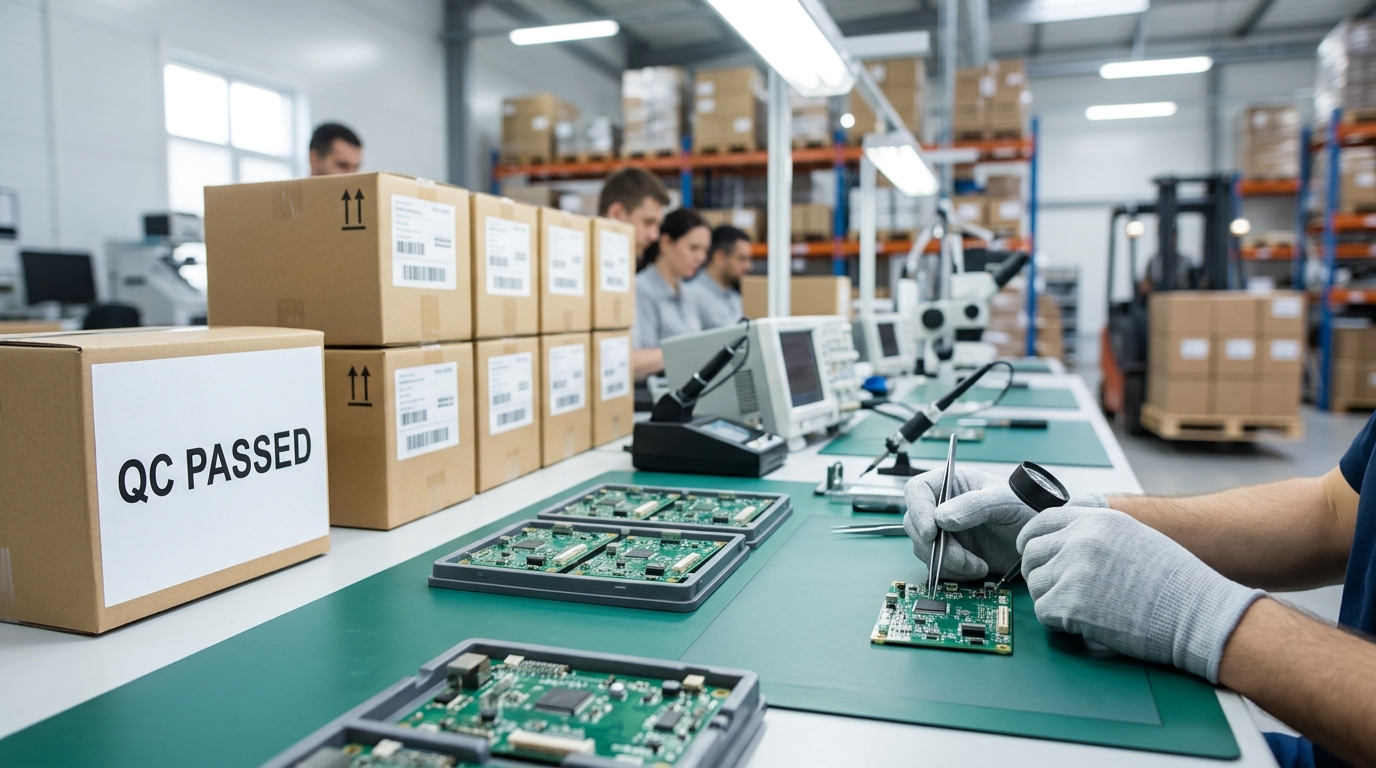
If you're already exporting electronic components to Singapore, or thinking of starting, news about Singapore's semiconductor supply chain isn't just macro industry news; it's telling you something about the direction Singaporean buyers are looking and the standards they expect from suppliers in the region, including Thailand.
Singapore isn't just a chip manufacturing hub; it's a center through which everything goes.
Singapore produces approximately 101 TP3T of chips globally and accounts for around 201 TP3T of global semiconductor industry equipment manufacturing capacity. These figures are not only significant in their numerical terms, but they also highlight the comprehensive ecosystem of this industry in Singapore. From R&D and design to wafer manufacturing, assembly, advanced packaging, and chip testing, every stage involves world-class players.
What makes Singapore strong is not the competition in sub-3nm chips, but rather its mature nodes and specialty technologies that demand high reliability, stable manufacturing standards, and clear traceability. Markets using these chips include automotive, consumer electronics, industrial robotics, AI, data centers, and high-speed communications, all of which require components and materials from reliable suppliers in the region.
Where does Thailand stand in this chain?
Thailand has a large manufacturing base for electronics, PCBs, and the automotive sector, resulting in lower production costs than Singapore. It also has factories already producing the components that Singapore needs. This means that if you are in the electronics components, PCB, industrial materials, machinery, industrial packaging, or logistics services business for high-value goods, you may be ideally positioned to be a supplier or partner in the same supply chain that Singapore is expanding into.
Before getting excited, it's important to understand that this is a structural signal, not a waiting buy order. This news indicates the industry's direction, but it doesn't say there are customers in Singapore waiting to buy from you. This difference is crucial because it determines how you should prepare.
Exporting electronic components to Singapore: Things to check before shipping.
If you're considering exporting electronic components to Singapore, or expanding into the semiconductor supply chain in that market, there are things to prepare before actually shipping the goods, because buyers in this industry have much stricter standards than in the general market.
- Certificate of Origin— Singapore utilizes several FTAs, including the ASEAN-Australia-NZ FTA and the CSFTA. You need to check which agreement your goods qualify under and whether the Certificate of Origin (CO) issued is of the correct type.
- Product standards— Electronic components supplied into the semiconductor supply chain often must meet IPC, ISO, or buyer-specific standards. It's crucial to clarify these requirements with the buyer before manufacturing.
- Traceability and Lot Control— Buyers in this industry want to be able to track which batch a part came from, when it was manufactured, and where the raw materials came from. If your traceability system isn't ready, this is the first thing you need to address.
- Packaging for high-value goods.— This type of product requires packaging that protects against ESD (Electrostatic Discharge), moisture, and impact during transport. If the packaging does not meet standards, the product may be rejected at its destination.
- Customs documents (HS Code and Invoice)— Electronic components have multiple HS Codes, and they must be specified correctly because the tariff rates and destination requirements depend on the HS Code used. The Commercial Invoice must include complete product details as required by Singapore Customs.
- Communicating with the buyer before shipping.— In this industry, buyers typically have an approved vendor list and a supplier qualification process that takes time. Discussions should start early, not after an order has been placed.
- Cargo insurance during transit.— High-value goods should be insured to cover damage from both transportation and ESD. Check to see if your existing policy covers this type of goods.
The risks that cannot be overlooked when shipping technology products to high-standard markets.
Singapore is a market with strict standards, and buyers in the semiconductor supply chain have very high expectations regarding quality consistency. If your first batch meets the standards but subsequent batches differ even slightly, the buyer may immediately remove you from their Approved Vendor List, and getting back on track takes much longer than maintaining the original relationship.
Another thing to be careful about is the lead time for documentation. In the technology industry, buyers often require complete documentation before the goods arrive at the port, not afterward. If the documentation is incomplete or incorrect, the goods may be held at customs. In the case of electronic components that buyers need for their production lines, delays of even 2-3 days can significantly impact business relationships.
Logistics planning is essential before shipping high-value goods.
Singapore is a highly efficient logistics hub, but that doesn't mean shipping goods there is always easy, especially high-value items that require special care during transit. This includes temperature control, ESD protection, and careful handling at every point of movement.
If you ship by sea, choose a carrier experienced in handling this type of goods and ensure the containers are clean, free of residue, and have appropriate moisture protection systems. Air shipping is more expensive but offers shorter lead times and lower transit risks, especially for high-value items. When comparing total costs between the two options, consider insurance, risk management, potential damage, and the impact on your relationship with the buyer, not just the freight cost.
For more information on exporting high-value goods to the ASEAN market, you can refer to the preliminary information here.smeshipping.comThis compiles information, routes, and essential knowledge for Thai SMEs.
Standardization and Traceability: Areas where Thai SMEs often miss out in the technology market.
The concept of traceability might sound like something only large factories can handle, but SMEs looking to enter the semiconductor supply chain actually need this system as well. At a minimum, they should be able to trace which raw material batches were used to produce a particular product, what processes it underwent, and where the quality control was performed. Buyers in this industry can request this information at any time.
If your traceability system is still in Excel or on paper, that's not an immediate problem. But if you're serious about entering this market, investing in a better system will help you qualify for buyers faster and reduce the risk of being removed from vendor lists due to documentation issues.
The Singaporean government continues to invest: What does this mean for Thai suppliers?
Singapore has a RIE 2030 plan with a total budget of S$37 billion, including over S$800 million specifically for semiconductors. This figure indicates that the Singaporean government remains committed to maintaining its position in this supply chain, and is not retreating.
For Thai suppliers, this means that the demand for parts, materials, and related services from the region is likely to remain in the medium term. However, it's important to understand that competition in Asia is intensifying, with Vietnam, Malaysia, and Indonesia all trying to enter the same supply chain. Therefore, if you want to compete, you must compete on quality, reliability, and proper documentation, not just price.
Before deciding to expand into this market, you should ask yourself these questions.
News regarding Singapore and its semiconductor supply chain is a positive sign for Thai SMEs in related industries. However, before deciding to invest in this market, there are questions that should be answered first.
Does your product truly meet the needs of this supply chain? Do you have a quality control and traceability system that is acceptable to buyers in this industry? Do you have the resources to maintain quality consistency in the long term? And do you adequately understand the qualification process of buyers in this market? If the answers are unclear, starting by gathering information and talking to potential buyers will help you make better decisions than investing first and then trying to adjust later.
What we should do now is use this news as a framework to review our own readiness. If a buyer from Singapore contacts us today, are you ready to supply them with goods that meet their required standards? If not, that's where we need to start addressing that.
Source: DITP / Thai Trade Center, Singapore, Weekly News, June 15-19, 2026.



 English
  Thai
Thai