


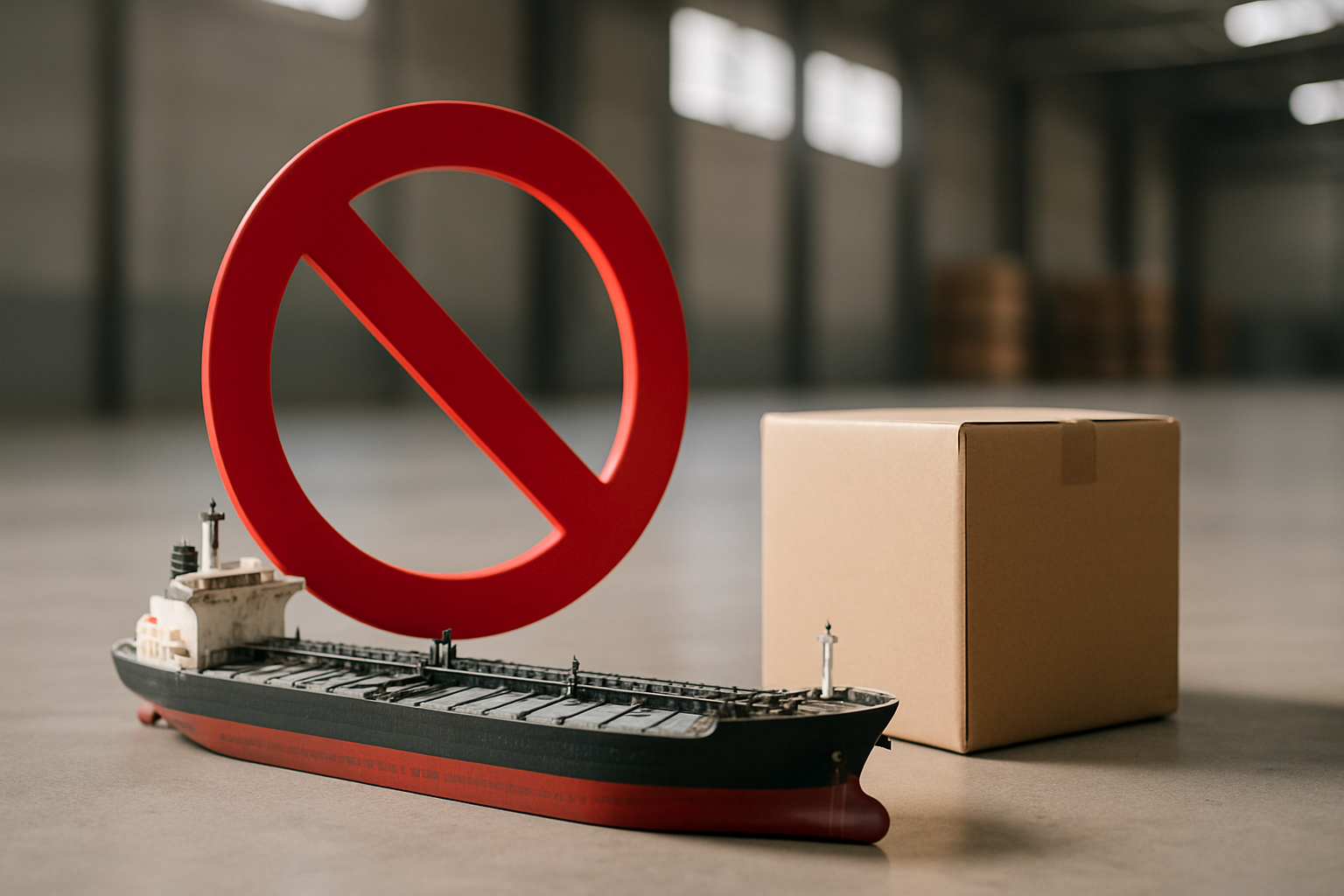
If you are currently shipping goods to the UAE or any of the Gulf countries, regarding...The Strait of Hormuz is at risk.This is no longer distant news, as it will truly impact the shipping routes you use. Iran has announced it will establish a new "no-go zone" in this strait, and ships entering it may be placed on sanctions lists. This means shipping lines and insurance companies will have to adjust their plans entirely, and these increased costs will ultimately pass on to you as an exporter.
Here are some things this article will help you think about:
- Why does the Strait of Hormuz pose a risk to Thailand-UAE trade?
- The impact that truly affects you isn't just limited to the price of oil.
- Available alternative ferry routes now.
- Things to check before sending your next shipment.
- How to communicate with buyers and partners about potential delays.
With the Strait of Hormuz at such risk, who will be affected first?
The Strait of Hormuz is a waterway through which approximately one-fifth of the world's oil is passed and is a major shipping lane connecting the UAE with Asian markets, including Thailand. Now, Iran is about to declare a new restricted zone, along with an unrefined map of the shipping lane. Ships entering this declared area will be placed on a sanctions list. This is the point where shipping lines and insurance companies are already taking action, as they need to reassess their entire risk assessment.
It's noteworthy that the number of cargo ships passing through the strait has now dropped to an average of about 10 ships per day, even though the actual amount of oil transported is still around two-thirds of pre-war levels. This means that commercial shipping has contracted more significantly than the oil figures suggest, and this is a signal that Thai exporters should take seriously, because the type of cargo ships you use may be affected more than you think.
Why does this come at your expense?
As security risks along shipping routes increase, the first thing to shift is the war risk premium. Insurance companies add this to the cost due to the uncertainty surrounding restricted zones that lack clear plans. This is followed by higher freight rates as shipping lines adjust to compensate for increased navigation risks. These two costs don't disappear; they are passed on to importers and exporters worldwide, including you, who trade with the UAE or the GCC.
Thailand itself relies heavily on oil from the Middle East. When oil prices rise, domestic energy costs also increase, affecting electricity costs and overall production costs. This is why this isn't just a problem for those directly shipping goods to the UAE, but a multi-layered risk.
Which Thai product groups should we pay special attention to?
Products heavily reliant on the Gulf market or shipping routes, such as automobiles and parts, air conditioners, jewelry and ornaments, electrical appliances and electronics, as well as food and halal products, are more likely to be affected by higher logistics costs and shipping route uncertainties than other sectors. If you are in this group, advance planning regarding routes and costs will be more crucial than usual.
An existing alternative route is available; no need to wait for clarification. 100%
The good news is that the UAE and Oman have already established logistics routes that bypass the Strait of Hormuz. Eastern UAE ports like Fujairah and Khor Fakkan, as well as Oman's Sohar and Duqm ports, are outside the strait, making them a viable alternative that mitigates the risks of shipping through the restricted zone. While this doesn't guarantee complete elimination of delays, it's a route worth considering in conjunction with the existing one.
What you should do is talk to your forwarder or shipping line to see if they have alternative plans to pass through these ports and if the increased cost from changing routes is acceptable. Because sometimes a safer route may come with longer shipping times, so you need to plan the lead time for the buyer in advance.
Checklist of things to do before sending out the next shipment.
Before confirming your next booking with your buyer or forwarder, try checking these points to mitigate the risks from the current uncertainty surrounding the Hormuz route.
- Check with the shipping line to see if the route you are using passes through any areas that Iran may have declared restricted.
- Inquire about war risk insurance premiums in advance, and negotiate to lock in shipping rates if possible.
- Consider routes via Fujairah, Khor Fakkan, Sohar, or Duqm ports as alternative options.
- Prepare documentation and contract terms that cover delays resulting from security risk factors.
- Discuss with the buyer the possibility that the lead time may extend beyond the usual time.
- Review the tax benefits under the Thailand-UAE CEPA agreement to see how much they offset the increased costs.
- Consult with sanctions and compliance experts before confirming any potentially risky routes.
The UAE remains an attractive hub, despite the uncertain situation.
Interestingly, despite security risks, the UAE's non-oil trade in the first half of the year still grew by approximately 13.11 TP3T, reaching US$528 billion. This reflects the strong purchasing power and the UAE's role as a trade hub. Thai exporters who use the UAE as a gateway to distribute goods to the Middle East, Africa, and South Asia still have reasons to continue doing so, but they need to plan their routes and costs more carefully.
Don't rush into a decision based on uncertainty without sufficient details.
I want you to understand that the details regarding Iran's new restricted zone and shipping lane maps are still unclear. The actual enforcement and scope of sanctions also need to be monitored. Therefore, instead of rushing to reroute or cancel orders immediately, continuously checking information with your forwarder and compliance advisors will help you make decisions based on more up-to-date information, not fear.
For those planning shipping routes to the UAE or the GCC during this period, please consult additional sources for further information. smeshipping.com This may help to provide a clearer overview of logistics options, along with monitoring announcements from Thailand's international trade authorities. Department of International Trade This site often provides updated information on sanctions and precautions regarding international trade.
Summarize what should be done now.
The Strait of Hormuz situation is a matter that requires continuous monitoring and is not something that will be resolved in a single day. If you trade with the UAE or the Gulf countries, what you can do now is check your current shipping routes, discuss insurance premiums and alternative routes with shipping lines, prepare documentation and contracts to accommodate potential delays, and communicate frankly with your buyer about the existing risks. No one can guarantee when the situation will resolve itself, but preparing in advance will help mitigate the impact when circumstances actually change.
Source: Department of International Trade Promotion (DITP)



 English
  Thai
Thai