


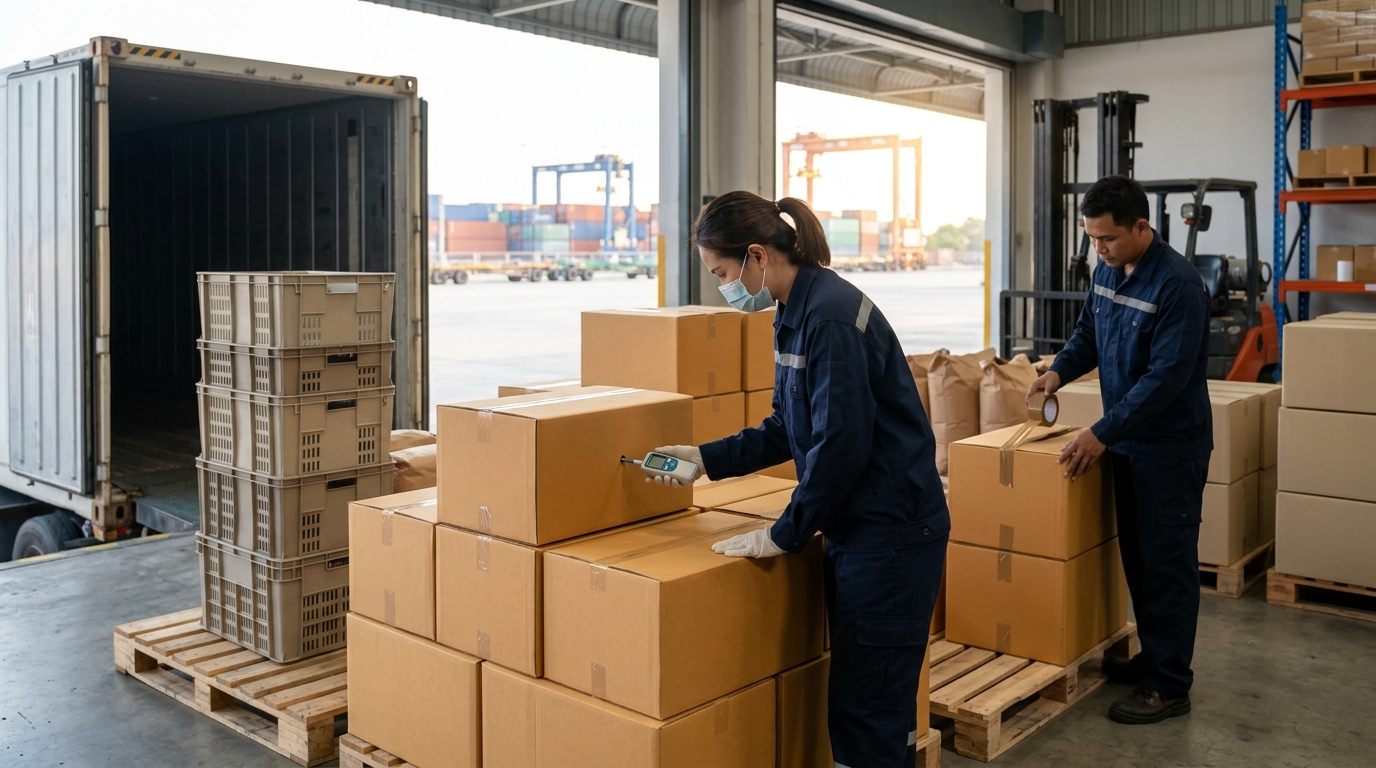
If you Sending Thai food to the UAE. Whether already in place or about to begin, there are things you should know before closing your next container. Data from DITP indicates that between 2024 and May 2026, 50 food and beverage items from Thailand were rejected for import by Dubai Municipality (DM). Over 70% of these issues stemmed from the same problem: ethanol exceeding the UAE's permitted limit. This sounds simple, but in practice, it can happen to products that have already received Thai FDA approval.
That's where many people miss the point, thinking that if it meets Thai standards, it should also meet destination standards. However, the UAE, especially Dubai, uses its own criteria, which in many parameters are much stricter than Thailand's. And some problems, such as the increase in ethanol during transport, are not the fault of the production formula, but rather issues with the cold chain and the duration in the container.
Why are the standards for sending Thai food to the UAE so different from those in Thailand?
The UAE is a Muslim country with very strict controls on alcohol content in food and beverages. The ethanol limit for beverages is only 0.01–0.101 TP3T, while soy sauces are allowed up to 0.301 TP3T. However, if your product is found to contain 0.18–0.641 TP3T, which is the range that DM (Disposal Method) actually found in Thai products, then it is considered to exceed the limit.
The standard used in the UAE is called GSO, or Gulf Standardization Organization, which is a common standard of the GCC countries, not just Dubai. Therefore, if you ship goods to the UAE, Saudi Arabia, Kuwait, Bahrain, Oman, or Qatar, you must use the GSO criteria, not the Thai FDA or Thai Industrial Standards (TIS).
It's worth noting that most problems don't stem from intentional violations, but rather from gaps between two sets of standards that exporters are unaware of, or know of but don't test using the DM (Directive Testing) methods, which can result in different outcomes.
How is ethanol formed in fruit juices and sauces during transportation?
This is very important for those shipping fruit juices, coconut water, or sauces to the UAE because the ethanol in these products doesn't come from added alcohol, but from natural fermentation during transport, especially when containers heat up or the cold chain is interrupted. Microorganisms remaining in the product will convert sugar into ethanol, and even a small increase in levels can exceed the UAE's ethanol limit.
Examples of products actually found by DM include 22 different fruit juices, various brands of sauces and soy sauce, chicken sausages, and even organic black sticky rice. This means that seemingly harmless products can still contain excess ethanol if temperature control during transport is not adequate.
Before sealing the container, the first thing to do is check the ethanol content of the product at a lab using the GC-FID method, the same method used by DM. If you send the sample to a lab using a different method, the results may differ and cannot be directly compared to DM's criteria.
SO₂, cadmium, and the weight of drained meat: issues that are rarely discussed.
Besides ethanol, there are other issues found in Thai products that are worth knowing. Sulfur dioxide, or SO₂, is found in coconut milk and coconut water at levels between 36–43 mg/kg, while the UAE limit is only 30 mg/kg. SO₂ often comes from preservatives or bleaching agents used in the production process. If you ship products in this category, you should always check the production formula and the amount of sulfites used.
Cadmium in canned mackerel is another issue to be concerned about. DM found cadmium levels of 126 and 377 µg/kg in Thai products, clearly exceeding the 100 µg/kg limit, especially the 377 µg/kg item, which is almost four times higher than the limit. This problem needs to be addressed at the source of raw materials and the production process, not just through pre-shipment testing.
Drain weight is often overlooked, but DM (Department of Disposal) tests have found that canned water chestnuts had a drain weight of only 44–501 TP3T, while the minimum requirement is 551 TP3T, and canned pineapples had a drain weight of 501 TP3T, but the requirement is 581 TP3T. If you ship canned fruit, you should check the drain weight of each batch, not just the total weight.
QR codes on e-Phytosanitary documents: a small problem that can halt the delivery of an entire container.
This is something many people are unaware of until the goods reach Dubai customs and fail to clear. Dubai DM and Customs use QR code scanning to verify the authenticity of documents, especially e-Phytosanitary Certificates. If the printed document lacks a clearly scannable QR code, fresh fruits and vegetables will be rejected, regardless of their quality.
This problem can easily occur, such as when the QR code is printed too small or unclear, or the document generation system has a problem on that day, resulting in an incomplete QR code. Before shipping fresh fruits and vegetables, always print the document and test scan the QR code with a mobile phone. If it cannot be scanned, you must request a new document from the Department of Agriculture (DOA) before the goods leave the factory.
Required documents for shipping food to the UAE include a Health Certificate, an Organic Certificate (if applicable), and an e-Phytosanitary Certificate with a clear QR code for fresh fruits and vegetables. Missing any of these documents may result in detention or the entire container being returned.
Preservatives and fat content in coconut milk are two more points to check.
The tapioca pearls detected by DM contained 2,284 mg/kg of sorbic acid and 1,478 mg/kg of benzoic acid, both exceeding the 1,000 mg/kg limit. If you ship products using these types of preservatives, you should verify the actual amounts used in your production formula and have them tested in a lab before shipment, as the UAE standards may be lower than you think.
The problematic coconut milk had a fat content of only 4.221 TP3T, while the UAE minimum standard is 5.01 TP3T. This problem may be due to a production formula using too much water, or a process that causes fat separation and loss during production. If you ship coconut milk or other coconut products, you should check the fat content of every batch before sealing the container.
Impact on costs and landing costs when goods are rejected in Dubai.
If goods are rejected by customs at the Dubai port, the costs incurred don't stop at the lost merchandise. There are also daily container docking fees, customs broker fees in Dubai, return shipping costs, or destruction costs if return is not cost-effective. Even more significant is the damage to the relationship with the buyer, as they did not receive the goods they ordered.
Let's take a rough estimate for a detained 20-foot container. Container docking fees in Dubai could be 50–150 USD per day. If detained for 2–3 weeks while awaiting test results or additional documentation, this cost alone could reach 700–3,000 USD, not including damaged goods, customs broker fees, and other operational costs, which would make the actual landing cost significantly higher than calculated.
Performing pre-shipment testing on every batch, while adding approximately 3,000–8,000 THB per test depending on the number of parameters checked, is far more worthwhile compared to the potential potential damage. It also ensures you have lab results to provide to your buyer, with some buyers in the UAE already requesting these results before placing orders.
Timeline for documents and lab work: How many days before the cabinet is closed should preparation begin?
If you plan to close the container on date X, you should start the preparation process at least 3–4 weeks in advance, as sending samples to an ISO/IEC 17025 certified lab such as the Food Institute or Central Lab Thailand and waiting for test results can take 7–14 days, depending on the parameters being tested.
If the lab results show a problem, you still have time to adjust the formula or change the batch of ingredients and resubmit the samples before the final container shipment. However, if you submit the lab samples just a week before the container shipment and the results are negative, you have virtually no choice but to postpone the shipment or accept the risk.
For e-Phytosanitary Certificates, please coordinate with the Department of Agriculture at least 5-7 working days in advance. Once you receive the document, immediately test scan the QR code before the product leaves the factory or warehouse.
Questions that customs brokers in Dubai often ask when goods are detained.
If your goods are held at Dubai customs, the customs broker in Dubai will usually ask you these questions beforehand: Do you have pre-shipment lab results, and what testing method was used? Do you have complete hygiene certificates? Is the QR code on the documents scannable? Is the goods being transported in a cold chain or dry container, and are temperature records kept during transit?
If you can answer these questions immediately with supporting documentation, the problem-solving process will be much faster. But if there is no documentation at all, the broker can do very little, and the goods may be held longer or eventually ordered destroyed.
Communicating with buyers in the UAE when problems arise at customs.
A topic often overlooked is how to communicate with buyers when goods are detained or rejected in Dubai. A practical piece of advice is to inform the buyer immediately upon discovering a problem. Don't wait for the broker to resolve the issue before telling them, as buyers appreciate transparency from the start.
Send the buyer the available documents, such as lab results, certificates, and reports from the broker in Dubai, to demonstrate that you are working on resolving the issue. If the problem is solvable, such as missing QR codes, inform the buyer how you will address it in the next batch to maintain the business relationship.
Checklist before sealing the food delivery container for the UAE.
- Check ethanol levels. Using the GC-FID method at an ISO/IEC 17025 lab before sealing each lot, especially fruit juices, coconut water, and sauces.
- Check the SO₂ level. In products that use sulfites as a preservative, such as coconut milk and coconut water, the maximum concentration must not exceed 30 mg/kg, according to UAE guidelines.
- Check the drain weight. Canned fruits and vegetables must meet the minimum standards of the UAE, not just Thailand.
- Cadmium test Using the ICP-MS method, the concentration of pollutants in canned fish, especially mackerel, must not exceed 100 µg/kg.
- Inspect for preservatives. Sorbic acid and benzoic acid must not exceed 1,000 mg/kg according to UAE guidelines.
- Scan the QR Code If the e-Phytosanitary Certificate cannot be scanned before the product leaves the factory, a new one must be requested from the DOA (Dead on Arrival).
- Prepare the cold chain. For beverages and sauces, to inhibit fermentation that would increase ethanol content during transport.
- Use the GSO criteria as a benchmark. It's not compliant with Thailand's FDA or TIS standards because the UAE's criteria are stricter in many parameters.
Products that require special care before shipping to the UAE.
Based on the list of items that DM has actually rejected, products that require special caution include all types of fruit juices and beverages, sauces and soy sauce, coconut milk and coconut water, canned fruits and vegetables, canned fish, chicken sausages, and organic products made with naturally fermented ingredients.
Even seemingly safe products, such as organic black glutinous rice, can contain ethanol due to the natural fermentation process in the raw materials. Therefore, if your product contains fermentable ingredients, you should always check the ethanol content before shipment, regardless of the product type.
How do temperature and transportation routes affect ethanol prices?
The route from Thailand to Dubai generally takes about 14–21 days by sea, passing through the Strait of Malacca, the Arabian Sea, and arriving at Jebel Ali, Dubai's main port. During the journey, temperatures inside the dry container can reach 40–50°C, especially when passing through the Arabian Sea, particularly during the summer months.
The higher temperatures inside the container accelerate the activity of any remaining microorganisms in the product, significantly increasing ethanol content. If your product already has an ethanol content near the UAE ceiling when it leaves the factory, it may exceed it by the time it reaches Dubai. Therefore, using refrigerated containers or reefers for beverages and sauces is a worthwhile option to consider, even though it is more expensive than dry containers.
If you are still using dry containers, the ethanol content of the product should be tested to be at least 30–40% below the UAE limit to allow sufficient margin for any increase during transit. The temperature inside the container should also be recorded throughout the transit process to serve as evidence in case of problems at the destination.
Things to watch out for next.
DM has a "Our Food Source is Safe" project in place, discussing solutions to recurring problems with key exporting countries, including Thailand. This means that inspection criteria and processes may be adjusted in the future. It is advisable to regularly monitor announcements from DITP and the Department of Agriculture to stay informed of changes before they impact exports.
Additionally, it's important to monitor any adjustments to GSO parameters, particularly regarding ethanol in sauces and beverages. If the threshold is lowered further, products that pass today may not pass next year. Also, if you already have a buyer in the UAE, periodically providing them with the latest lab results will help build confidence and reduce the risk of them switching to other suppliers.
For those who require further information regarding food exports to the UAE and GCC markets, please refer to the following references. SME SHIPPING This compiles trade signals and logistics information for Thai SME exporters.
Source: DITP https://www.ditp.go.th/post/k7s9q5ygnphamh4kvlaitfj1



 English
  Thai
Thai