


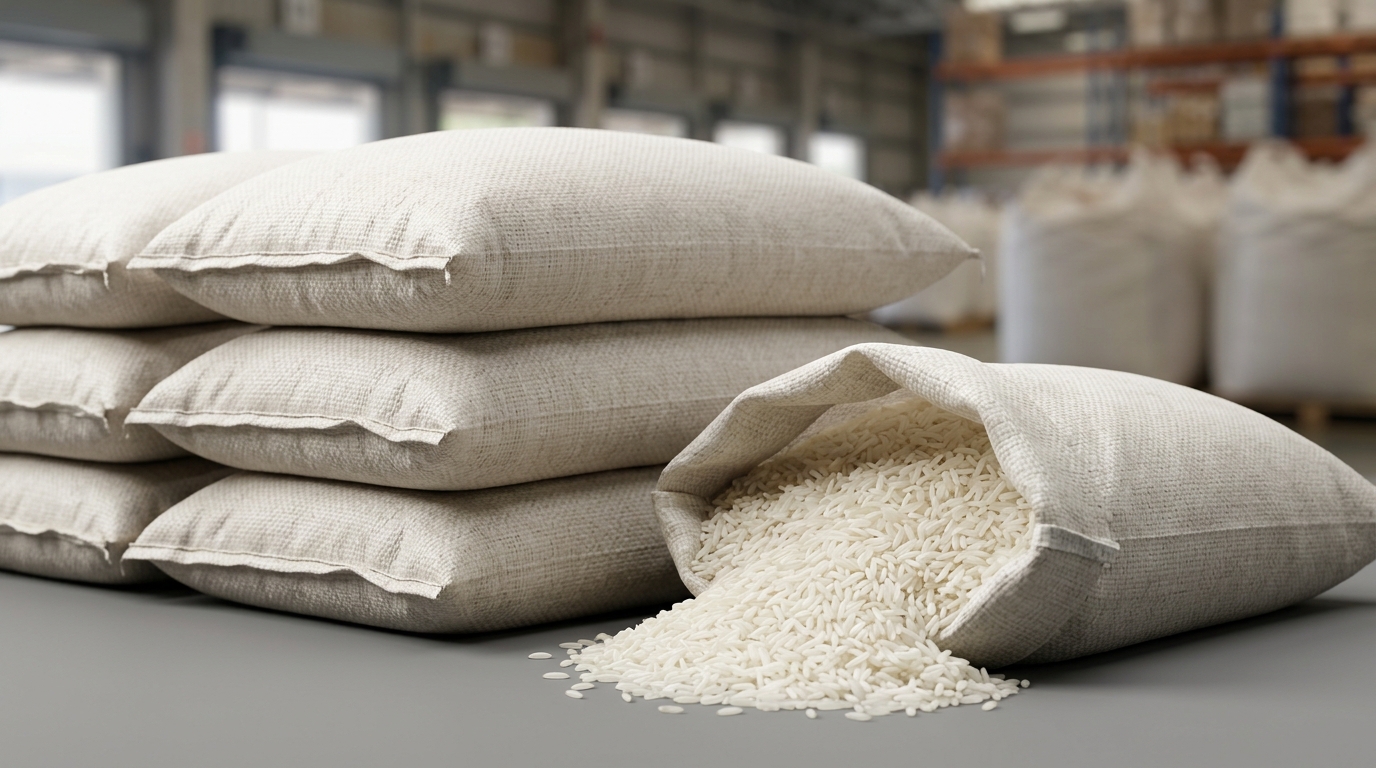
If you export rice or are looking for new markets in ASEAN,Exporting Thai rice to the Philippines.It remains a route with constant real demand. The Philippines, with a population of over 117 million, consumes an average of 151 kilograms of rice per person per year, but produces only about 12 million tons domestically, while needing 17-18 million tons. That gap must be filled by imports every year.
The numbers indicate that this market is still open.
From January to April 2026, the Philippines imported a total of 1.8 million tons of rice, an increase of 181 TP3T compared to the same period the previous year. This figure indicates that demand has not decreased and the market is still absorbing imports. Thailand ranked second as a supplier with a share of approximately 61 TP3T, but Vietnam dominated the market with almost 881 TP3T, a figure you need to be aware of before making a decision.
Why can Thailand still compete even though prices are higher?
Thai Hom Mali and Thai Jasmine rice are sold in Manila supermarkets at significantly higher prices than local and Vietnamese rice. A 5kg bag of Thai Hom Mali costs around 674 pesos, while premium local rice is 575 pesos. This difference indicates that some Filipino consumers are willing to pay more for the quality and aroma of Thai rice, but this group is not the mass market. You have to know which niche you're targeting.
Market structure after import liberalization.
The Philippines abolished its quota system and allowed private companies to import rice directly since 2019 through the Rice Tariffication Act. The G-to-G (government-to-government) channel that previously went through the NFA (National Food and Agriculture Commission) has been eliminated. Private importers now must obtain their own licenses from the Bureau of Plant Industry (BPI) under the Department of Agriculture. This means your trading partner in the Philippines must already possess that license. If they don't, your shipment may be held up at the port.
The import tariff for rice from ASEAN countries is 35%, which Thailand is entitled to as an ASEAN member. The tariff outside the MAV (350,000 tons) is 50%. In practice, these figures directly impact the importer's end costs and affect the price they are willing to pay.
Documents required before exporting Thai rice to the Philippines.
This is where many people miss the point, thinking that rice is an easy commodity. However, the Philippines has fairly strict SPS (Self-Public Health) regulations. Goods must leave the country of origin by the date specified in the permit and arrive at the destination within 60 days of the shipment date. Any delay could cause problems at customs.
- Sanitary and Phytosanitary Import Clearance (SPSIC) — Importers must request permission from BPI before the goods depart and verify with their trading partners that it has been received.
- Certificate of Origin (Form D / ATIGA) — Use the ASEAN 35% tax benefit instead of paying 40% or higher.
- Results of residue and heavy metal testing. — The Philippines requires testing of microbiological parameters and contaminants; lab results from Thailand should be attached.
- Phytosanitary Certificate — Issued by the Department of Agriculture, confirming that the product is pest-free.
- Bill of Lading and Packing List - Clearly state the net weight, type of rice, and export date, as BPI uses this information to verify the import license.
- Certificate of Analysis (COA) — Some importers request additional confirmation to ensure the rice quality meets the agreed-upon specifications.
Risks that should be assessed before making a decision.
actionExporting Thai rice to the Philippines.There are risks that need to be acknowledged directly, not just through paperwork.
Firstly, there's the issue of price. Thai rice is significantly more expensive than Vietnamese rice. If your trading partners are competing in the mass market, they can constantly pressure prices or switch suppliers. Secondly, there's the issue of stock levels. As of June 1, 2026, the Philippines had a total rice stock of 2.35 million tons, down from the previous month. If stock levels continue to fall, a surge in import demand should be monitored, as this could occur. However, there might also be competition from multiple suppliers from different countries simultaneously. Thirdly, there's the issue of changing regulations. The Philippines has adjusted its rice policy several times before, so it's important to regularly monitor announcements from the DA and BPI.
The areas where Thai rice still has an advantage.
If you're supplying jasmine rice or premium rice, the supermarket and Thai restaurant channels in Manila are still an area where Thai rice can compete on quality, not price. The number of Thai restaurants in the Philippines is growing, and this segment often demands specifically Thai rice, not substitutes. If you have partners in this channel, maintaining consistency in quality and on-time delivery will be more important than competing on price.
Sticky rice is another interesting product. Its retail price in the Philippines is significantly higher than regular rice, and it's also used to make many traditional desserts, making its demand relatively stable.
Things to discuss with your business partner before closing a deal.
Before you confirm your order, there are questions you should ask your partner in the Philippines to clarify things and minimize risks at the destination.
- Have you received the import license from BPI yet, and until what date is it valid?
- Does SPSIC cover the full quantity ordered?
- Do you require a COA or additional lab results beyond the standard documentation?
- What is the destination port, and are there any special requirements for agricultural products?
- What are the agreed-upon Incoterms, and who is responsible for the import duties on 35%?
How to plan a shipment to avoid problems at customs.
The conditions in the Philippines are clear: goods must arrive within 60 days of the scheduled shipment date as per the license. If you use a feeder vessel via Singapore or Hong Kong, the total transit time, including transit, could take 10-20 days depending on the vessel schedule and destination port. You should calculate sufficient buffer time and confirm your booking before the license expires.
For more information about transportation routes between Thailand and the Philippines, you can refer to the preliminary information at: smeshipping.com For planning purposes.
actionExporting Thai rice to the Philippines.It's not too difficult, but you need to prepare all the necessary documents and communicate clearly with your business partner from the start. Incomplete documentation or delays in delivery beyond the license period could pose a risk at the destination customs.
Source: Department of International Trade Promotion (DITP), Report on the Rice Commodity Situation in the Philippines, July 2026 / USDA / Philippine Statistics Authority / Global Trade Atlas
Exporting Thai rice: Check the conditions before making a decision.
Exporting Thai rice should begin with thoroughly checking all necessary documents, costs, and destination conditions before confirming the price. Then, use the Thai rice export topic in discussions with the buyer to confirm responsibilities and deadlines.
Before actually shipping, it's advisable to review the product classification, required documents, and responsible party at the destination again, as the details of Thai rice exports may vary depending on the market and trade conditions.
For more official information, please check: Related sources of information


 English
  Thai
Thai