


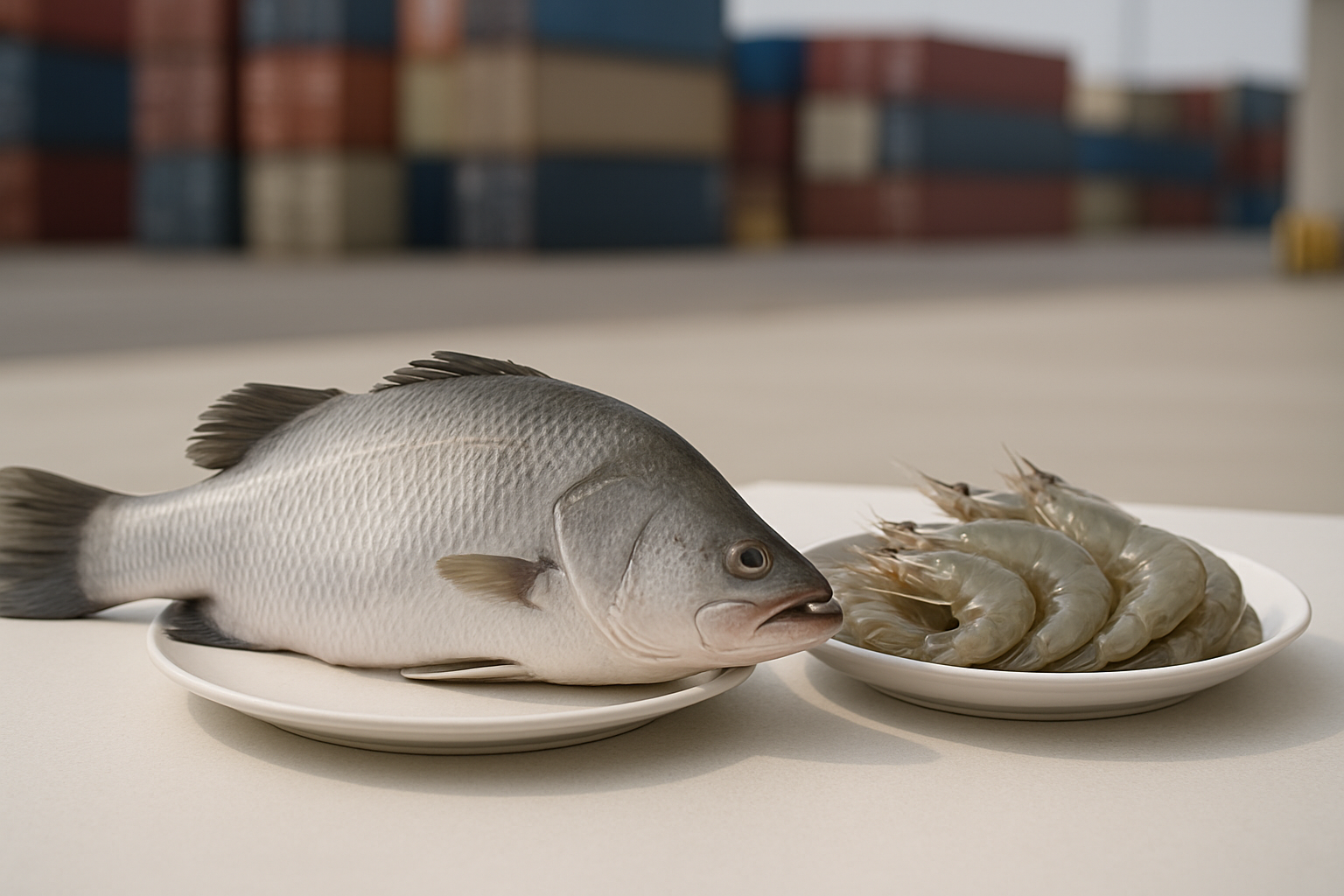
If you export Thai seafood to Malaysia, whether it's sea bass or shrimp, there are things you need to know before June 1, 2026, because from that date onwards, the regulations at Malaysian customs will be different, and the time left to prepare is less than many realize.
What changes have occurred in Malaysia?
The Malaysian Ministry of Agriculture and Food Security (KPKM) has announced enhanced inspection measures for imported fishery products from Thailand, divided into two distinct parts, effective simultaneously from June 1, 2026.
for Sea bass Every lot shipped to Malaysia must include this. Certificate of Analysis (CoA) This document confirms that the product meets the food safety standards of the Malaysian Ministry of Health. Without this document, the product will not pass customs; there are no exceptions.
for 5 species of shrimp These include tiger prawns, white prawns, Vannamei prawns, black tiger prawns, and blue prawns, as announced by Malaysia. Temporarily suspend imports. And it will not be canceled until Thai agencies have fully completed the food safety standards questionnaire.
Why is this happening now?
Malaysia has explicitly stated that this is a "reciprocal" measure because Thailand had previously imposed similar conditions on shrimp imports from Malaysia. Therefore, this isn't just about food standards; it also involves international trade, meaning the duration of the measure depends on how quickly Thailand responds.
On May 13, 2026, the Malaysian Fisheries Development Organization (LKIM) convened a meeting with importers and relevant agencies, including the Department of Fisheries (DOF), the Ministry of Health (KKM), and the Customs Inspection Authority (MAQIS), to brief them on the new Standard Operating Procedures (SOPs). This means that Malaysia is prepared, and Thailand must prepare as well.
Logistical risks to consider before shipping goods.
Fresh seafood has a short shelf life. If goods are detained at customs due to incomplete documentation, there's a high chance they will be damaged or discarded. The lost costs aren't just transportation expenses, but also include the value of the entire batch, cold storage costs while awaiting inspection, and the costs of returning or destroying the goods.
Stricter inspections at customs mean longer customs clearance times, higher cold chain costs, and the risk that Malaysian importers may refuse to accept goods if the documents do not match the agreed-upon specifications. Exporters should assess whether existing contracts with importers cover these scenarios.
In addition, you should check the terms of your shipping insurance to see if it covers damage to goods due to detention at customs, as this is a directly increased risk from the new measures.
Documents and procedures that need to be prepared.
For exporters of sea bass, a Certificate of Analysis (CoA) must be issued by a laboratory accredited by the Malaysian side. The lab testing process typically takes several days to two weeks depending on the parameters to be tested, so advance planning is crucial, especially if you ship multiple lots per month.
The content of the Certificate of Analysis (CoA) required by Malaysia has not yet been officially announced in its entirety. What is certain is that it must be confirmed that the product meets the food safety standards of the Malaysian Ministry of Health, which covers specified residues, pathogens, and contaminants. The list of parameters to be tested should be confirmed with the importer before sending samples to the lab.
Checklist for preparing to export Thai seafood to Malaysia.
- Check whether the lab issuing the CoA is approved by the Malaysian side. There is no officially announced list of laboratories yet. Please confirm with your importer before sending samples.
- Plan to request a Certificate of Analysis (CoA) at least 2-3 weeks in advance. Because the lab testing process takes time, and if the results are not approved, there needs to be time to make corrections before shipping the product.
- Have a clear conversation with the Malaysian importer about their latest SOPs (Standard Operating Procedures). Because the SOP may be updated after the LKIM meeting, the details may differ from what has been done before.
- If you are shipping shrimp, please track the progress of the Thai Department of Fisheries' response to the Malaysian survey. Because that is the only condition for the suspension to be lifted.
- Do not ship the item without all the necessary documents. Even though it had been submitted before, the new rules will actually come into effect on June 1, 2026.
- Check the terms and conditions in the contract with the importer. If goods are held at customs or rejected, who is responsible and what costs are covered?
- Check the terms and conditions of product insurance during transit. Does it cover damages resulting from goods being detained at customs or refused acceptance?
If you're shipping sea bass, it's still possible, but you'll need to prepare more.
Sea bass orders haven't been suspended yet, but every batch must come with a Certificate of Analysis (CA). If you already have a quality control system in place at your factory and a reliable lab, it's more about managing documentation and time than changing the production process. Exporters with well-established QC systems will have an advantage at this time.
But if you've never prepared a CoA before, start gathering information now. Don't wait until the end of May to look for a lab, because there won't be enough time, and labs that meet Malaysia's requirements may have long waiting lists before the measures take effect.
If you want to ship shrimp, there's currently no way to ship it.
There is no clear end date for the suspension of five shrimp species. It depends on when Thailand responds to Malaysia's survey and the results of the assessment. In the meantime, if you have shrimp orders to Malaysia, you should discuss directly with your importers how to manage the situation. This could include postponing orders, finding temporary alternative markets, or waiting to see how the situation develops. Making a quick decision will help minimize damage more than waiting until the measures take effect.
Things that remain unclear and need to be monitored.
There are still details that have not been officially announced, such as the list of laboratories accepted by Malaysia, the criteria that must be met in the Certificate of Analysis (CA), and the actual enforcement procedures at customs checkpoints, including whether there will be any grace periods. These should be confirmed directly with the importer or their agent in Malaysia, and should not be concluded based on the current information.
Regularly monitoring progress from the Thai Department of Fisheries and DITP will help you know in advance when the shrimp ban will be lifted, allowing you to be ready to resume exports as soon as channels reopen. For more information on planning logistics for regulated goods, please see the references provided. smeshipping.com
Source: Department of International Trade Promotion (DITP) / Thai Trade Center in Kuala Lumpur.
Exporting Thai seafood: Check the requirements before making a decision.
Exporting Thai seafood should begin with thoroughly checking all necessary documents, costs, and destination conditions before confirming the price. Then, use the Thai seafood export topic in discussions with the buyer to confirm responsibilities and deadlines.
Before actually shipping, you should review the product codes, required documents, and responsible party at the destination again, as the details for exporting Thai seafood may vary depending on the market and trade conditions.
For more official information, please check: Related sources of information





 English
  Thai
Thai